

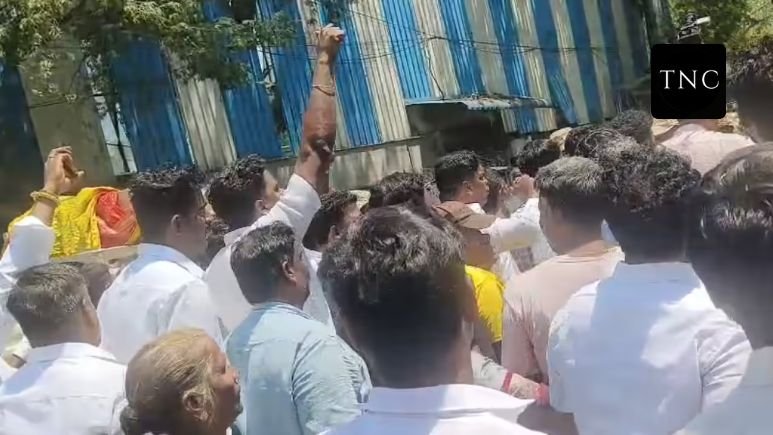

They were counting. Women in bright saris waited with folded voter slips. First-time voters snapped selfies outside schools turned polling stations. In semi-urban districts, motorcycles lined dusty roads leading to booths. By evening, Tamil Nadu had delivered a historic turnout of roughly 85 percent, the highest in the state’s assembly election history.
For most democracies, high turnout is a civic celebration. For political parties in power, it can also be a warning siren.
Why Record Turnout Could Trouble the DMK
Tamil Nadu’s ruling Dravida Munnetra Kazhagam (DMK), led by Chief Minister M.K. Stalin, entered the 2026 election with the advantages of incumbency, organization, and welfare-driven governance. But record participation changes campaign math.
Historically, surges in turnout often signal one of three forces: pent-up dissatisfaction, energized opposition voters, or the arrival of new political blocs that traditional polling fails to capture.
That is why analysts immediately looked backward.
In 2006, a relatively strong turnout accompanied a change in government, with the AIADMK losing power and the DMK alliance returning. In 2016, a solid turnout did not produce anti-incumbency; Jayalalithaa’s AIADMK retained power, defying Tamil Nadu’s usual alternation pattern. In other words, turnout alone predicts nothing. But turnout spikes often mean something has shifted beneath the surface.
The Real Battlefield: Women, Youth, and Swing Districts
This year’s numbers contain one especially sharp signal: women voters reportedly outpaced men. That matters because women voters in Tamil Nadu have increasingly acted as an independent political force, rewarding welfare delivery while also punishing arrogance or local failures.
Youth turnout matters too. In regions like Salem and western districts, reports pointed to unusually strong participation from younger and first-time voters. Those voters are less tied to old Dravidian loyalties and more responsive to jobs, prices, identity, and fresh faces.
Then there is the wildcard: actor Vijay’s Tamilaga Vettri Kazhagam (TVK). Even if the party does not win many seats, it could fracture vote banks, especially urban youth and floating voters who once defaulted to the two major Dravidian camps.
That possibility is what keeps ruling parties awake.
Why High Turnout Is Not Automatically Bad News
DMK also has reasons for confidence.
The party remains electorally formidable, with deep booth-level networks, welfare credibility, and a broad alliance structure. In some urban areas, it may have mobilized its own supporters effectively. High turnout can just as easily reflect a well-run machine calling every loyal voter to the booth.
And anti-incumbency in Tamil Nadu is never uniform. A voter unhappy with one MLA may still back the ruling alliance statewide.
A historic turnout does not guarantee defeat for the DMK. But it does suggest movement and movement is dangerous for any incumbent.
When more people vote than expected, someone has expanded the electorate. The only question now is whether those extra voters came to renew the government’s mandate or to end it.
Also Read / “Politics Isn’t Cinema”: The Tamil Nadu Election Where Vijay’s Entry Changed Every Calculation.











Leave a comment