


At dawn, the oil tanker Mercury Dawn slowed to a near stop just outside the Strait of Hormuz. Its engines hummed, but the horizon ahead was empty, no green signal, no convoy escort, only radio chatter crackling with warnings in multiple languages. The captain, a veteran of three decades at sea, leaned over the console and muttered, “This isn’t a delay. This is a message.”
Behind him, millions of barrels of crude sat idle. Ahead, a choke point of global trade had become a fault line of war.
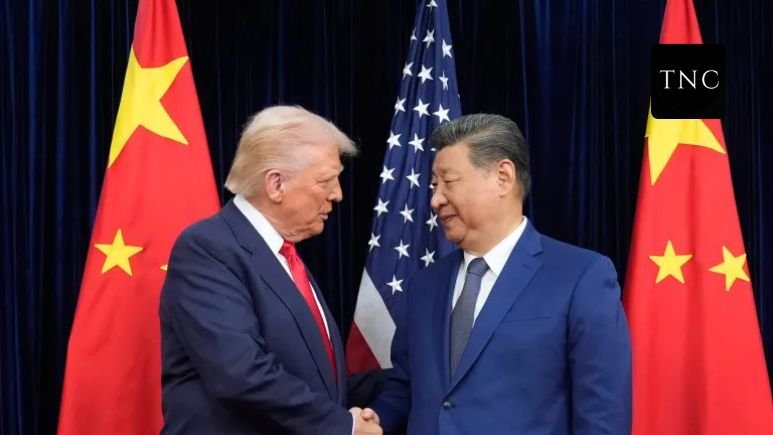
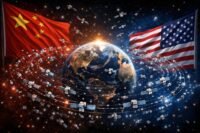
That moment ships stranded, markets rattled, diplomacy fraying is exactly what Chinese President Xi Jinping was pointing to when he broke his silence on the Iran conflict. His message was blunt: the global order is no longer stable; it is “crumbling into disarray.”
The Iran war, sparked by U.S. and Israeli strikes and followed by Iran’s retaliation and closure of the Strait of Hormuz, has done more than ignite a regional conflict. It has disrupted energy flows, fractured alliances, and exposed the limits of existing international rules.
Xi’s warning matters because it signals a shift not just in China’s tone, but in how major powers now interpret the rules of the global system itself.
Strip away the diplomatic language, and Xi’s argument is stark: the world is drifting away from rule-based order toward raw power politics.
The facts on the ground support that claim.
The United States has imposed a naval blockade on Iran, escalating tensions and pushing oil prices upward.
Iran has retaliated by restricting one of the world’s most critical shipping routes, disrupting global supply chains.
Meanwhile, efforts at diplomacy remain fragile, with ceasefires repeatedly tested and negotiations collapsing.
In this environment, international law looks less like a framework and more like a tool selectively applied.
Xi has leaned heavily into that critique, warning against a return to the “law of the jungle,” where stronger nations dictate outcomes.
But there’s another layer to his message.
China is not just criticizing the system, it is positioning itself as an alternative stabilizing force. By calling for multilateralism, peace talks, and respect for sovereignty, Beijing is attempting to step into a leadership vacuum created by escalating Western military actions.
Yet this positioning is complicated. The same conflict threatens China’s energy security, economic growth, and geopolitical ambitions.
In other words, China is both referee and stakeholder.
What makes this moment different is scale.
This is not just another Middle East conflict. It is a stress test for globalization itself.
The Strait of Hormuz carries a significant share of the world’s oil. When it tightens, inflation rises in countries thousands of miles away. Food prices climb. Supply chains fracture.
The IMF has already warned that even a temporary war could leave permanent scars on the global economy.
At the same time, alliances are shifting. European leaders are engaging more closely with China, while questioning U.S. strategies.
This is how world orders change not in a single event, but through accumulating fractures.
The tanker waiting at Hormuz isn’t just carrying oil it’s carrying proof.
Xi Jinping’s warning isn’t abstract. It’s visible in stalled ships, rising fuel prices, and nations choosing sides.
The old system isn’t gone yet. But it’s no longer holding everything together.
And when global order starts to crack, it doesn’t collapse all at once it leaks, slowly, until everyone feels it.






Leave a comment