


At dawn, somewhere off the coast of Oman, a tanker captain stared at a motionless horizon. His vessel heavy with crude oil should have been moving. Instead, it drifted in a queue of ships that stretched like a steel necklace across the Gulf. Orders crackled over the radio: wait. No one could say for how long. A week ago, this route was routine. Now, it felt like a gamble. The crew slept lightly, boots beside their bunks, unsure whether the next sound would be an engine restart or an explosion.
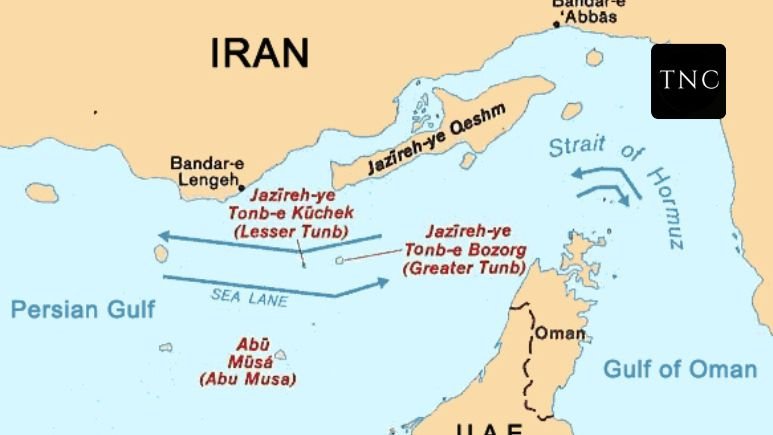
What’s unfolding in the Strait of Hormuz is not just a regional standoff, it is a chokehold on the global economy. As tensions between the United States under President Donald Trump and Iran escalate, the world’s most critical oil artery has become unstable. Iranian officials and their allies have warned that security in the strait cannot be guaranteed, urging other nations to step in. The message is blunt: this is no longer a bilateral conflict, it’s a global risk with global consequences.
The Strait of Hormuz is less a waterway and more a pressure point. Roughly 20% of the world’s oil supply passes through it, making any disruption instantly felt from Mumbai to Manhattan.
But this crisis is not just about geography, it’s about leverage. Iran has turned the strait into a strategic weapon. By restricting passage, targeting ships, and laying potential mine threats, it has effectively slowed maritime traffic to a near standstill. Tankers are rerouting or anchoring indefinitely, unwilling to risk billions of dollars in cargo and human lives.
Even countries not directly involved in the conflict are feeling the strain. Chinese vessels have reportedly turned back despite assurances of safe passage, a sign that trust in the corridor has collapsed.
Meanwhile, Washington’s response has been fragmented. President Trump has pushed allies to take a greater role in securing the strait, at times criticizing them for not stepping up. But the reality is more complicated. Securing Hormuz is not a simple naval escort mission; it involves clearing mines, countering drones, and maintaining constant surveillance in one of the world’s most volatile regions. Experts warn this could take months, not days.
The economic ripple effects are already visible. Oil prices have surged past $100 per barrel, supply chains are tightening, and industries far removed from the Middle East fertilizers, aluminum, even shipping insurance are feeling the squeeze.
At its core, this is a battle of endurance. Iran is signaling that it can outlast pressure by holding the world’s energy lifeline hostage. The United States, meanwhile, faces a dilemma: escalate militarily and risk a broader war, or negotiate and risk appearing weakened.
And hovering over it all is a stark reality: once a critical trade route becomes unpredictable, restoring confidence is far harder than restoring access.
The Strait of Hormuz is only 33 kilometers wide at its narrowest point but right now, it’s wide enough to divide the global economy. Until stability returns, every ship that hesitates there is a reminder: in modern geopolitics, the smallest corridors can carry the heaviest consequences.
Also Read / The War Room India Won’t Call a War Room: How West Asia’s Crisis Reached South Block.






Leave a comment