

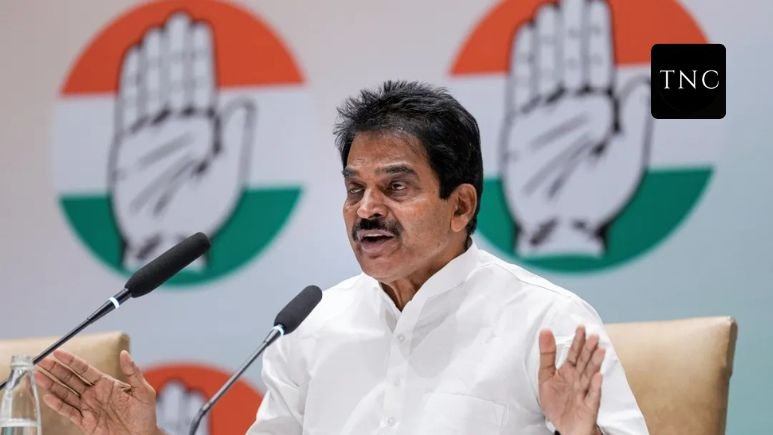

The microphones crackled as party workers leaned forward, phones raised, trying to catch every word. Outside, the afternoon heat pressed down on the gathering, but inside the small press enclosure, the mood was electric. K.C. Venugopal didn’t hedge. He didn’t soften his tone. He spoke as if the result were already written.
“There will be a change of government in Keralam,” he said, his voice steady, almost defiant.
A few supporters clapped immediately. Others exchanged glances half belief, half caution. Elections in Kerala have a way of humbling certainty.
The Stakes Behind the Statement
Venugopal’s declaration is more than campaign rhetoric; it captures the high-stakes battle unfolding ahead of the 2026 Kerala Legislative Assembly elections, where 140 seats will determine who governs one of India’s most politically literate states.
For nearly a decade, the state has been under the rule of the Left Democratic Front (LDF), led by Chief Minister Pinarayi Vijayan. The Congress-led United Democratic Front (UDF), now in opposition, is betting that fatigue, controversy, and shifting voter sentiment have created an opening.
Venugopal’s claim that the UDF will win “hands down” is not just optimism. It’s a signal: the opposition believes the cycle of power in Kerala, historically known for alternating governments, is ready to reset.
A Campaign Built on Accusation and Anticipation
Kerala’s elections are rarely quiet affairs. This one is no exception.
Venugopal and other Congress leaders have sharpened their attacks, accusing the ruling Left of misgovernance, political opportunism, and even covert alignment with ideological rivals. In recent days, he has alleged a “secret pact” between the CPI(M) and the BJP an explosive claim in a state where political identities are sharply drawn.
The rhetoric has only intensified. Venugopal has also pushed back against accusations from the Left, defending Congress leadership while framing the election as a referendum on governance failures from administrative controversies to public dissatisfaction.
This strategy is deliberate. In Kerala, elections are not won on charisma alone. They are fought on narrative on who convinces voters that the other side has drifted too far from its promises.
At the same time, the UDF has moved to present itself as organised and ready. Seat-sharing arrangements have been finalised, candidates announced, and internal dissent, often a weakness, has been largely contained ahead of polling.
The Voter’s Dilemma
Kerala’s electorate is uniquely unpredictable. The state has a long tradition of alternating between the LDF and UDF, rarely giving incumbents consecutive terms until 2021, when the Left broke that pattern with a decisive win.
That history cuts both ways.
On one hand, it gives credibility to Venugopal’s confidence: anti-incumbency is a powerful force here. On the other hand, the LDF’s previous victory showed that voters are willing to break tradition when they see continuity as stability.
Add to this a charged political climate, controversies in governance, ideological clashes, and a highly engaged voter base and the outcome becomes harder to forecast than either side admits.
K.C. Venugopal’s prediction is bold, but in Kerala, boldness is part of the script.
The real story isn’t the certainty in his voice, it’s the uncertainty on the ground.
Because in a state where voters think deeply, switch loyalties decisively, and defy expectations regularly, one truth holds: no election is won at the podium. It’s won at the ballot box.
Also Read / The Quiet Challenger in Nandigram.










Leave a comment