

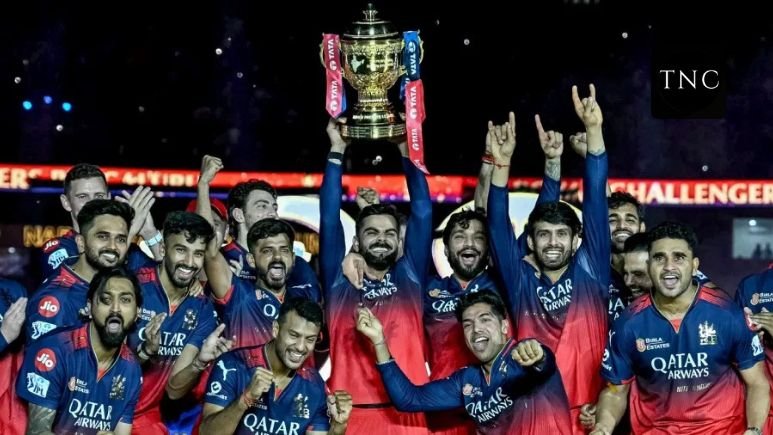

Inside a glass-walled office hundreds of kilometers away, executives weren’t talking about cover drives or death overs; they were dissecting valuation multiples, media rights, and global fan engagement curves. On one screen: a highlight reel of Royal Challengers Bengaluru lifting their first IPL trophy in 2025. On another: a number blinking in bold $1.78 billion.
For years, RCB was a cricket team. Overnight, it became something else entirely: a financial asset traded at the scale of global sports franchises.
The sale of RCB by United Spirits Limited to a consortium led by the Aditya Birla Group, alongside The Times of India Group, Blackstone, and Bolt Ventures, marks a turning point not just for cricket, but for how sport is valued and owned in India.
This isn’t merely a franchise changing hands. It’s a signal that the Indian Premier League has evolved into one of the most lucrative, investor-driven sports ecosystems in the world.
Start with the number: $1.78 billion (₹16,600+ crore). That makes RCB one of the most expensive cricket franchises ever sold.
But the number alone doesn’t explain the frenzy.
1. Cricket is now a media business first, sport second.
The IPL’s media rights crossed $6 billion in recent cycles, turning every franchise into a revenue-generating engine backed by guaranteed central payouts.
Owning a team like RCB means owning a slice of that ecosystem broadcast money, sponsorships, and digital engagement.
2. RCB isn’t just a team it’s a brand with global pull.
For years, RCB thrived despite not winning titles, powered by star power like Virat Kohli and one of the league’s most loyal fan bases. Their 2025 title win only sharpened that appeal.
Add to that a women’s team, merchandising, and hospitality ventures, and you’re looking at a multi-vertical sports business.
3. Big capital is reshaping Indian sport.
The buyer list reads like a cross-section of modern capitalism:
- A legacy Indian conglomerate (Aditya Birla Group)
- A media powerhouse (Times Group)
- A global sports investor (Bolt Ventures)
- A private equity giant (Blackstone)
This mix is deliberate. Sport today sits at the intersection of content, commerce, and capital. Each partner brings a different lever distribution, branding, financing, or global expansion.
4. Why did United Spirits sell?
Because RCB, despite its glamour, didn’t align with its core alcohol business strategy.
In corporate terms, it was a non-core asset. In market terms, it was peak timing sell when valuations are soaring.
5. The bigger trend: IPL as the new global sports frontier.
Franchise valuations are climbing rapidly. Just days before, another IPL team sold for over $1.6 billion, signaling a broader surge.
The IPL is no longer chasing leagues like the NBA or Premier League it’s beginning to rival them in commercial momentum.
RCB’s sale isn’t about cricket changing owners. It’s about cricket changing identity.
What was once a city team backed by a liquor company is now a multi-billion-dollar asset owned by a coalition of media, capital, and global investors.
The message is clear:
In modern sport, the real game isn’t played on the field it’s played on the balance sheet.
Also Read / Peak Auction: Why the IPL’s Next Billion Will Be Harder to Earn Than the Last.









Leave a comment