

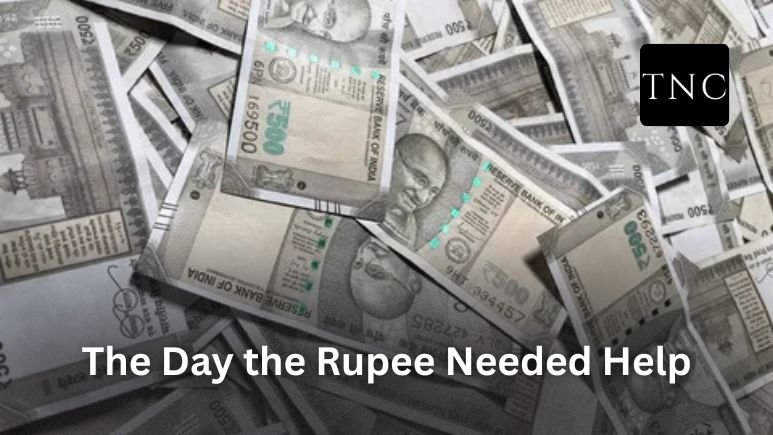

At 9:15 a.m. on a humid trading morning in Mumbai, currency dealer Rohan Mehta watched the numbers on his screen flicker red. The Indian rupee had slipped again, brushing dangerously close to a historic low against the U.S. dollar. Oil prices were climbing after fresh reports from the Middle East. Traders whispered about shipping routes in the Strait of Hormuz and the price of crude the next morning.
Within hours, something shifted in the market. The rupee steadied. Dealers knew what that meant: the central bank had stepped in. Somewhere inside the Reserve Bank of India’s dealing room, billions of dollars from India’s foreign exchange reserves were quietly deployed to calm the currency markets.
By the end of the week, the numbers told the story. India’s forex reserves had fallen sharply, the price of defending the rupee in a turbulent global economy.
India’s foreign exchange reserves, the pool of dollars, gold, and other global assets held by the Reserve Bank of India (RBI) act as a financial shield. They stabilize the rupee, reassure investors, and help the country pay for imports like oil.
In early March 2026, that shield took a hit. India’s reserves fell by $11.68 billion to about $716.8 billion, the largest weekly decline in more than a year. Analysts attribute the drop largely to RBI intervention in currency markets to support the rupee amid geopolitical shocks triggered by the escalating Iran conflict and rising oil prices.
The event reveals something deeper: how distant wars, oil prices, and currency markets can collide to shape the stability of one of the world’s fastest-growing economies.
The Forces Pushing India’s Forex Down
The fall in reserves did not happen in isolation. Several forces converged at once.
1. RBI’s Currency Defense
When the rupee weakens rapidly, the RBI can sell dollars from its reserves and buy rupees in the market. This helps prevent panic selling and sharp currency depreciation. Analysts estimate that roughly $6 billion in dollar sales contributed to the recent decline in reserves.
This intervention is common during periods of global volatility a way for the central bank to smooth extreme currency movements.
2. The Iran War and Oil Shock
The escalating Iran War has pushed global oil prices higher and rattled financial markets. Energy routes through the Strait of Hormuz carry a significant share of the world’s oil, and any disruption sends prices surging.
For India, which imports more than 80% of its crude oil, rising energy costs immediately pressure the rupee and widen the import bill.
3. A Stronger Dollar and Global Risk
Global investors often move money into safer assets like the U.S. dollar during geopolitical crises. That shift strengthens the dollar and weakens emerging-market currencies, including the rupee.
In recent weeks, the rupee has even crossed ₹92 per dollar, reflecting the pressure from oil prices and global uncertainty.
4. Valuation Changes in Assets
Not all reserve losses come from direct intervention. When global currencies fluctuate, the value of assets held in reserves such as euro- or yen-denominated securities can fall when converted to dollars.
Despite the headline drop, India’s forex reserves remain historically strong. At more than $700 billion, they cover many months of imports and give policymakers ample room to manage currency volatility.
The contrast with earlier crises is stark. During the 1991 Indian economic crisis, India’s reserves were so low that the country could finance only a few weeks of imports.
Today’s reserves act as a buffer allowing the RBI to step into markets without risking financial instability.
Still, prolonged geopolitical tensions could create new pressures. Higher oil prices, a weaker rupee, and global investor caution could push the RBI to continue using its reserves to maintain stability.
India’s shrinking forex reserves are not a sign of weakness. They are the cost of defending economic stability in a volatile world.
A war thousands of kilometers away can raise oil prices, shake currencies, and force central banks into action. For India, the recent dip in reserves is a reminder that in the global economy, financial shockwaves travel fast and the central bank’s war chest is often the first line of defense.
Also Read / Union Budget 2026: From Life-Saving Drugs to Smartphones – What’s Cheaper and What’s Costlier?












Leave a comment