

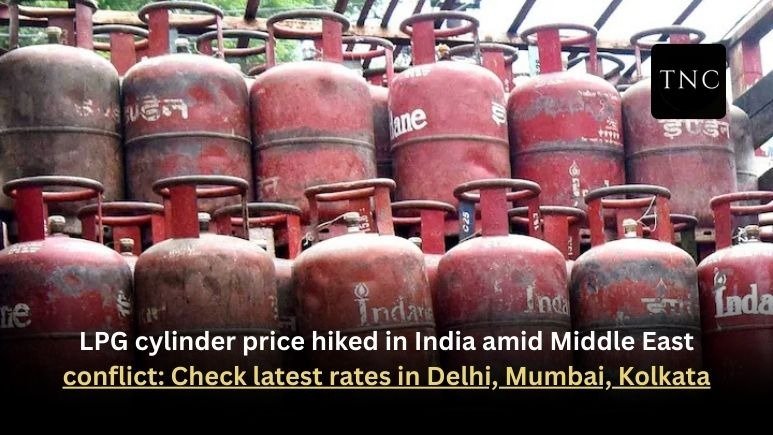

At 6:30 a.m., the tea stall outside a crowded bus stand in Delhi is already humming. Steam curls out of a dented aluminum kettle while Rajesh Kumar, who has run the stall for a decade, twists the valve on a new LPG cylinder. The metal clicks. The flame bursts alive.
He pauses and shakes his head.
“Another price hike,” he mutters, sliding a row of glasses across the counter. Yesterday’s refill cost him ₹115 less. Today, it costs more. For a stall that sells ₹10 cups of tea, even small changes in fuel prices ripple through every decision — from how many samosas to fry to whether to raise prices for customers already counting their coins.
Across India, from roadside eateries to household kitchens, the cost of cooking has quietly climbed again.
India’s oil companies raised LPG prices on March 7, increasing the cost of a 14.2-kg domestic cylinder by ₹60 and commercial cylinders by roughly ₹115. The change pushes the price of a household cylinder in Delhi to about ₹913, with similar increases reported in other major cities.
The hike arrives at a tense moment in global energy markets. Escalating conflict in the Middle East — particularly disruptions linked to the Strait of Hormuz — has rattled oil supply chains and driven up global fuel prices.
For India, one of the world’s largest importers of LPG, the consequences show up quickly in everyday life: restaurant menus, household budgets, and inflation data.
The math behind an LPG price hike is rarely simple. But the forces pushing prices upward are clear.
First, geopolitics.
The ongoing conflict involving Iran and Western allies has disrupted shipping routes around the Strait of Hormuz, a narrow waterway through which roughly 20% of global oil supply normally passes. Even temporary interruptions have sent crude prices climbing sharply in global markets.
Higher crude prices translate into higher LPG costs. India imports a large share of its LPG consumption, making the country particularly sensitive to global shocks.
Second, supply anxiety.
The government has reportedly asked domestic refiners to increase LPG output to avoid shortages as imports face uncertainty.
This is a reminder that LPG pricing is tied not only to global crude prices but also to logistics — shipping routes, tanker insurance costs, and refinery capacity.
Third, inflation pressure at home.
Fuel costs cascade through the economy. Restaurants using commercial cylinders may raise menu prices. Street vendors might cut margins. Households may reduce consumption or delay refills.
Even for beneficiaries of government schemes such as subsidized LPG connections, the hike still increases out-of-pocket costs. For millions of families, a ₹60 jump may sound modest but accumulates quickly over the year.
And the timing matters. Energy price spikes have historically been early indicators of broader inflation waves — a lesson the global economy learned repeatedly during previous oil crises.
The new LPG price hike is more than a routine adjustment. It’s a reminder that events thousands of kilometers away — wars, shipping disruptions, geopolitical standoffs — can reach straight into the Indian kitchen.
For people like Rajesh at the tea stall, the equation is brutally simple: when fuel costs rise, everything else eventually follows.
And sometimes, the first signal of a global crisis isn’t a headline — it’s the price of the next gas cylinder.
Also read / India Signs First Major LPG Deal With United States Suppliers











Leave a comment