

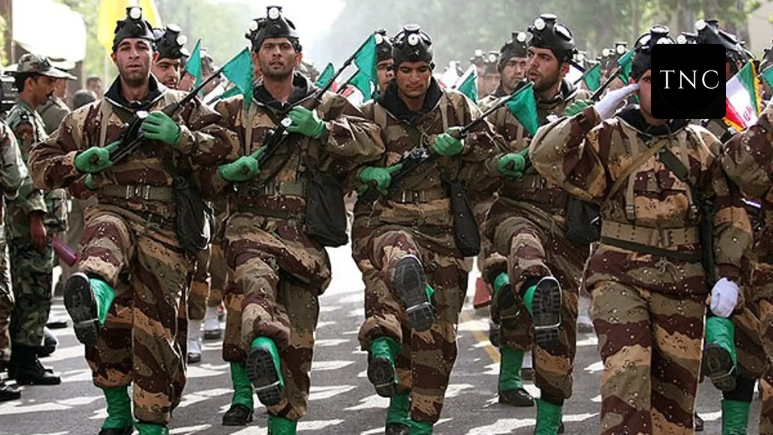

The operator never sees the target.
Inside a dimly lit control room on the outskirts of Tehran, a young technician stares at a grainy feed just pixels and motion. A drone, hundreds of kilometers away, circles above a simulated battlefield. The exercise is modeled not on Iran’s past wars, but on a different conflict entirely: Ukraine.
The instructor pauses the footage. “Too slow,” he says. “In Ukraine, that delay gets you killed.”
Around the room, officers take notes not about tanks or territory, but about timing, software, and swarms.
Iran is not fighting Ukraine. But I am studying it closely.
As the war in Eastern Europe reshapes modern combat, Tehran is absorbing its lessons and rewriting its own military doctrine. The shift goes beyond hardware. It’s about how wars are fought: faster, cheaper, more decentralized and increasingly dominated by drones and data.
This evolution matters because it signals a broader transformation in global warfare. What worked in Ukraine is no longer regional knowledge; it is becoming a blueprint for future conflicts, from the Middle East to Asia.
The first lesson is brutally simple: cheap beats expensive.
In Ukraine, low-cost drones have repeatedly outperformed multimillion-dollar systems. A $50,000 unmanned aircraft can force an opponent to spend millions on interception. Iran has taken notice. Its military planners are doubling down on mass-produced drones and missile systems, aiming to overwhelm rather than outgun.
The second lesson is speed.
Modern war is no longer about who has better weapons, it’s about who processes information faster. Artificial intelligence now compresses the time between detection and strike, shrinking decision windows to seconds. Ukraine has shown how rapid targeting cycles can paralyze larger, slower forces. Iran is now integrating similar AI-driven systems into its planning.
The third lesson is decentralization.
Ukraine’s battlefield has rewarded flexibility with small units operating independently, adapting in real time. Iran’s existing “mosaic defense” strategy already leans in this direction, dividing command into semi-autonomous units designed to survive heavy strikes. The Ukraine war has validated that model, reinforcing Iran’s belief that resilience matters more than centralized control.
Then there is the strategic layer of war beyond the battlefield.
Iran has learned that victory isn’t always about defeating an enemy outright. It’s about raising the cost of conflict. By threatening global chokepoints like the Strait of Hormuz, Tehran can create economic shockwaves far beyond the front lines. Ukraine demonstrated a similar principle: disrupt supply lines, stretch resources, and force adversaries into long, expensive wars they struggle to sustain.
Finally, there is the lesson of endurance.
The Ukraine war has shown that modern conflicts rarely end quickly. Iran is preparing for that reality by building systems designed not for decisive victory, but for survival over time. Its strategy is shifting from dominance to durability.
The future of warfare isn’t being written in one place.
It’s being tested in Ukraine, studied in Iran, and quietly adopted across the world.
The lesson is stark: wars are no longer won by the strongest military. They’re shaped by the fastest learner.
Also Read / ‘Cynical and Targeted’: 12 Miners Killed in Drone Strike as Ukraine Prepares for Abu Dhabi Summit.













Leave a comment