

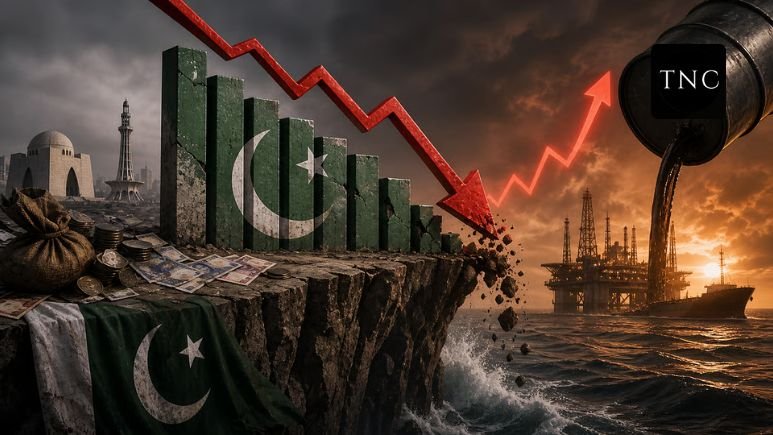

Companies Pull Back Expansion Plans Amid Rising Costs and Uncertainty
The boardroom discussion at a manufacturing company in Karachi was supposed to focus on expansion. New machinery had been shortlisted, financing options were on the table, and management had spent months preparing for growth.
Instead, executives spent the meeting discussing contingency plans.
Fuel prices were climbing. Shipping routes looked increasingly uncertain. Suppliers were warning of delays. By the end of the session, the investment proposal was shelved indefinitely.
Across Pakistan, similar conversations are unfolding as businesses grapple with a rapidly deteriorating economic environment.
Recent business sentiment surveys show a sharp decline in corporate confidence, reflecting growing concerns over inflation, rising operating costs, supply-chain disruptions, and the broader impact of geopolitical tensions in the Middle East. The deterioration has become significant enough to force many firms to postpone or reconsider expansion plans.
Why This Matters
Business confidence is often one of the earliest indicators of economic momentum. When companies feel optimistic, they hire workers, invest in equipment, expand facilities, and increase production. When confidence falls, those activities slow down.
Pakistan’s latest business sentiment data suggests that companies are entering a defensive phase. Rather than pursuing growth, many are prioritizing cash preservation, risk management, and operational resilience. The shift could have broader implications for employment, industrial output, and economic growth in the months ahead.
Investment Freeze Signals Growing Anxiety
Perhaps the most concerning trend is the collapse in investment appetite.
A large majority of surveyed businesses report delaying, revising, or reassessing planned investments. Instead of committing capital to new projects, firms are waiting for greater clarity on energy prices, inflation, and regional stability.
This hesitation is understandable.
Pakistan remains heavily exposed to fluctuations in global energy markets. Any disruption in the Middle East quickly translates into higher import costs, increased transportation expenses, and additional pressure on domestic inflation. Businesses fear that committing funds today could become significantly more expensive tomorrow.
Rising Costs Are Reshaping Corporate Strategy
The services sector appears to have been hit particularly hard, while manufacturing firms also report weakening sentiment. Retail businesses have shown comparatively greater resilience, though challenges remain widespread across the economy.
Companies are responding by changing their priorities.
Instead of focusing on expansion, many are diversifying suppliers, redesigning logistics networks, and strengthening operational safeguards. Supply-chain resilience has become a boardroom priority as businesses seek to reduce exposure to potential disruptions in global trade routes.
For manufacturers, the pressure is particularly intense. While some industrial activity has shown signs of stabilization, higher fuel and raw-material costs continue to squeeze margins and complicate future planning.
The Geopolitical Factor
The decline in confidence is not occurring in isolation.
The ongoing conflict in the Middle East has introduced a layer of uncertainty that extends far beyond energy markets. Businesses increasingly worry about shipping delays, currency volatility, inflationary pressures, and weaker consumer demand.
Economic policymakers have also warned that prolonged geopolitical tensions could weigh on growth prospects and complicate efforts to maintain macroeconomic stability.
For many executives, the question is no longer whether geopolitical events affect business operations. The question is how long those effects will last.
Pakistan’s corporate sector is sending a clear message: uncertainty is becoming more expensive than risk.
When businesses stop investing, economic growth loses one of its most powerful engines. The latest decline in confidence suggests that companies are preparing for a period of caution rather than expansion.
Until inflation eases, energy markets stabilize, and geopolitical tensions subside, many firms are likely to remain on the sidelines waiting for clearer signals before placing their next big bet on the future.
Also Read / Pakistan’s Latest IMF Lifeline Comes With a Warning Label.













Leave a comment