

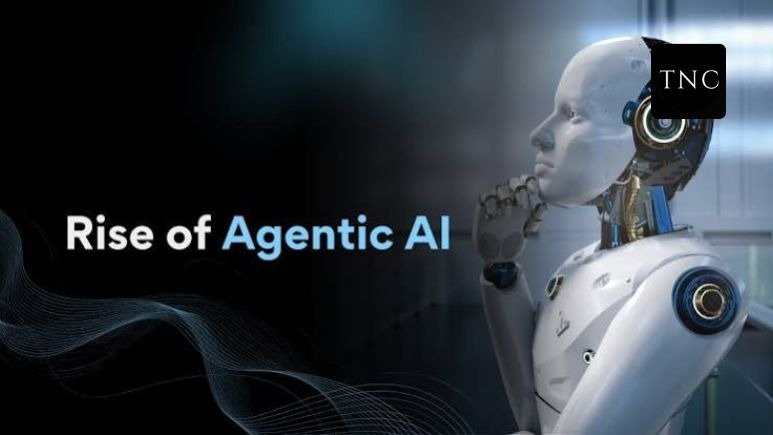

Artificial Intelligence has evolved rapidly over the past few years, but 2026 is shaping up to be the year of Agentic AI. Unlike traditional AI systems that respond to commands and prompts, Agentic AI can independently plan, make decisions, and complete complex tasks with minimal human intervention.
Businesses worldwide are embracing autonomous AI agents to improve productivity, automate repetitive processes, and enhance decision-making. From customer support and software development to marketing and project management, Agentic AI is redefining how work gets done.
In this article, we’ll explore what Agentic AI is, how it works, and why it is becoming one of the most important technology trends of 2026.
What Is Agentic AI?
Agentic AI refers to artificial intelligence systems that can act as autonomous agents. Instead of simply generating responses, these systems can analyze goals, create plans, execute actions, and adapt based on results.
Traditional AI tools require users to provide detailed instructions for every task. Agentic AI takes things a step further by understanding objectives and determining the best way to achieve them.
For example, instead of asking an AI chatbot to write individual emails, a business could instruct an AI agent to manage an entire email marketing campaign. The agent could research audiences, draft emails, schedule campaigns, monitor performance, and suggest improvements all with limited human oversight.
How Autonomous AI Agents Work
Agentic AI combines several advanced technologies to function independently.
Goal-Oriented Decision Making
AI agents are designed to work toward specific objectives. Once a goal is assigned, they break it into smaller tasks and determine the most efficient path to completion.
Continuous Learning
Modern AI agents learn from interactions, outcomes, and feedback. This enables them to improve performance over time and adapt to changing conditions.
Tool Integration
Agentic AI can connect with external software platforms, databases, APIs, and business applications. This allows agents to perform real-world actions such as scheduling meetings, generating reports, updating records, or analyzing market trends.
Multi-Step Reasoning
Unlike traditional chatbots that answer one question at a time, autonomous agents can handle complex workflows involving multiple stages and decisions.
Why Agentic AI Is Gaining Popularity in 2026
Several factors have contributed to the rapid adoption of Agentic AI.
Increased Workplace Productivity
Organizations are under constant pressure to do more with fewer resources. Autonomous AI agents can work around the clock, completing tasks faster than human employees while reducing operational costs.
Improved Business Efficiency
AI agents eliminate many repetitive and time-consuming activities, allowing employees to focus on strategic and creative work.
Better Decision-Making
By analyzing large amounts of data in real time, AI agents can provide valuable insights and recommendations that help businesses make informed decisions.
Scalability
Companies can deploy multiple AI agents simultaneously across departments, enabling them to scale operations without significantly increasing workforce expenses.
Industries Being Transformed by Agentic AI
Software Development
AI coding assistants are becoming increasingly autonomous. These agents can write code, identify bugs, test applications, and suggest improvements with minimal supervision.
Customer Support
Many businesses now use AI agents to handle customer inquiries, process refunds, manage support tickets, and provide personalized assistance 24/7.
Marketing
Marketing teams are leveraging Agentic AI to create content, manage advertising campaigns, analyze customer behavior, and optimize engagement strategies.
Healthcare
Healthcare providers are using AI agents to assist with patient scheduling, administrative tasks, medical research, and data analysis.
Finance
Banks and financial institutions use autonomous AI systems for fraud detection, risk assessment, compliance monitoring, and investment analysis.
Benefits of Agentic AI
Enhanced Productivity
AI agents can perform tasks continuously without breaks, significantly increasing output and efficiency.
Cost Savings
Businesses can reduce labor costs and operational expenses by automating repetitive workflows.
Faster Execution
Autonomous agents can complete tasks in minutes that might take human teams hours or even days.
Improved Accuracy
AI systems reduce human errors in data processing, reporting, and administrative work.
Greater Innovation
By handling routine activities, AI agents allow employees to focus on innovation, creativity, and strategic initiatives.
Challenges and Concerns
While Agentic AI offers significant advantages, it also raises important concerns.
Data Privacy
AI agents often require access to sensitive information. Organizations must implement strong security measures to protect user data.
Ethical Considerations
Businesses need clear guidelines regarding how AI agents make decisions and interact with customers.
Workforce Impact
As automation increases, some job roles may evolve or become less dependent on human involvement. Companies must invest in reskilling and upskilling employees.
Reliability and Oversight
Although AI agents are becoming more capable, human supervision remains essential to ensure accuracy and accountability.
The Future of Work with Agentic AI
The workplace of the future is likely to involve close collaboration between humans and AI agents. Rather than replacing workers entirely, Agentic AI will serve as a powerful digital assistant capable of handling routine and complex tasks alike.
Employees will increasingly focus on leadership, creativity, relationship-building, and strategic thinking while AI agents manage operational processes behind the scenes.
As technology continues to evolve, businesses that successfully integrate Agentic AI into their workflows will gain a significant competitive advantage.
Conclusion
Agentic AI is no longer a futuristic concept, it is becoming a reality in 2026. Autonomous AI agents are transforming industries by improving productivity, reducing costs, and streamlining operations. From software development and healthcare to marketing and finance, organizations are discovering new ways to leverage AI-driven automation.
While challenges such as privacy, ethics, and workforce adaptation remain, the potential benefits of Agentic AI are too significant to ignore. As businesses continue adopting these intelligent systems, Agentic AI is poised to become one of the defining technologies of the modern workplace.
The rise of autonomous AI agents marks the beginning of a new era where humans and machines work together to achieve greater efficiency, innovation, and success.













Leave a comment