

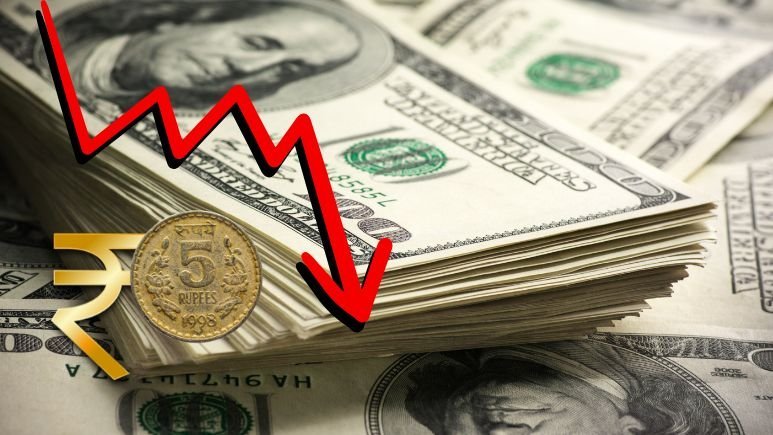

The Indian rupee crashed to an all-time low of 89.71 against the US dollar Friday, marking its steepest single-day decline in six months as the Reserve Bank of India appeared to scale back its aggressive currency defence.
The rupee plummeted 103 paise from Thursday’s close of 88.68, breaching the psychologically important 89-per-dollar level that traders had watched nervously for weeks.
Currency dealers said the central bank, which had vigorously defended the 88.80 level in recent sessions, seemed to step back and allow market forces greater play. The rupee later pared some losses to close at 89.49, but still posted its worst single-day drop since May 8.
The crash came amid mounting uncertainty over a promised US-India trade deal and continued outflows of foreign investment from Indian stocks.
Breaking the defended line
For months, the RBI had successfully prevented the rupee from sliding past 88.80 through dollar sales from its foreign exchange reserves. That defence crumbled Friday.
“Rupee dropped sharply to a new all-time low of 89.71, falling by 103 paise as the absence of any clear communication or progress on the India-US trade deal triggered strong selling pressure,” said Jateen Trivedi, currency analyst at LKP Securities.
Traders reported that the currency’s slide accelerated dramatically once it breached 88.80. Stop-loss orders triggered automatically as the level gave way, creating a cascade of selling.
The RBI appeared to intervene only near 89.50, a significantly weaker level than its previous defense point. This suggests the central bank may have decided to conserve its foreign exchange reserves rather than fight what many see as inevitable dollar strength.
“At 88.80, participants became jittery, and some players pressed the panic button resulting in a short squeeze,” said Anil Kumar Bhansali, head of treasury at Finrex Treasury Advisors.
The perfect storm of pressures
Multiple factors combined to sink the rupee to record lows.
Foreign institutional investors have withdrawn $16.5 billion from Indian equities since late August, when the United States imposed steep tariffs on Indian exports. This makes India one of the worst-hit emerging markets for portfolio outflows in 2025.
The US dollar index climbed above 100 after stronger-than-expected jobs data reduced expectations for Federal Reserve rate cuts. Nonfarm payrolls grew by 119,000 in September, significantly exceeding forecasts of 50,000.
India’s merchandise trade deficit hit a record high last month, with exports to the United States down 9% year-on-year. The tariffs implemented in late August continue weighing on trade flows.
US Treasury Department sanctions added fresh pressure Thursday. The department imposed restrictions on Indian firms dealing with Iran, creating additional compliance headaches for businesses.
Perhaps most significantly, hopes for a quick US-India trade deal that could ease tariff pressures have faded. Despite assurances from both sides, no concrete progress has emerged.
“A lot now depends on the trade deal. A favorable one can bring USD/INR down materially,” said Dhiraj Nim, currency strategist at ANZ.
The H-1B visa factor
President Trump’s decision to impose a $100,000 fee on H-1B visa applications has created additional uncertainty. While the rule applies to all countries, India holds about 70% market share in the H-1B program.
Many companies have indicated they’re unwilling or unable to pay such steep fees, potentially reducing an important source of dollar inflows to India through remittances and technology services.
The H-1B visa change compounds broader trade tensions between Washington and New Delhi, adding to market nervousness about the bilateral relationship.
RBI’s changing strategy
The central bank’s apparent pullback from aggressive intervention marks a potential shift in strategy.
RBI Governor Sanjay Malhotra has repeatedly stated the bank doesn’t target any specific exchange rate. He insists rupee movements primarily reflect market dynamics involving dollar demand, trade flows, and portfolio activity.
Yet currency dealers had grown accustomed to RBI intervention at key levels. The bank’s willingness to let the rupee slide past 88.80 suggests it may be choosing to preserve its roughly $690 billion in foreign exchange reserves for potential future needs.
“The RBI seems to be relenting to a market that has been short INR for quite some time,” Nim said.
This calculated retreat allows the rupee to find a more natural market level while keeping reserves available for genuine crisis intervention. However, it also risks accelerating currency weakness if traders interpret the move as abandonment rather than tactical repositioning.
Bond market volatility
Government bond yields have fluctuated sharply alongside the rupee’s decline. The benchmark 10-year bond yield has moved between 6.56% and 6.60% as investors reassess monetary policy expectations.
The RBI purchased approximately 148 billion rupees of government securities in mid-November. Analysts view these operations as tactical liquidity management rather than signaling any shift toward aggressive rate cuts.
Some economists still expect a cautious 25-basis-point rate cut at the December policy review, but only if currency stress eases and inflation remains contained. The rupee’s crash complicates that calculation by potentially importing inflation through higher import costs.
A weaker rupee makes foreign debt servicing more expensive and increases the rupee cost of oil and other imports. India imports about 85% of its crude oil requirements, making it particularly vulnerable to currency depreciation.
Winners and losers
Not everyone suffers from rupee weakness. Indian IT companies and pharmaceutical exporters actually benefit from a weaker currency, as their dollar revenues translate into more rupees.
Infosys, TCS, Wipro, and other technology giants typically see profit margins expand when the rupee weakens. The same applies to drug manufacturers that export to developed markets.
However, importers face immediate pain. Higher costs for crude oil, electronics, machinery, and other imported goods squeeze margins and potentially drive up consumer prices.
Airlines, which buy jet fuel priced in dollars, face particular pressure. IndiGo, SpiceJet, and other carriers could see operating costs rise significantly if the rupee remains weak.
Students studying abroad and their families also feel the pinch, as tuition and living expenses suddenly become more expensive in rupee terms.
Regional comparison
The rupee’s 4.5% decline in 2025 makes it one of Asia’s worst-performing major currencies this year. It has underperformed the Indonesian rupiah, Thai baht, Malaysian ringgit, and Philippine peso.
Other emerging market currencies have also weakened, but India’s exposure to US trade tensions and portfolio outflows has amplified its currency pain.
China’s yuan, despite its own trade challenges, has depreciated less severely than the rupee. The yuan benefits from China’s massive trade surplus and tight capital controls.
What comes next
Most analysts expect the rupee to trade between 89.20 and 90.50 in coming weeks unless significant developments change market dynamics.
“Near-term weakness can extend further, with the rupee likely to trade in the 89.20-90.00 range,” Trivedi predicted.
Several factors could trigger a reversal. A breakthrough in US-India trade negotiations would immediately ease pressure. Reduced gold imports after the festival season could help narrow the current account deficit. A return of foreign portfolio investment would provide dollar inflows.
Conversely, further deterioration in any of these areas could push the rupee toward 90 or beyond.
The RBI faces difficult choices at its December 6 policy meeting. Cutting rates to support growth risks further currency weakness. Holding rates steady to support the rupee could slow an economy already showing signs of deceleration.
The bigger picture
Friday’s crash highlights India’s vulnerability to external shocks despite strong underlying economic fundamentals. GDP growth remains robust, equity markets hover near record highs, and inflation has moderated.
Yet none of those positives can fully offset the combination of massive foreign outflows, trade tensions with the United States, and a surging dollar.
The rupee’s depreciation also reflects structural issues. India’s persistent current account deficit means it must continuously attract foreign capital inflows. When those reverse, as they have in recent months, the currency comes under immediate pressure.
Gold imports surged during the festival season, further widening the deficit. Indians purchased record amounts of gold jewelry and coins, requiring dollar outflows to pay foreign suppliers.
Unless India can reduce its dependence on imported energy and other goods, or dramatically increase exports, the rupee will remain vulnerable to external shocks.
Market reaction
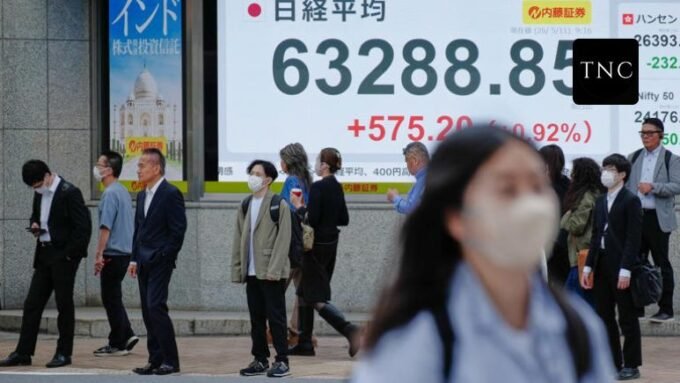
Indian stock markets fell Friday alongside the rupee. The Sensex dropped over 400 points, while the Nifty slipped below 26,100.
Bank stocks particularly struggled, as investors worried about potential stress on dollar-denominated loans and deposits. Private sector banks with significant foreign exchange exposure saw heightened selling.
However, IT and pharmaceutical stocks bucked the trend. Infosys, TCS, Dr. Reddy’s, and Sun Pharma all gained on expectations that currency translation benefits would boost earnings.
The numbers
All-time low: 89.71 per US dollar
Closing level Friday: 89.49
Single-day decline: 103 paise (1.16%)
Year-to-date decline: 4.5%
Previous defended level: 88.80
Foreign outflows in 2025: $16.5 billion
RBI reserves: Approximately $690 billion
India’s current trade deficit with US: Record high
US exports decline: 9% year-on-year
Expected trading range: 89.20-90.50
Next RBI policy meeting: December 6, 2025
The rupee’s crash past 89 marks a psychological milestone that could reshape market expectations. Whether the RBI’s apparent strategic retreat proves wise or forces a costly emergency intervention will become clear in coming weeks. For now, one thing is certain: the rupee’s era of relative stability below 88 has definitively ended. India’s currency faces its most challenging period in years, with no quick resolution in sight.












Leave a comment