

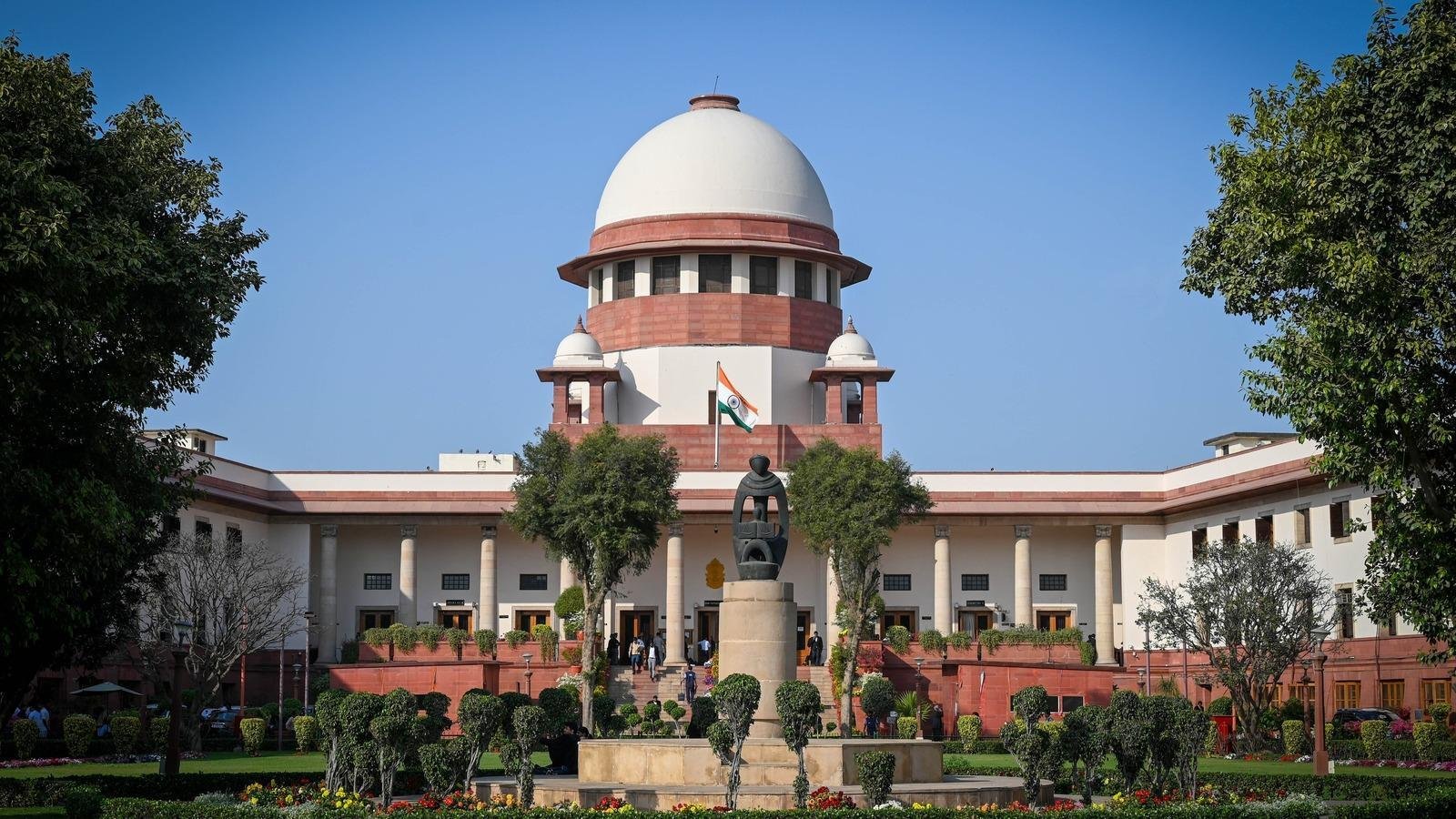

In a major judgment protecting individual freedom, the Supreme Court of India has clarified when the 24-hour deadline for producing an arrested person before a magistrate begins.
The Supreme Court 24-hour arrest rule starts from the moment a person is actually detained, not when police officially record the arrest.
The ruling, delivered on November 5, 2026, strengthens constitutional protections against unlawful detention.
It also makes clear that investigating agencies cannot delay recording an arrest to extend the time someone remains in custody without judicial supervision.
What Did the Supreme Court Rule?
A bench of Justices Ujjal Bhuyan and Atul S. Chandurkar delivered the important ruling.
The Court held that the 24-hour period begins when authorities restrict a person’s freedom and place them in custody as a suspect.
This means the time spent in detention before formal arrest must be included.
Police cannot treat the period before officially recording an arrest as extra investigation time.
The judges explained that creating an artificial difference between detention and arrest would weaken constitutional rights.
The decision provides greater clarity about how the deadline must be calculated.
What Is the 24-Hour Arrest Rule in India?
Article 22(2) of the Indian Constitution protects people who are arrested and detained.
It requires an arrested person to be presented before the nearest magistrate within 24 hours.
The time reasonably needed to travel from the place of arrest to the magistrate’s court is excluded.
Without a magistrate’s authority, a person cannot ordinarily remain in custody beyond this period.
The protection helps prevent people from being held indefinitely without judicial oversight.
The Supreme Court’s latest judgment clarifies that the clock begins when actual detention starts.
The formal arrest paperwork does not determine when constitutional protection becomes effective.
Why Is the Difference Between Arrest and Detention Important?
Imagine police take someone into custody at 10 a.m. on Monday.
The person is questioned for several hours, but the official arrest is recorded at 8 p.m.
Under the Supreme Court’s interpretation, the 24-hour period begins at 10 a.m., when the person’s freedom was restricted.
It does not begin at 8 p.m., when the arrest was entered into police records.
This distinction is important because otherwise authorities could delay recording arrests while continuing to hold suspects.
The judgment prevents that practice from extending the constitutional deadline.
What Case Led to This Judgment?
The ruling arose from a case involving allegations under the Narcotic Drugs and Psychotropic Substances Act, commonly known as the NDPS Act.
The accused challenged the legality of their detention after the investigating agency recorded their formal arrest later than the time they were initially detained.
The matter reached the Supreme Court following proceedings before the Tripura High Court.
The central question was whether the hours spent in actual custody before formal arrest should count towards the constitutional limit.
The Supreme Court ruled that they must.
The decision reinforces the principle that constitutional rights depend on the reality of detention, not simply the language used in official records.
Can Police Question Someone Before Making an Arrest?
Yes. Police may question people and conduct lawful investigations without necessarily arresting them.
However, the important issue is whether a person is genuinely free to leave.
A voluntary interview is different from being held in custody.
When authorities effectively restrict someone’s liberty as a suspect, they cannot avoid constitutional safeguards merely by describing the situation as questioning or an inquiry.
The circumstances of each case remain important.
The judgment does not mean that every conversation with police automatically counts as detention.
What Happens if Someone Is Detained Beyond 24 Hours?
The Supreme Court stated that a person detained beyond the permissible 24-hour period without being produced before a magistrate must be released from that unlawful custody.
This is a significant protection against prolonged detention without judicial approval.
The Court also emphasised that detention must remain reasonable, even when it lasts less than 24 hours.
Authorities cannot assume that every detention is justified simply because it falls within the maximum period.
The ruling requires greater attention to both the duration and legality of custody.
What Are the New Responsibilities of Magistrates?
The judgment places important responsibilities on judicial magistrates.
When a detained person is brought before the court, the magistrate must examine the actual date and time of detention.
The magistrate should not rely only on the formal arrest time entered by investigating officers.
Judges must independently determine whether the constitutional deadline has been followed.
They must also consider whether the length of detention was reasonable.
The Supreme Court indicated that a magistrate may refuse a request for further custody if the earlier detention was excessive.
This strengthens judicial oversight of police investigations.
Why Did the Supreme Court Reject Earlier Interpretations?
The Supreme Court disagreed with earlier rulings from the Orissa, Madras and Kerala High Courts that had allowed time spent in detention before formal arrest to be excluded.
The judges found that such an approach could weaken Article 22(2).
The Constitution permits the exclusion of necessary travel time to the magistrate’s court.
It does not create a separate period for investigation before the 24-hour clock begins.
The latest ruling establishes a clearer approach for calculating the deadline.
How Does This Judgment Protect Citizens?
The decision is important for ordinary citizens because it limits the possibility of undocumented or prolonged custody.
It encourages authorities to maintain accurate detention records.
It also helps ensure that people taken into custody receive timely judicial oversight.
The judgment may be especially important in cases involving lengthy questioning, searches or investigations.
By focusing on when liberty is actually restricted, the Supreme Court has reinforced the practical meaning of constitutional protection.
Conclusion
The Supreme Court 24-hour arrest rule judgment marks an important development in India’s criminal justice system.
The Court has clarified that the constitutional deadline begins with actual detention, not the formal recording of an arrest.
Only necessary travel time to the magistrate’s court can be excluded.
The ruling strengthens accountability, protects individual freedom and reinforces the responsibility of magistrates to examine detention carefully.
Most importantly, it sends a clear message: constitutional safeguards cannot be delayed through paperwork.
Also Read | Trump’s Political Empire Shaken! Democrats Seize US Congress in Stunning Midterm Victory!













Leave a comment