

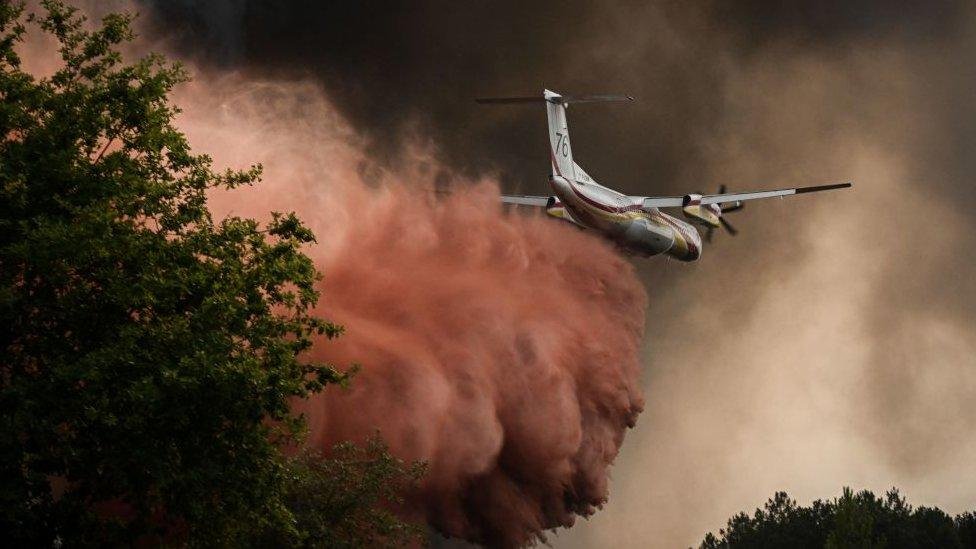

Record-Breaking Blaze Engulfs High Fens Nature Reserve
Belgium is currently battling its largest wildfire on record, a massive blaze that has scorched vast areas of the High Fens nature reserve and is threatening to spread toward the German border.
The fire, which erupted on Friday, August 14, 2026, in the country’s eastern Liège province, has grown rapidly over the weekend, burning more than 3,000 hectares (approximately 7,400 acres) of protected land.
This unprecedented wildfire has forced the evacuation of hundreds of residents and prompted an international emergency response involving firefighters from Belgium, Germany, and Luxembourg.
Rapid Expansion and Evacuation Orders
The wildfire has demonstrated alarming growth, more than doubling in size within a 24-hour period as strong winds and dry conditions fueled its spread. By Saturday evening, the blaze had consumed 2,700 hectares, and by Sunday, it had expanded to approximately 3,000 hectares, making it the largest wildfire in Belgium’s recorded history.
The fire’s rapid advancement, reported at speeds of up to 10 kilometers per hour in some areas, has overwhelmed local firefighting resources and necessitated the deployment of additional reinforcements.
In response to the escalating threat, authorities ordered the evacuation of around 600 residents from nearby municipalities, including Waimes and Bütgenbach in Liège province.
The village of Sourbrodt, home to approximately 500 residents, was also placed under threat of evacuation due to heavy smoke and the risk of flames reaching inhabited areas. On the German side of the border, the town of Monschau advised residents in three districts to leave temporarily, citing concerns about smoke inhalation even though officials did not expect the flames to cross into Germany.
International Firefighting Efforts Mobilized
A massive firefighting operation has been launched to contain the blaze, with more than 250 firefighters and emergency personnel deployed to the scene.
Reinforcements have been called in from across Belgium, as well as from neighboring Germany and Luxembourg, under the European Union’s Civil Protection Mechanism. Water-bombing aircraft and helicopters have been mobilized to assist ground crews, while farmers with tractors have joined the effort to create firebreaks and support containment operations
Interior Minister Bernard Quintin reported on Sunday that two of the fire fronts, those heading toward the localities of Jalhay and the German town of Monschau were now “under control.”
Firefighters managed to prevent the fire from spreading westward and toward Monschau, marking a significant achievement in the containment effort. However, authorities cautioned that conditions remained “challenging,” with the fire’s behavior subject to change based on weather patterns and wind direction.
Proximity to German Border Raises Concerns
The wildfire’s eastward trajectory has brought it dangerously close to the German border, with the fire front reported to be within 1.5 to 3 kilometers (approximately 1 to 1.9 miles) of the boundary.
Area firefighting chief Luc Burette warned that “if we cannot contain the fire,” there was a risk it could spill over into German territory.
The German town of Monschau, located just a stone’s throw to the east of the High Fens, advised residents living closest to the fire to evacuate as a precautionary measure.
Despite the proximity, German officials expressed cautious optimism that the flames would not cross the border.
Authorities in Malmedy, Belgium, echoed this sentiment, stating that while the fire had come within about 3 kilometers of the German border, they did not expect it to cross into Germany.
Nevertheless, the thick plume of yellowish smoke blanketing the border region has prompted health advisories and temporary evacuations on both sides.
Environmental and Ecological Impact
The High Fens (Hautes Fagnes in French, Hoge Venen in Dutch) is Belgium’s largest nature reserve, renowned for its unique ecosystem of peat bogs, heathlands, and forests.
The area serves as a critical habitat for numerous plant and animal species, many of which are rare or endangered.
The wildfire’s devastation of more than 3,000 hectares of this protected landscape represents a significant ecological loss, with potential long-term consequences for biodiversity and carbon storage.
Environmental experts have expressed concern about the fire’s impact on the reserve’s delicate peat bog ecosystems, which play a vital role in regulating water flow and sequestering carbon.
The destruction of vegetation and soil structure could lead to increased erosion, altered hydrology, and reduced habitat quality for native species.
Recovery of the affected areas is expected to take years, if not decades, depending on the severity of the damage and the effectiveness of restoration efforts.
Climate Context and Extreme Weather Conditions
The Belgium wildfire occurs amid a broader pattern of extreme weather and record-breaking heatwaves across Europe during the summer of 2026.
High temperatures, prolonged drought, and strong winds have created ideal conditions for wildfires to ignite and spread rapidly, not only in Belgium but also in neighboring countries including Germany, Greece, and other parts of the continent.
Read Also | Pakistan’s Interior Minister Mohsin Naqvi travelled to Tehran for talks with senior Iranian leaders.














Leave a comment