

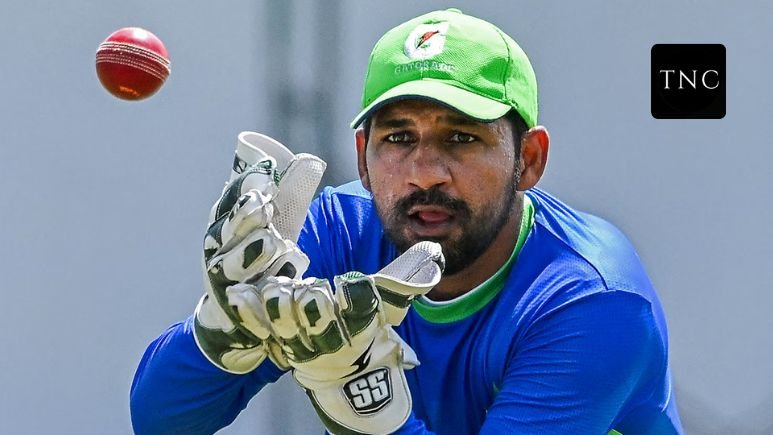

The dressing room door clicked shut, and for a moment, the chatter died. Sarfaraz Ahmed stood at the center, not in pads this time, but with a clipboard in hand. A few players, some barely capped, others veterans watched him with a mix of curiosity and caution. Outside, the humidity of Dhaka waited. Inside, Pakistan’s Test future was being quietly rearranged.
Pakistan cricket has rarely been short on drama, but the appointment of Sarfaraz Ahmed as head coach for the upcoming Bangladesh Test series marks something deeper than another administrative shuffle. It signals a shift toward internal leadership turning to a former captain who understands both the chaos and the culture of the system. With a new World Test Championship cycle underway, this decision isn’t just about one series; it’s about redefining direction after months of instability in the coaching setup.
Sarfaraz’s appointment comes at a moment when Pakistan’s red-ball structure has been anything but stable. Since the resignation of former coach Jason Gillespie in late 2024, the role has rotated through interim hands, leaving the team without a consistent voice.
Into that vacuum steps a figure who has lived every layer of Pakistan cricket. Sarfaraz isn’t an outsider parachuted in with theory; he is a product of the system, one who led Pakistan to the 2017 Champions Trophy and recently guided youth teams to success. His coaching résumé may still be developing, but his credibility inside the dressing room is already established.
The decision also reflects a broader pattern: Pakistan turning inward. Former players like Asad Shafiq and Umar Gul have been added to the coaching setup, reinforcing a domestic core that prioritizes familiarity over experimentation.
But this move carries risk. Pakistan’s frequent changes in leadership, what critics call a “musical chairs” approach, have often disrupted long-term planning. Sarfaraz now inherits not just a team, but a system that demands immediate results while rarely offering stability.
On the field, the stakes are equally high. The Bangladesh series, beginning in May 2026, is part of the World Test Championship cycle and includes a refreshed squad with uncapped players alongside established names like Babar Azam and Shaheen Afridi. It’s a blend of promise and pressure exactly the kind of environment where leadership is tested.
Sarfaraz’s real challenge won’t be tactics. It will be coherence. Can he unify a dressing room that has seen constant change? Can he translate his captaincy instincts into coaching clarity? And perhaps most importantly, can he survive the same system that once removed him as captain?
Pakistan hasn’t just appointed a coach; it has made a bet on familiarity over reinvention. If Sarfaraz Ahmed succeeds, it could stabilize a team long defined by turbulence. If he doesn’t, it will be another chapter in a cycle Pakistan cricket knows all too well.
Also Read / Mumbai Indians’ Struggles Reignite Rohit Sharma Captaincy Debate.










Leave a comment