

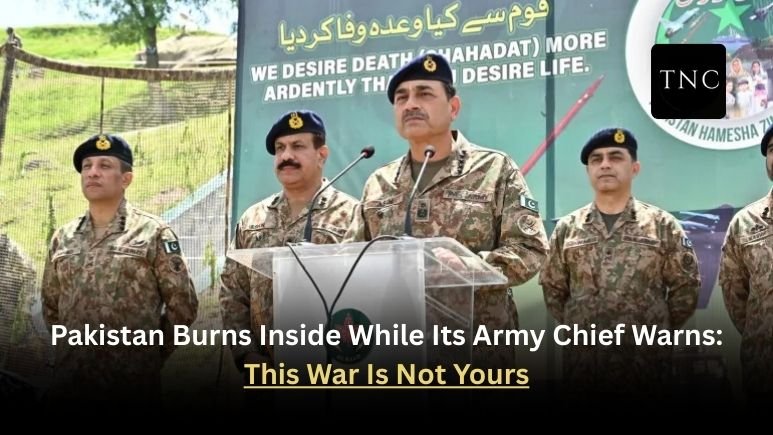

The crowd in Rawalpindi had barely settled when the army chief’s voice cut through the humid air. A shopkeeper, still holding a receipt book, paused mid-calculation. A university student stopped scrolling her phone. The message was blunt: Pakistan would not tolerate instability spilling in from “other countries.”
In a nation already rattled by protests, airstrikes, and whispers of a widening regional war, the statement landed less like reassurance and more like a warning directed as much inward as outward.
Pakistan’s army chief, General Asim Munir, is sending a calculated signal at a volatile moment. As the Iran-centered conflict escalates and regional tensions ripple outward, his message to Pakistanis reflects a deeper anxiety: the country is being squeezed by forces it cannot fully control external wars, internal unrest, and fragile alliances.
This isn’t just rhetoric. It’s a window into how Pakistan’s military leadership is trying to manage a dangerous balancing act keeping the country stable while avoiding entanglement in a broader Middle East war.
Munir’s statement comes at a time when Pakistan is caught in overlapping crises.
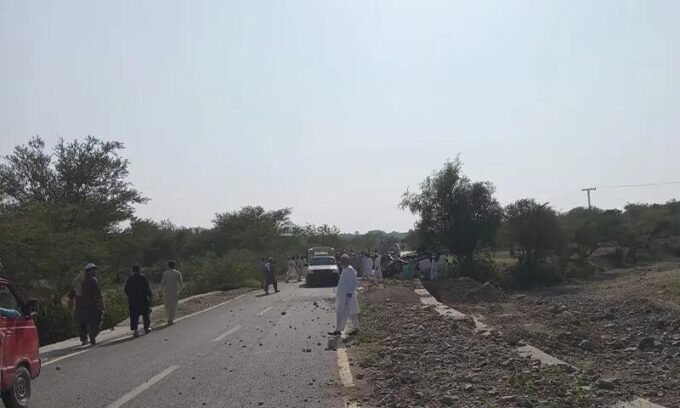
First, there is the Iran conflict spillover. Protests across Pakistan erupted after developments in the war, with demonstrators clashing with authorities and even targeting foreign missions, leaving dozens dead and many injured.
This is not distant geopolitics, it’s already reshaping Pakistan’s streets.
Second, Pakistan is trying to avoid choosing sides. On one hand, it has long-standing ties with Saudi Arabia. On the other, it shares a sensitive border and history with Iran. That tension is becoming harder to manage as the war intensifies, with Islamabad issuing warnings while carefully sidestepping direct involvement.
Third, there’s the question of strategic distraction. Recent Pakistani airstrikes in Afghanistan, controversial and deadly, are widely seen by analysts as an attempt to redirect domestic attention and avoid confronting the Iran dilemma head-on.
Munir’s message, then, serves multiple purposes:
- It projects control at home, signaling that unrest linked to foreign conflicts will not be tolerated.
- It reassures allies that Pakistan remains vigilant about regional security.
- It buys time, allowing Islamabad to delay taking a definitive stance in a conflict where any choice carries risks.
But there is a deeper pattern. Pakistan’s military leadership has repeatedly leaned on strong rhetoric during periods of instability whether toward India, Afghanistan, or internal dissent to consolidate authority and shape public perception.
The danger is that words can only stretch so far. When protests intensify, borders heat up, and alliances strain, messaging alone cannot resolve the contradictions
Munir’s warning isn’t just about foreign interference. It’s about a country under pressure from every direction, trying to hold its center.
Pakistan isn’t choosing a side yet. But the longer the war burns around it, the harder that neutrality will be to maintain and the louder these warnings are likely to become.
Also Read / Cracks at the Top: Pakistan’s Army Chief Turns on His Own Generals.










Leave a comment