

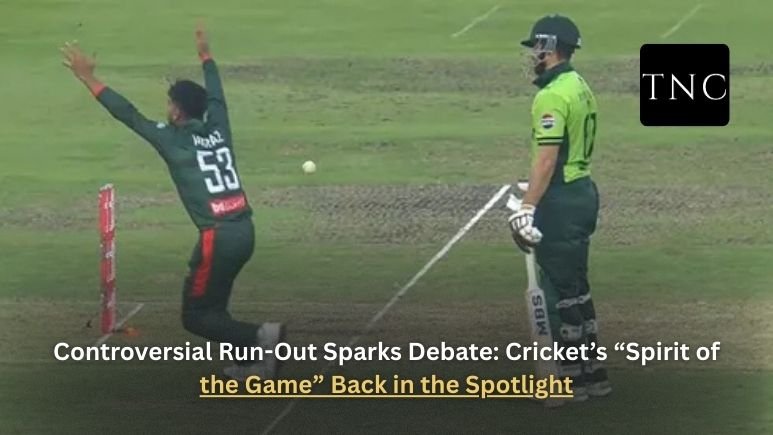

The Sher-e-Bangla National Cricket Stadium in Dhaka was buzzing late in the afternoon. Pakistan were cruising. Salman Ali Agha and Mohammad Rizwan had built a solid partnership, the scoreboard ticking past 200 as the crowd settled into the rhythm of a long ODI.
Then, in a flash, the calm shattered.
A defensive shot trickled toward the pitch. Bangladesh captain Mehidy Hasan Miraz collected the ball. Agha, momentarily outside his crease and appearing to return the ball, hesitated. Miraz hurled the ball at the stumps. The bails flew.
For a second, nobody moved. Then came the arguments gestures, raised voices, and confusion. Pakistan players surrounded the umpire. The Bangladesh side stood firm. On the giant screen, the replay confirmed it: technically, it was out. But the debate had just begun.
The dismissal of Salman Ali Agha during the Pakistan-Bangladesh ODI wasn’t just another wicket. It reignited one of cricket’s oldest arguments: where should the line be drawn between playing by the rules and honoring the “spirit of the game”?
The incident drew reactions from across the cricketing world. Former Indian cricketer Mohammad Kaif publicly backed Agha, criticizing Miraz’s decision and suggesting such actions undermine sportsmanship in cricket.
Yet others defended the Bangladesh captain, arguing that international cricket is about competing within the laws of the game not unwritten moral codes.
At its core, this controversy highlights a tension cricket has wrestled with for more than a century.
First, the laws of cricket are clear.
If a batter is out of his crease and the fielding side breaks the stumps, it is a legal dismissal. By that definition, Miraz did nothing wrong. The umpires confirmed it, and the rulebook backed him.
But cricket has always carried an unwritten code.
Players are often expected to show restraint when a dismissal appears accidental or when a batter is not actively attempting a run. That tradition sometimes called the “spirit of cricket” has shaped how the game is perceived.
The divide was visible almost immediately.
- Critics argued Miraz should have warned Agha or returned the ball instead of attempting the run-out.
- Supporters said elite sport has no room for sentiment; if the batter leaves his crease, he risks dismissal.
Moments like this are not new. Cricket has seen similar debates from controversial “Mankads” to disputed catches. Each time, the same question returns: Should players prioritize fairness as defined by the rules, or fairness as defined by tradition?
In this case, the fallout also exposed how modern cricket operates. With slow-motion replays, social media reactions, and commentary from former players across borders, a split-second decision can quickly become a global controversy.
Even the players involved felt the tension. Reports indicate heated exchanges followed the dismissal, with both sides arguing their interpretation of sportsmanship.
The run-out of Salman Ali Agha may fade from the scorecard, but the debate it sparked will linger.
Cricket’s laws allowed the dismissal. But cricket’s culture left many uneasy.
Also Read / Signing, Suspension, and a Storm Online: How Abrar Ahmed’s Hundred Deal Sparked a Cricket Controversy.













Leave a comment