


Thirty minutes on the phone. Half a trillion dollars in commitments. India’s Russian oil imports, effectively dead overnight. Tariffs on Indian goods dropped from 25% to 18%, placing India in a better trade position than China and Canada simultaneously. And a cryptic “STAY TUNED” post from the U.S. Ambassador that set social media ablaze before either leader said a word publicly. This is what a trade deal looks like when two leaders who genuinely like each other decide to stop negotiating and start agreeing. The question isn’t whether the numbers work on paper. The question is what India actually gave up to get here, and whether $500 billion in “Buy American” commitments is a partnership or a new kind of dependency.
NEW DELHI / WASHINGTON — The world’s two largest democracies just fundamentally reshaped their economic relationship in a single phone call. On Monday, February 2, 2026, President Donald Trump and Prime Minister Narendra Modi spoke for 30 minutes and emerged with what both sides are calling a historic trade agreement that slashes reciprocal tariffs on Indian goods from 25% to 18% while committing India to $500 billion in American purchases over the next decade.
U.S. Ambassador to India Sergio Gor, who only assumed office on January 14, kicked off the evening’s drama with a cryptic “STAY TUNED” post on X at 9:30 PM IST, signalling that something significant was about to drop. Minutes later, the deal was public, and markets were already reacting.
The numbers that matter
The headline figures are genuinely significant, and understanding them requires context about where things stood before this call happened.
During the 2025 “Tariff Blitz,” Trump imposed 25% reciprocal tariffs on Indian goods, plus an additional 50% “punitive” duty specifically targeting India’s continued purchase of Russian crude oil. Those combined rates were strangling Indian exports to the U.S. and creating real economic pain for manufacturers across the country.
Now look at where things stand:
| What Changed | Before the Call | After the Call |
| U.S. tariff on Indian goods | 25% reciprocal + 50% punitive | 18% reciprocal, punitive duties removed |
| India’s position vs. rivals | Behind China and Canada | Better than China (34%) and Canada (35%) |
| India’s tariffs on U.S. goods | Significant barriers remain | Moving toward zero |
| Indian energy imports | Mix of Russian, U.S., Middle Eastern | Russian crude effectively eliminated |
| U.S. purchase commitment | No formal framework | $500 billion over 10 years |
Dropping from 25% to 18% might sound modest in isolation. In the context of global trade volumes between two of the world’s largest economies, it’s worth billions of dollars annually to Indian exporters. And placing India in a more favourable position than both China and Canada gives Indian manufacturers a genuine competitive advantage in the American market.
The $500 billion question: partnership or dependency?
Here’s where the deal gets complicated. India committed to purchasing over $500 billion worth of American energy (including coal), technology, and agricultural products over the next decade. That’s a staggering number that requires some unpacking.
$500 billion over 10 years means $50 billion annually in “Buy American” commitments. India’s total annual imports from the U.S. currently run roughly $80-90 billion. This deal essentially requires India to dramatically increase its dependence on American goods across multiple critical sectors.
Energy: India switching from Russian crude to American and potentially Venezuelan oil sources. This removes the primary justification for the punitive tariffs but also hands Washington significant leverage over India’s energy security. If U.S.-India relations sour, energy supply becomes a pressure point.
Technology: Committing to American tech purchases positions India within the U.S.-led technology ecosystem rather than diversifying toward alternatives. For a country trying to build indigenous technological capability, heavy dependence on American tech purchases could actually slow domestic development.
Agriculture: Large agricultural purchases from the U.S. could undermine Indian farmers who are already struggling with competition from subsidized American agriculture. The political sensitivity of agricultural policy in India makes this particularly tricky domestically.
The opposition Congress party has labelled the deal a “capitulation” for exactly these reasons. They see India surrendering strategic autonomy in energy, technology, and agriculture in exchange for lower tariffs. The criticism isn’t entirely unfair.
The Russian oil pivot: geopolitical earthquake
Trump himself highlighted the energy switch as the deal’s most significant achievement, posting on Truth Social: “He agreed to stop buying Russian Oil, and to buy much more from the United States and, potentially, Venezuela. This will help END THE WAR in Ukraine!”
India had been buying Russian crude at heavily discounted prices since the Ukraine war began, much to Washington’s frustration. Russian oil was cheap, plentiful, and India needed it during an energy crisis. Stopping those purchases hurts Russia’s revenue significantly, particularly as sanctions squeeze other Russian export markets.
But India was buying Russian oil for a reason: it was cheap. American crude costs more. Venezuelan oil comes with its own geopolitical complications given the current situation in Caracas. India will likely pay more per barrel going forward, with the cost difference effectively subsidizing U.S. sanctions enforcement against Russia.
Whether this helps “END THE WAR in Ukraine” as Trump claims is debatable. Russia has found alternative buyers for its energy exports, particularly China. Removing India from the Russian energy market hurts Moscow but probably doesn’t cripple it. The connection between Indian oil purchases and Ukraine peace talks is more about diplomatic optics than direct causal impact.
The “Pax Silica” invitation
Ambassador Gor confirmed India will join the U.S.-led “Silicon supply chain,” a framework for ensuring critical semiconductor and technology minerals flow through allied networks rather than Chinese-dominated supply chains.
This is strategically significant beyond the trade numbers. It positions India as a key partner in the broader U.S. strategy to reduce dependence on China for critical technology inputs. For India, it means access to American semiconductor technology and manufacturing partnerships. For the U.S., it means another major economy committed to the American-led technology ecosystem.
Gor, who leveraged what he described as the “genuine personal friendship” between Trump and Modi to coordinate the deal, played a central role in making this happen despite only assuming his ambassadorial role weeks earlier. His early “STAY TUNED” post suggested confidence that the deal was essentially done before the phone call even happened, with the conversation being more ceremonial confirmation than actual negotiation.
Industry reaction: cautious celebration
Mahindra Group CEO Anish Shah hailed the agreement as a “significant step forward” for Indian manufacturing, and the optimism is understandable. Lower tariffs mean Indian exports become more competitive in the world’s largest consumer market. For manufacturers who’ve been absorbing the cost of 25% tariffs or avoiding the U.S. market entirely, 18% changes the economics meaningfully.
But the benefits aren’t evenly distributed. Export-oriented sectors like pharmaceuticals, textiles, and auto components will feel the positive impact most directly. Sectors that compete with American imports, particularly agriculture, could feel pressure as India moves toward zero tariff barriers on U.S. goods.
The broader context: India’s diplomatic juggling act
This deal arrived just days after India concluded what was described as the “mother of all deals” with the European Union. India is simultaneously positioning itself as a partner to the U.S., the EU, and presumably maintaining relationships with other major economies.
The challenge is that each of these partnerships comes with implicit and explicit demands. The U.S. wants India to buy American and cut ties with Russia. The EU wants India to align on climate commitments and democratic values. China wants continued economic engagement. Russia wants India to maintain energy purchases.
Modi has historically navigated these competing demands through strategic ambiguity, maintaining relationships with everyone while committing fully to nobody. This deal with the U.S. represents the most significant departure from that strategy, explicitly choosing American alignment over Russian energy partnerships.
Whether Modi can maintain India’s independent foreign policy posture while honoring $500 billion in “Buy American” commitments remains an open question. The deal’s success will ultimately be measured not just in tariff rates but in whether India gains genuine economic partnership or simply trades one form of dependency for another.
The deal takes effect immediately on tariff reductions, which is unusually fast for trade agreements of this magnitude. The $500 billion purchase commitment plays out over a decade, meaning its actual impact will unfold gradually and could be renegotiated, modified, or quietly scaled back depending on how the political relationship evolves.
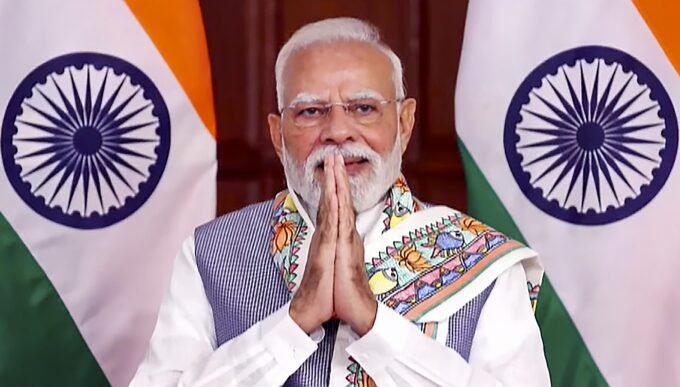
Modi thanked Trump on X, stating the deal “unlocks immense opportunities” on behalf of 1.4 billion Indians. Trump’s White House is touting it as proof that “reciprocal trade” works between “true friends.” Both leaders have political incentives to frame this as a win.
The real test comes in implementation. Can Indian manufacturers actually capitalize on the lower tariff environment? Will American agricultural exports actually flood Indian markets, hurting domestic farmers? Will the energy switch genuinely happen at the scale promised, or will India quietly maintain some Russian oil purchases when prices make it economically necessary?
A 30-minute phone call made headlines. The next 10 years of execution will determine whether this was truly historic or just the beginning of a complicated new chapter in the India-U.S. relationship.
Also Read / The ‘Mother of All Deals’ Finalized: India and EU Seal Historic Trade Pact After 19-Year Wait.












Leave a comment