

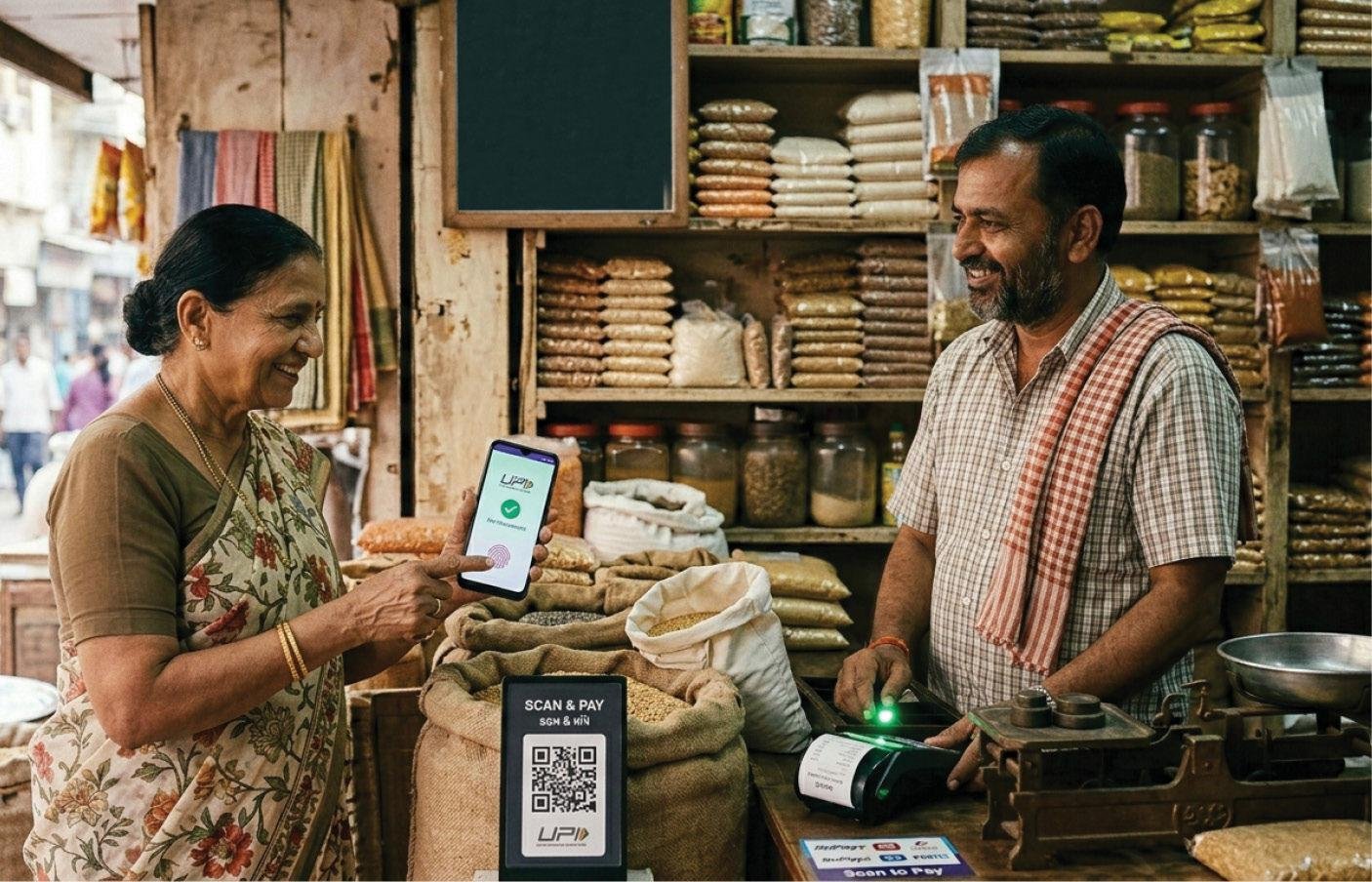

New Delhi: India’s popular Unified Payments Interface (UPI) system is entering a new phase from October 15, 2026, when a 0.4% Merchant Discount Rate (MDR) will apply to specified merchant transactions above ₹2,000. The change ends more than six years of a zero-MDR model for the affected transactions and is intended to create a more sustainable financial model for India’s rapidly expanding digital-payments ecosystem.
The most important point for ordinary users is that UPI payments are not becoming generally chargeable for consumers. Person-to-person transfers will remain free, and payments to merchants up to ₹2,000 will also remain free. The government says about 96% of person-to-merchant UPI transactions will remain unaffected by the new framework.
What Is the New 0.4% UPI Fee?
The new charge is an MDR, or Merchant Discount Rate. It applies to specified person-to-merchant payments above ₹2,000.
For example, a ₹5,000 eligible merchant transaction would attract an MDR of ₹20, while a ₹10,000 transaction would attract ₹40. For transactions above ₹75,000, the MDR will be capped at ₹300 per transaction.
Importantly, the MDR is an industry fee rather than a government tax. The money is distributed among participants in the payment ecosystem, including banks and payment-service providers, to support the operation and expansion of UPI.
Will Consumers Have to Pay?
According to the government’s framework, consumers should not be charged the 0.4% MDR directly.
The government has said UPI app providers cannot add platform fees or hidden charges to recover the MDR from users. Banks have also been advised to ensure merchants do not pass the fee on to customers.
That means a customer paying ₹10,000 through an eligible UPI merchant transaction should still see a payment of ₹10,000 rather than ₹10,040 solely because of the MDR.
However, retailer organisations have expressed concern that some businesses could face pressure to reconsider UPI acceptance or find other ways to manage the additional cost. This has already triggered debate among merchants and industry bodies.
Small Merchants Get an Exemption
The new framework includes protections for smaller businesses.
Merchants receiving up to ₹1 lakh per month through QR-code UPI payments will be exempt from MDR. UPI QR transactions by merchants in rural and semi-urban areas will also remain free under the framework.
This is significant because UPI is widely used by small shops, street vendors and neighbourhood businesses. The exemptions are designed to reduce the impact on smaller merchants while introducing charges primarily for larger-value commercial transactions.
The government has also said a dedicated fund will be created to promote UPI acceptance among small merchants, with 5% of total MDR collections contributing to the fund.
Some Sectors Have Separate Rates
Not every merchant transaction will follow the standard 0.4% rate.
Transactions involving specified services, including railways, telecom, insurance and fuel, will attract a flat MDR of ₹5, according to NPCI’s framework.
There is also a separate rate for capital-market transactions such as payments to brokers, mutual funds and securities dealers. These transactions will face an MDR of 0.02%, capped at ₹300.
This means the exact impact will depend on what a customer is paying for and which type of merchant account receives the payment.
Why Is India Introducing the Fee?
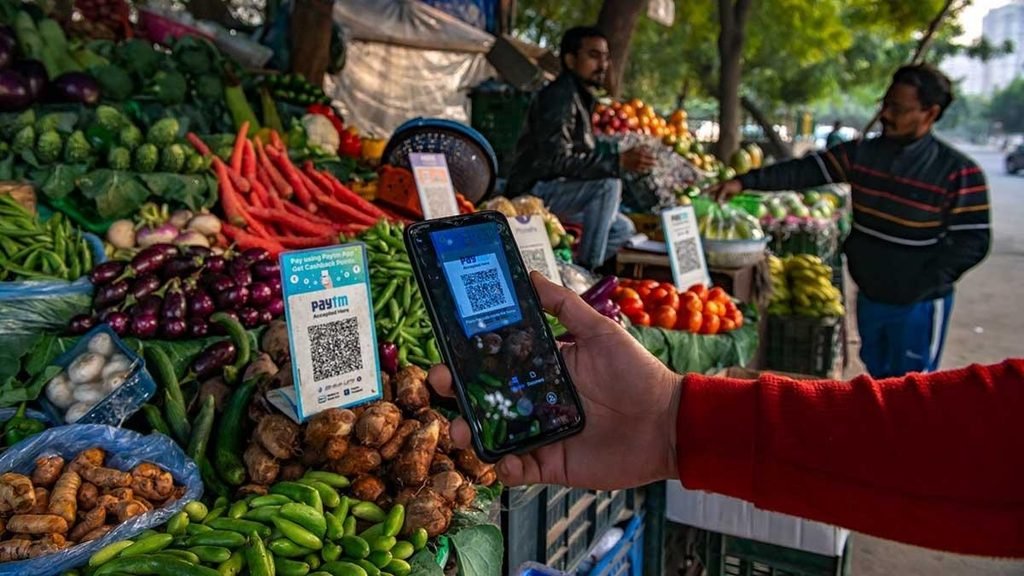
UPI has expanded at extraordinary speed. In August 2026, the network processed about 24.5 billion transactions worth ₹29,823 billion, according to government data cited by Reuters. UPI accounts for around 84% of India’s digital-payment transaction volume and a major share of global real-time payments.
Maintaining such a large system requires continuous spending on servers, cybersecurity, fraud prevention, network reliability and customer support.
NPCI and the government say the new MDR will help create a sustainable revenue model for the ecosystem and support continued investment in infrastructure and security.
What Could It Mean for Businesses?
For large merchants, the new MDR represents a direct operating cost.
A retailer processing ₹10 lakh in eligible UPI transactions could face substantial fees depending on the transactions covered by the framework. Businesses therefore have to consider whether the extra cost should be absorbed internally or whether payment preferences should change.
Retailer organisations have warned that the new fee could encourage some businesses to favour cash, particularly during India’s major October-November festival shopping season, when many purchases are above ₹2,000.
At the same time, financial institutions and payment companies could gain a new source of revenue from UPI transactions after years of operating under a largely zero-MDR structure.
Why the Rule Is Facing Opposition
Not everyone agrees with the new framework.
Retail groups have raised concerns about its timing and potential effect on business margins. A public-interest petition has also been filed in the Supreme Court challenging the UPI fee framework, according to Reuters reporting.
Critics of the policy have argued that the change could eventually affect consumers if merchants try to recover their costs indirectly. The government, however, says safeguards are in place to prevent this.
What UPI Users Should Know
For most people, there is no need to stop using UPI.
Person-to-person payments remain free, including transfers above ₹2,000. Merchant payments up to ₹2,000 also remain free, while eligible larger merchant transactions are subject to the new MDR at the business end rather than as a direct customer charge.
Consumers should nevertheless check payment receipts and merchant policies after October 15, particularly for high-value purchases.
What Happens From October 15?
The new framework marks a significant change in the economics of India’s digital-payment system, but it does not mean the end of free UPI for everyday users.
Instead, the model introduces charges for selected higher-value merchant transactions while protecting person-to-person payments and many small merchants.
The success of the policy will depend on whether it generates enough revenue to support UPI’s infrastructure without reducing merchant acceptance or creating confusion for consumers.
For now, the key message is simple: from October 15, 2026, eligible UPI merchant payments above ₹2,000 will carry a 0.4% MDR, but consumers and ordinary small-value UPI users are not supposed to pay that fee directly.
Also Read | India-US Tariff Tensions: How New Measures Could Affect Trade and Energy Security










Leave a comment