

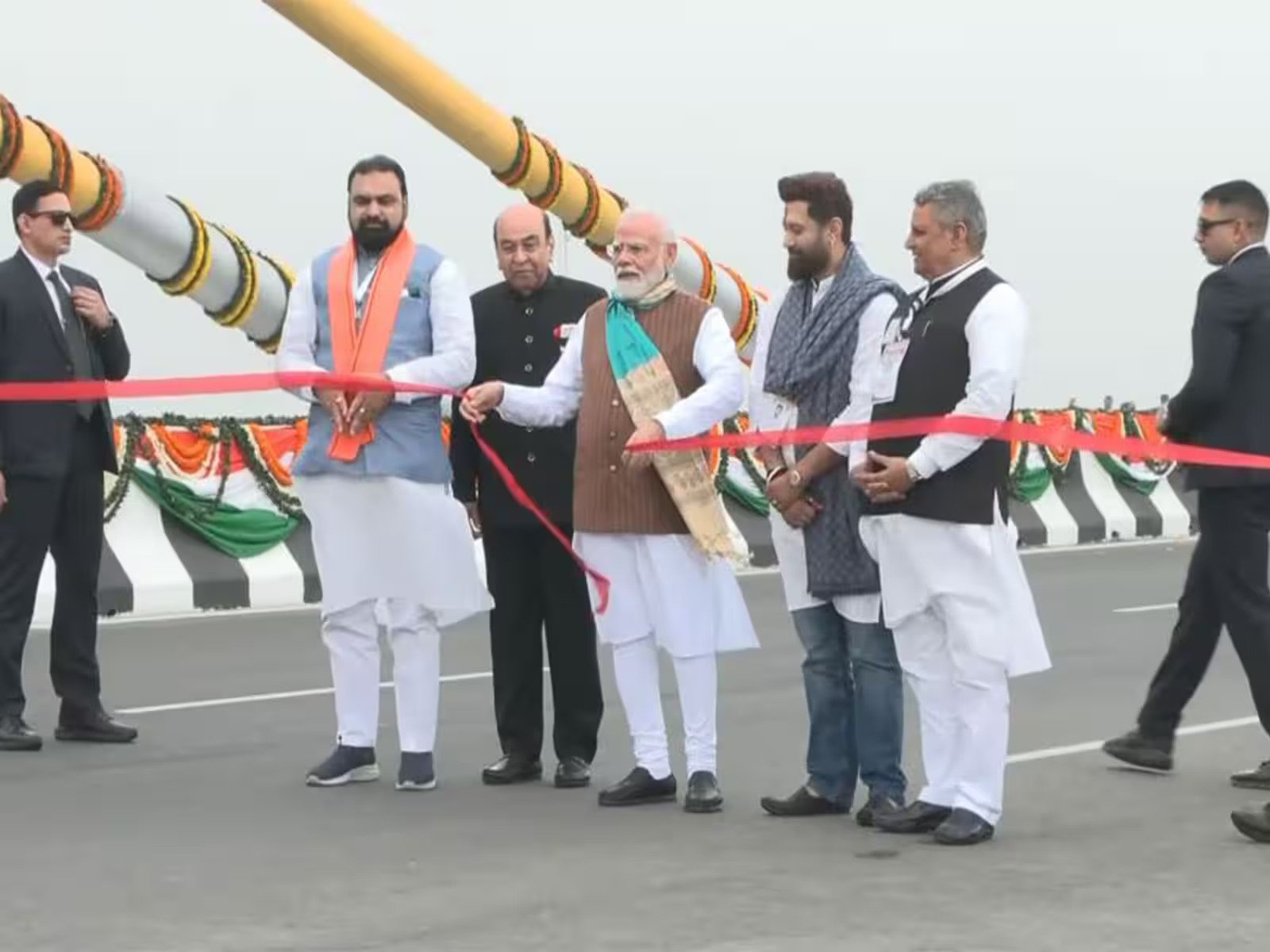

The Nitish Setu inauguration has added a major Ganga crossing to Bihar’s road network. Prime Minister Narendra Modi inaugurated the six-lane bridge in Vaishali district on November 21, 2026. Connecting Bidupur with Kachchi Dargah near Patna, the project is intended to improve movement between north and south Bihar and provide another route across the river.
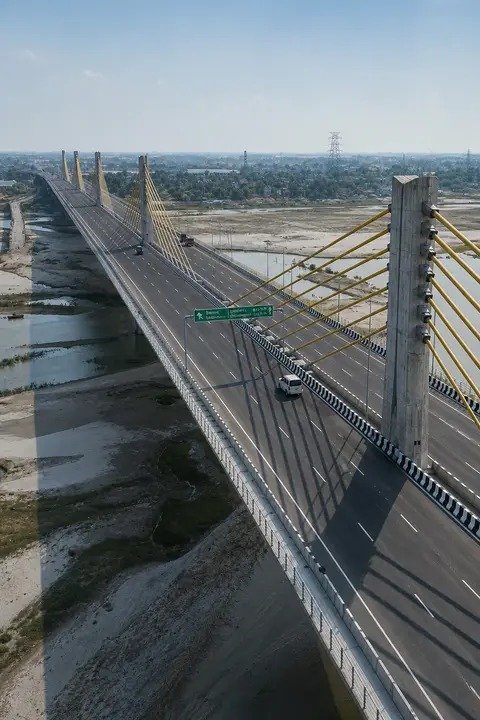
The main bridge measures approximately 9.76 kilometres, while the complete corridor extends about 19.76 kilometres, including around 10 kilometres of approach roads. The Prime Minister’s Office rounds these figures to 9.7 kilometres and 19.7 kilometres. The main bridge measurement refers to the full river crossing, with the approaches forming the rest of the road project.
Official information puts the project’s cost at around ₹4,280 crore. Its southern end connects Kachchi Dargah on NH-22 in Patna district with Bidupur on NH-322 in Vaishali. These connections matter because the bridge becomes part of a wider highway network, carrying journeys beyond the communities closest to either riverbank.
The description “India’s longest bridge” needs qualification. Project officials quoted by The New Indian Express described Nitish Setu as the country’s longest river bridge. That claim concerns its river-crossing category. The distinction helps readers understand the achievement without confusing the main structure, approach roads and other types of bridges.
For comparison, government information describes the Mumbai Trans Harbour Link, or Atal Setu, as approximately 21.8 kilometres long. That project includes a substantial sea crossing. Using the category “river bridge” therefore gives a more precise description of Nitish Setu’s reported record and the scale of its Ganga crossing.
The immediate transport objective is to ease pressure on existing crossings. The PMO said Nitish Setu would help reduce traffic on Mahatma Gandhi Setu and JP Setu. An additional crossing gives vehicles another route between the two sides of the Ganga, potentially improving how traffic spreads across the regional road network.
Raghopur Diara is among the areas expected to benefit. Its location among river channels has created difficulties for residents travelling towards Patna and other centres. Official statements identify improved access to hospitals, educational institutions and essential services as important benefits. For these communities, the significance lies in more manageable everyday journeys.
Speaking at the inauguration, Modi connected the bridge with education and healthcare access. He also spoke about moving crops, fruit, vegetables, milk and dairy products to larger markets. These examples explain the project through the needs of students, families, farmers and traders who regularly depend on transport.
The possible agricultural benefits extend beyond the journey across the river. When farm produce moves towards urban markets, the reliability of the entire route matters. A new crossing could help traders organise deliveries and farmers reach buyers. The actual gains will depend on traffic conditions and connections with roads serving nearby villages.
Industrial goods and commercial transport are also part of the project’s expected role. Officials quoted by PTI said the corridor could support trade, logistics and tourism. That remains an expectation about future activity. Its development will depend on how businesses use the route and how supporting services emerge around it.
The bridge uses an extradosed cable-stayed design. Larsen & Toubro’s project coverage identifies the construction as a greenfield, six-lane crossing over the Ganga. Its engineering category is part of what makes the project distinctive, alongside the long crossing and its connections between the Patna and Vaishali sides.
Nitish Setu takes its name from former Bihar chief minister Nitish Kumar. At the inauguration, Modi described the name as recognition of Kumar’s service. PTI reported that the bridge had been conceived and advanced towards completion during his tenure. The naming therefore links the infrastructure project with Bihar’s recent political history.
The decision also drew criticism from opposition leaders. The RJD questioned the choice and raised alternative naming proposals, while leaders from the governing alliance defended Kumar’s contribution. These exchanges became part of the coverage before inauguration. They reflect a wider contest over recognition for projects developed across several years and administrations.
After the inauguration, Modi walked on the bridge with other dignitaries. PTI reported that Bihar Chief Minister Samrat Choudhary, Governor Syed Ata Hasnain, Union Minister Chirag Paswan and Deputy Chief Minister Vijay Kumar Choudhary accompanied him during the visit to the newly inaugurated crossing.
The inauguration formed part of a larger programme in Vaishali involving projects worth around ₹34,470 crore. According to the PMO, the package covered roads, energy, urban infrastructure, water resources, education, healthcare and transport. It included completed works being inaugurated alongside projects for which foundation stones were being laid.
The programme also included the flagging off of 100 PM e-Buses, according to the government’s account of the event. Other initiatives involved power generation, transmission, irrigation and urban services. Nitish Setu’s role sits within this wider effort to connect transport infrastructure with the services and economic activities that people use across Bihar.
Also Read | Jensen Huang Is Back as Nvidia CEO After Brief Exit













Leave a comment