

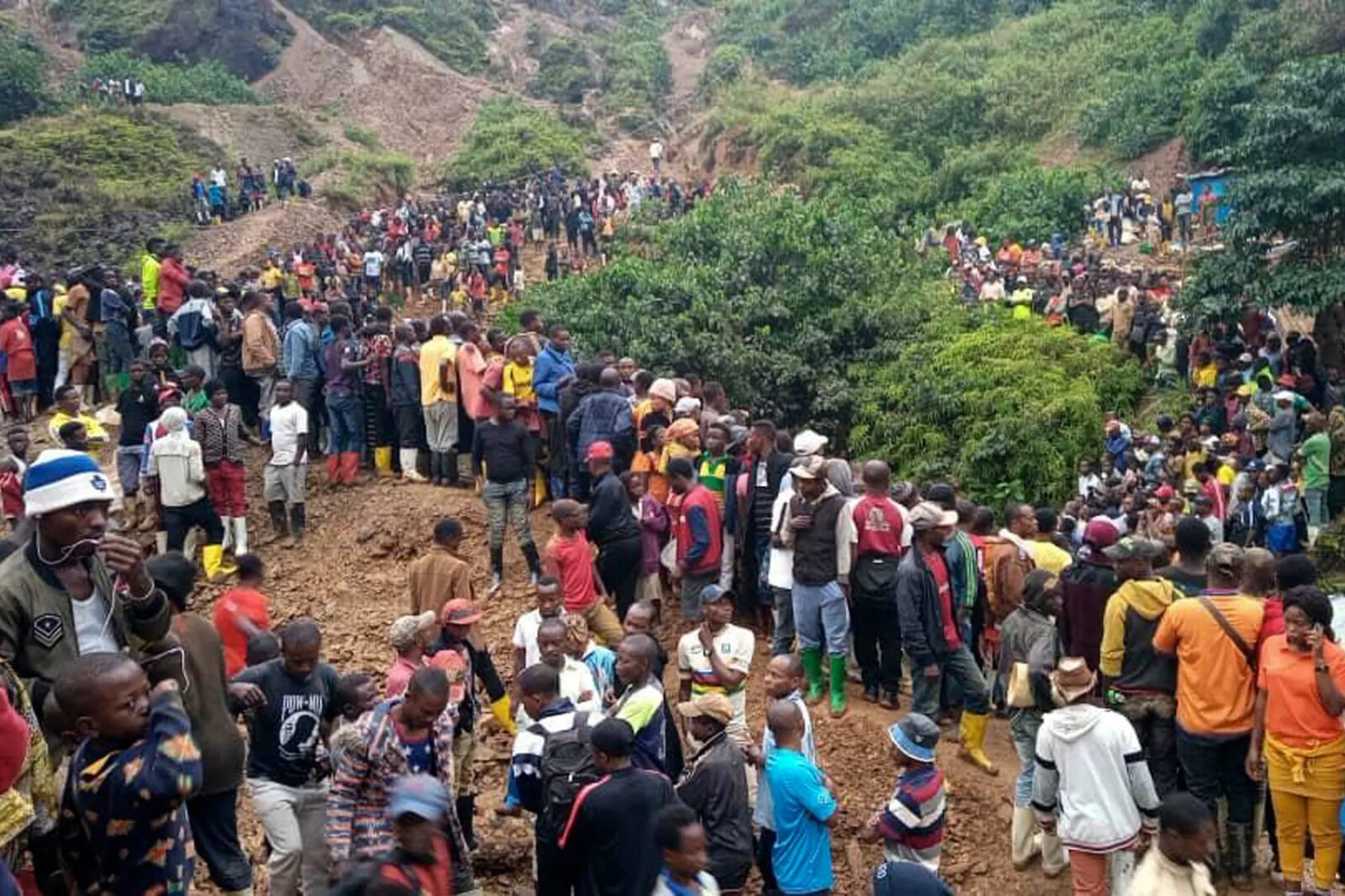

At least 30 miners were killed after an artisanal gold mine collapsed in western Central African Republic, according to officials, residents and rescue workers. The accident occurred on Tuesday, August 18, in the Abba region of Nana-Mambéré prefecture.
Several other miners are believed to have remained trapped underground after the collapse. Rescue efforts continued as workers and local residents searched through the debris for survivors. However, hopes of finding more people alive were reported to be declining.
The tragedy has once again highlighted the dangers faced by people working in informal and artisanal mining operations across the Central African Republic.
Mine Collapsed in Western Central African Republic
The accident occurred at an artisanal gold-mining site in the Abba region, located in the Nana-Mambéré prefecture in the western part of the country.
The mine was described as a low-tech operation. Such mines are commonly operated with limited machinery and safety equipment, making workers vulnerable to collapses and other accidents.
The collapse happened on Tuesday, and rescue workers immediately began searching the site.
According to reports, 30 bodies had been recovered as rescue operations continued. Other workers were still believed to be trapped beneath the collapsed earth.
Rescue Teams Search for Missing Miners
Rescue operations have been complicated by the conditions at the mining site.
Workers have had to move through mud and debris while searching for people who may still be underground. Local residents and rescuers have also been involved in efforts to recover victims and search for survivors.
Deputy Mayor Souleymane Bi called for additional support for the rescue operation, according to reports.
Government spokesman Evariste Ngamana expressed condolences to the victims’ families and said efforts were underway to assist those affected by the disaster.
The number of missing miners could change as the search progresses.
Artisanal Mining Creates Serious Safety Risks
Artisanal mining provides an important source of income for many people in the Central African Republic.
However, these operations are often conducted with basic tools and limited safety measures. Workers may enter unstable shafts and pits without the engineering systems used at larger industrial mines.
Mine walls can become unstable because of heavy rainfall, soil conditions or excavation methods.
When a collapse occurs, workers underground may have very little time to escape.
The latest accident has renewed concerns about the safety conditions faced by artisanal miners.
Mining Is Important to the Central African Republic
Gold and diamonds are important parts of the Central African Republic’s economy.
According to the US Geological Survey, gold and diamonds were mainly produced through artisanal mining in the country in 2024. The mineral sector accounted for a significant share of the country’s exports, with gold alone representing 25.7% of the value of exported goods.
This economic importance means that thousands of people depend directly or indirectly on mining.
At the same time, the sector faces challenges involving safety, regulation, illegal mining and limited infrastructure.
A Region Hit by Previous Mining Accidents
The latest disaster is not an isolated incident.
The Nana-Mambéré region has experienced other mining accidents this year. In June, at least eight artisanal gold miners were killed in a landslide at the Konyeme mining site in the same western region. Several other people were also feared trapped at that time.
Another mining accident in May reportedly killed 23 miners when a shaft collapsed at the Be-Mbari mining site in the same prefecture.
The repeated accidents have raised concerns about the conditions under which artisanal miners work.
Why Mine Collapses Are So Dangerous
Mine collapses can become deadly within seconds.
Workers inside underground pits can be buried under large amounts of soil and rock. Rescue teams may also struggle to reach victims because further movement of the ground can create additional risks.
Limited access to heavy equipment can make rescue operations even slower.
In artisanal mines, safety systems such as reinforced shafts, structural inspections and emergency plans may not be available.
These conditions can turn a structural failure into a mass-casualty disaster.
Calls for Better Mining Safety
The latest tragedy is likely to increase pressure on authorities to improve safety standards in artisanal mining areas.
Mining officials can play an important role by identifying dangerous sites, enforcing regulations and educating workers about the risks of unstable ground.
Better access to protective equipment and technical support could also reduce the risk of future accidents.
However, improving safety remains difficult in remote areas where informal mining is widespread and government resources are limited.
Government Faces a Difficult Challenge
The Central African Republic’s government must balance economic needs with worker safety.
Gold mining provides income for local communities and contributes to national exports. A sudden shutdown of informal mining operations could therefore affect thousands of families.
At the same time, authorities face pressure to prevent workers from entering unsafe sites.
The Mining Code adopted in 2024 provides the legal framework for the country’s mineral sector, while the Ministry of Mines and Geology is responsible for mining policy and administration.
Effective enforcement will be important if safety standards are to improve.
Families Wait for News
While rescue teams continue working, families of missing miners are waiting for information about their relatives.
For communities around Abba, the disaster has caused grief and uncertainty.
The recovery of 30 bodies has already made the collapse one of the country’s most serious recent mining accidents.
The final death toll could rise if additional victims are found underground.
Officials will also need to determine exactly what caused the mine to collapse.
Investigation Will Be Important
A detailed investigation could help establish how the accident happened.
Authorities may examine the mine’s structure, excavation methods, ground conditions and safety procedures.
The findings could also help identify measures that might prevent similar accidents.
Because several mining disasters have occurred in the region this year, the latest collapse could prompt wider inspections of artisanal mining sites.
Conclusion
The Central African Republic gold mine collapse has killed at least 30 miners in the Abba region of western Central African Republic. Several other workers were believed to be trapped as rescue teams continued searching through the collapsed mine.
The disaster highlights the serious risks faced by artisanal miners, many of whom work with limited equipment and few safety protections.
Mining remains economically important to the Central African Republic, particularly for gold and diamonds. But repeated accidents show that greater attention is needed to protect workers.
For now, rescue teams remain focused on finding missing miners and recovering victims. The authorities will also face pressure to investigate the collapse and strengthen safety measures at mining sites across the country.
The tragedy serves as another warning that economic dependence on artisanal mining must be matched with stronger worker protection and effective safety enforcement.
Read Also | Kolkata Hotel Fire: 9 Dead as Questions Rise Over Fire Safety













Leave a comment