


A Dive Beneath the Surface
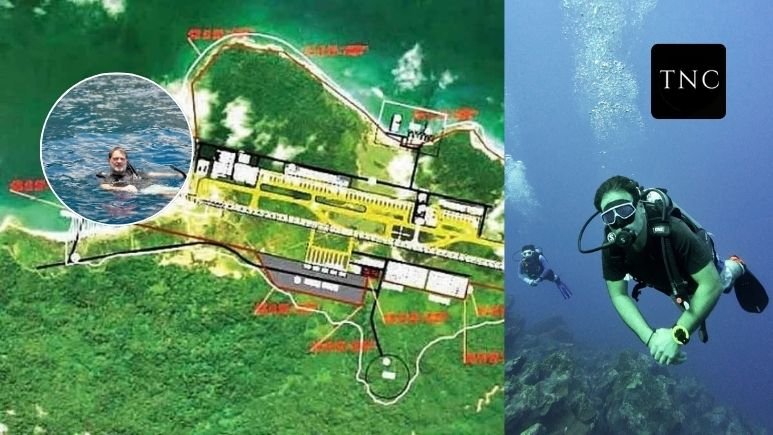
The turquoise waters surrounding Great Nicobar Island appeared calm as Rahul Gandhi descended beneath the waves. Coral formations stretched across the seabed, colorful marine life moved through the clear water, and for a brief moment the political noise of New Delhi seemed far away.
But the Congress leader emerged from the dive carrying a message far larger than a social media video.
Posting footage from his visit to the remote island, Gandhi accused the central government of pushing ahead with a massive infrastructure project that, in his view, threatens one of India’s most ecologically sensitive regions. His remarks have reignited a fierce debate over the future of Great Nicobar a debate that pits economic development and national security against environmental conservation and tribal rights.
Why Great Nicobar Matters
At the center of the controversy is the government’s ambitious Great Nicobar Development Project, a multi-billion-rupee initiative designed to transform the island into a strategic maritime and economic hub.
The proposal includes a deep-sea transshipment port, an international airport, power infrastructure, and a new township. Supporters argue that the project could strengthen India’s position in the Indian Ocean, improve trade connectivity, and enhance national security due to the island’s proximity to major global shipping routes.
Critics, however, say the cost may extend far beyond financial investment.
Environmental groups and opposition leaders have repeatedly warned that large-scale construction could affect vast stretches of rainforest, fragile ecosystems, and indigenous communities that have lived on the island for generations.
Rahul Gandhi’s Challenge to the Government
During his visit to Great Nicobar, Gandhi met members of local communities and tribal groups who have expressed concerns about the project’s impact. He argued that development should not come at the expense of environmental sustainability or the rights of island residents.
The Congress leader alleged that the project would lead to the destruction of extensive rainforest areas and claimed that local voices were not being adequately heard in the planning process. He further suggested that commercial interests were being prioritized over ecological protection and community welfare.
His criticism forms part of a broader opposition campaign questioning the environmental and social consequences of several large-scale infrastructure initiatives across the country.
Government Pushback
The central government has strongly rejected these allegations.
Officials maintain that the Great Nicobar project is of strategic national importance and has been designed with environmental safeguards in place. According to government representatives, the development plan aims to balance economic growth, security requirements, and ecological considerations.
Supporters of the project argue that India cannot ignore the strategic significance of Great Nicobar, particularly given its location near one of the world’s busiest maritime corridors. They believe the infrastructure could enhance India’s ability to compete with regional powers while creating long-term economic opportunities.
More Than an Island
The disagreement over Great Nicobar reflects a larger national question: How should India pursue growth in environmentally sensitive regions?
Across the country, policymakers increasingly face difficult choices between conservation and development. Projects that promise economic benefits often encounter resistance from communities and environmental experts concerned about irreversible ecological damage.
Great Nicobar has become a symbol of that struggle.
For critics, the island represents a unique natural heritage that deserves protection. For supporters, it is a strategic asset whose potential should be harnessed for national progress.
The battle over Great Nicobar is no longer just about a port, an airport, or a township. It has evolved into a debate about what development should look like in the 21st century.
As political leaders trade accusations and government planners defend their vision, the future of one of India’s most remote islands hangs in the balance. Whether Great Nicobar becomes a model of sustainable growth or a cautionary tale of environmental compromise may depend on decisions being made today.
Also Read / K. Annamalai’s Uncertain Next Chapter Has Tamil Nadu Politics Watching Closely.









Leave a comment