

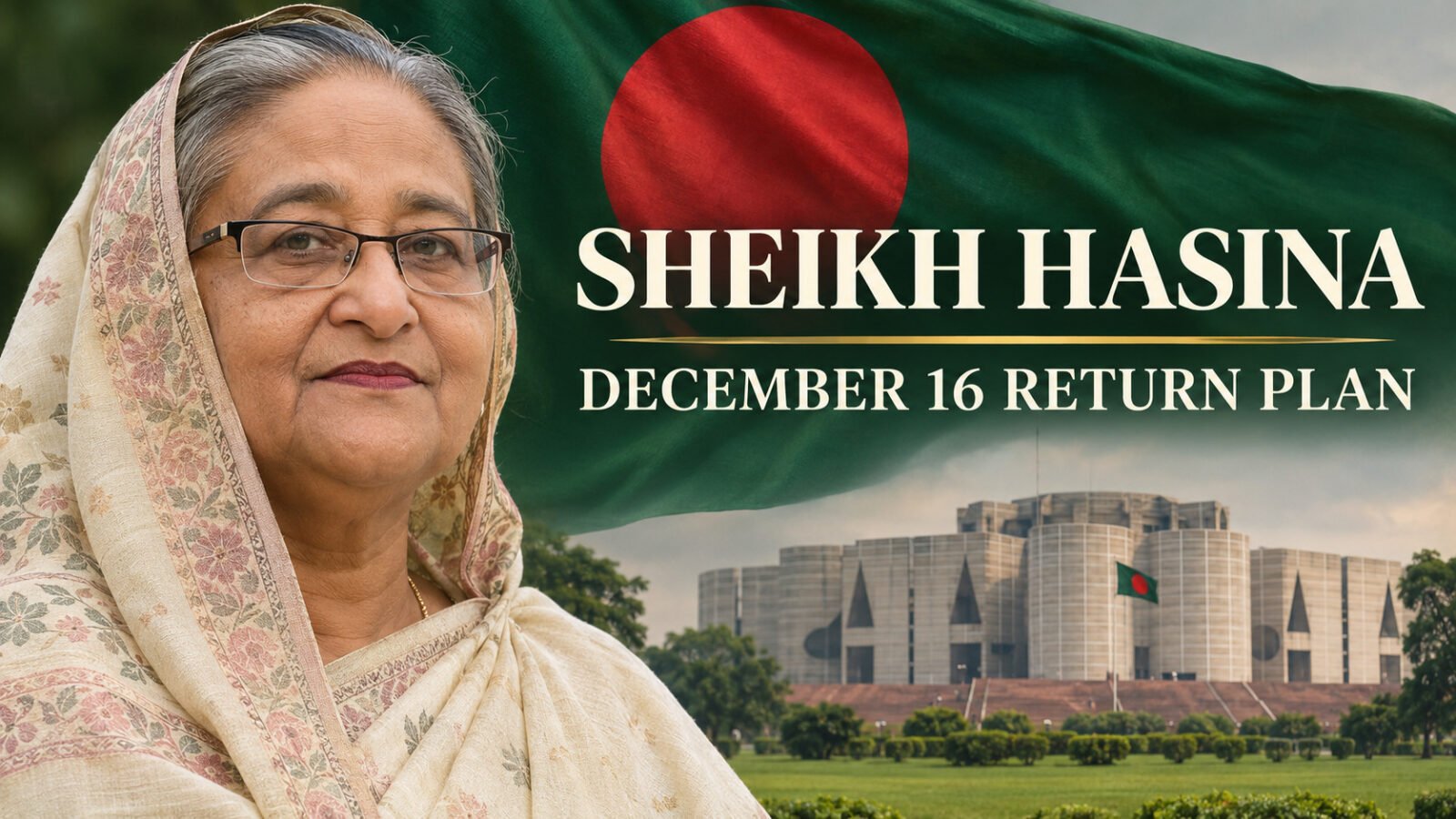

Sheikh Hasina’s December 16 return plan has added a specific date to the debate over her future in Bangladesh. On November 24, 2026, her spokesperson said the former prime minister intended to leave India and return home on Victory Day. Bangladesh’s government has maintained that it is seeking her extradition, leaving the arrangements and conditions for any return unresolved.
Spokesperson Syed Mozammel Ali said Hasina wanted Dhaka to arrange transport from Delhi aboard Biman Bangladesh Airlines. He linked the request to her departure on a Bangladeshi aircraft in August 2024. Former information minister Mohammad Ali Arafat also confirmed the intended date to Anadolu, saying the current administration should facilitate her return.
The timing carries historical importance. Bangladesh observes Victory Day on December 16, marking the surrender of Pakistani forces in 1971 and the end of the Liberation War. Choosing that anniversary gives the proposed journey a symbolic meaning, connecting Hasina’s announcement with one of the country’s most important national occasions.
That connection is personal and political. Hasina’s father, Sheikh Mujibur Rahman, was Bangladesh’s founding leader and a central figure in its independence movement. Her aide Abu Obaidha Arin told the Associated Press that the chosen date was symbolic. Supporters are presenting the planned return through that family and national history.
Hasina has lived in India since August 5, 2024, when a student-led uprising brought her government to an end. The protests began around public-sector job quotas and grew into a wider movement against her rule. The violence surrounding those events remains central to the cases against her and to Bangladesh’s continuing political divisions.
In November 2025, Bangladesh’s International Crimes Tribunal convicted Hasina in her absence of crimes against humanity connected to the crackdown on the uprising. It sentenced her to death. Hasina has rejected the verdict and described the proceedings as politically motivated. That sentence makes the proposed journey a matter with serious consequences for her personal freedom and life.
Human Rights Watch also raised concerns about the trial. It said Hasina and former home minister Asaduzzaman Khan Kamal were prosecuted in their absence and lacked lawyers of their choosing. The organisation criticised the death sentences and the fairness of the proceedings. Its assessment adds a human rights dimension to the debate over accountability.
Bangladesh’s government has framed the issue around the conviction and extradition request. State Minister for Foreign Affairs Humaiun Kobir said on November 24 that Hasina could be brought back in custody or under strict surveillance. He was responding to a question about the reported December 16 return date. His remarks underline the distance between the government’s position and the homecoming described by her representatives.
Travel documents are another unresolved part of the story. Hasina has sought a passport and other identification paperwork, according to reports. Bangladesh’s home minister said earlier in November that authorities were examining the authenticity and legal basis of those applications. Officials have connected decisions about her return with existing court proceedings and the extradition process.
India therefore has an important role. Hasina remains on Indian territory, and Bangladesh has formally requested her handover. India’s Ministry of External Affairs lists Bangladesh among countries with which it has an extradition treaty, dating to 2013. How the two governments handle the individual case remains a matter for the relevant authorities.
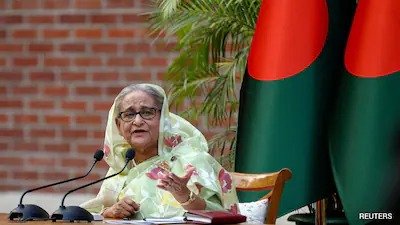
Reuters reported that India’s foreign ministry declined to comment on the latest announcement. The agency also recalled the ministry’s April statement that it was examining Bangladesh’s extradition request. Those statements leave the practical arrangements dependent on further official decisions, including how the request for travel assistance will be handled.
Bangladesh’s political landscape has changed since Hasina left. An interim administration led by Muhammad Yunus oversaw the transition before the February 2026 election. Tarique Rahman’s Bangladesh Nationalist Party subsequently formed the government. Hasina’s Awami League was excluded from that election after its political activities were banned under the interim administration.
The proposed return has also exposed uncertainty within the Awami League. Reporting by Prothom Alo earlier this month said some party leaders lacked a clear understanding of how a December return would happen. They described diplomatic cooperation as important to making such a journey possible. A named date now gives that uncertainty a sharper deadline.
There are public order concerns as well. Reports have described protests, arrests and violence surrounding demands for Hasina’s return, including in Gopalganj. These developments place pressure on the government to maintain security while addressing a highly contested political issue. Any gatherings linked to the announcement would unfold against that tense background.
The Ministry of External Affairs’ published guidance explains that extradition requests involve government scrutiny and may involve a magistrate’s inquiry. Documents, the relevant treaty and Indian law form part of that consideration. The case therefore brings administrative and judicial questions into the ongoing diplomatic discussion about Hasina’s proposed return journey.
Also Read | Ukraine-Russia War: Ukraine Claims Major Naval Drone Strike Near Libya










Leave a comment