

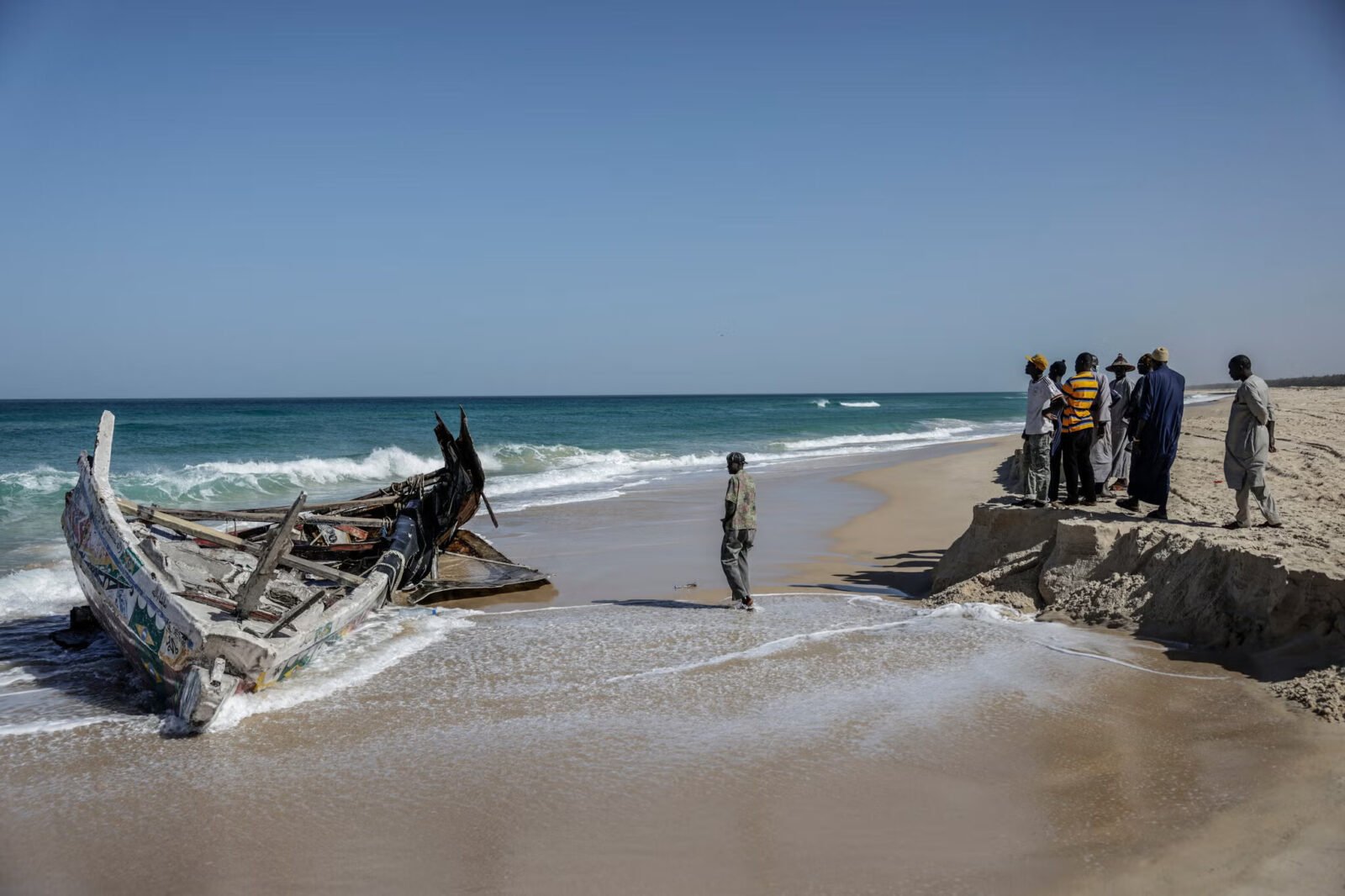

A devastating boat accident off Senegal’s northwestern coast has claimed at least 39 lives, once again highlighting the dangers faced by migrants attempting to reach Europe.
The Senegal migrant boat tragedy occurred near Kébémer, approximately 180 kilometres north of Dakar, after a wooden vessel carrying migrants overturned.
The boat had departed from Saint-Louis in northern Senegal and was travelling towards the Spanish coast.
Authorities initially reported 21 deaths, but the toll increased to 39 after additional bodies were recovered.
Only one person had been rescued alive in the latest confirmed reports, while several passengers were believed to be missing.
What Happened in the Senegal Boat Tragedy?
The migrant vessel capsized off the coast of Kébémer during the weekend of November 7–8, 2026.
According to Senegalese authorities, the passengers were attempting to reach Europe through the dangerous Atlantic Ocean migration route.
The vessel was a traditional wooden fishing boat known locally as a pirogue.
Such boats are commonly used for fishing but are also used for long-distance migration journeys.
Following the accident, rescue teams began searching the surrounding waters.
The exact number of passengers remains unknown, making it difficult to determine how many people may still be missing.
Death Toll Rises to 39
The Senegalese Interior Ministry initially confirmed 21 deaths.
As search operations continued, emergency workers recovered additional bodies.
By Monday, November 9, the official death toll had reached 39.
According to the Senegalese Press Agency, four additional bodies were recovered that morning.
Emergency personnel organised funeral prayers before the burial of some victims.
The tragedy has devastated families and communities along Senegal’s northern coast.
Authorities have not announced a complete passenger list or final casualty count.
Only One Survivor Rescued
One of the most heartbreaking details of the accident is the extremely low number of confirmed survivors.
According to official reports, only one passenger had been rescued alive.
Rescue teams continued searching for others who might have survived.
However, the number of missing people could not be established because authorities did not know how many passengers had boarded the vessel.
The uncertainty has added to the distress experienced by families waiting for information.
The incident demonstrates how difficult rescue operations can become when boats overturn far from safe landing points.
Why Is the Atlantic Migration Route So Dangerous?
Thousands of people attempt to travel from West Africa to Spain’s Canary Islands every year.
Many use small wooden boats that are poorly equipped for long ocean journeys.
The crossing can involve hundreds of kilometres of open water, strong currents and unpredictable weather.
Some vessels lack sufficient life jackets, navigation equipment or emergency communication systems.
Overcrowding and limited supplies can make these journeys even more dangerous.
When a boat develops problems, passengers may have little opportunity to request help.
The Atlantic route has consequently become one of the world’s deadliest migration corridors.
Why Do Migrants Risk Their Lives?
Economic hardship is one of the main reasons people attempt these dangerous journeys.
Many young people in Senegal face unemployment, poverty and limited opportunities.
Some hope to find work in Europe and support their families through earnings sent home.
Others may be influenced by promises from migration facilitators who underestimate the risks.
However, reaching Europe by sea is never guaranteed.
The journey can end in detention, deportation, injury or death.
Migration experts argue that addressing economic pressures and expanding safe migration opportunities are important parts of preventing future tragedies.
Senegal President Responds to the Disaster
Senegalese President Bassirou Diomaye Faye expressed condolences to the families of those who died.
He also promised stronger action against criminal networks organising dangerous sea crossings.
The government has faced growing pressure to prevent migrant deaths and improve maritime safety.
However, stopping departures alone may not address the reasons people choose these journeys.
Authorities must balance border enforcement with humanitarian protection and economic development.
Human Rights Groups Demand Investigation
The tragedy has also triggered criticism from civil society organisations.
Action for Human Rights and Friendship, a local organisation, called for Senegal’s National Assembly to investigate the government’s approach to migration.
The group argued that repeatedly announcing rescue operations and interceptions was not enough.
Campaigners want authorities to examine why deadly crossings continue despite previous tragedies.
They are also demanding stronger accountability and more effective protection for vulnerable migrants.
Hundreds Have Died on the Atlantic Route
The Senegal disaster is part of a wider humanitarian crisis.
According to migrant rights organisation Walking Borders, at least 635 people died attempting the West Africa–Canary Islands route during the first five months of 2026.
The figure highlights the enormous risks associated with irregular maritime migration.
The International Organization for Migration has repeatedly warned about exploitation by smugglers and traffickers.
Its director general, Amy Pope, has called attention to the dangers of people being sent to sea in unsuitable vessels.
Preventing future deaths will require cooperation between African and European authorities.
Conclusion
The Senegal migrant boat tragedy has claimed at least 39 lives and left families waiting for answers.
With only one confirmed survivor and an unknown number of missing passengers, the disaster has renewed concern about the Atlantic migration route.
The incident highlights the urgent need for safer migration options, stronger action against exploitation and better opportunities for young people.
Behind every casualty figure is a person whose journey ended in tragedy.
Also Read | Drone Alarm in Russia! Moscow Claims 92 Drones Shot Down Near Key Baltic Ports










Leave a comment