

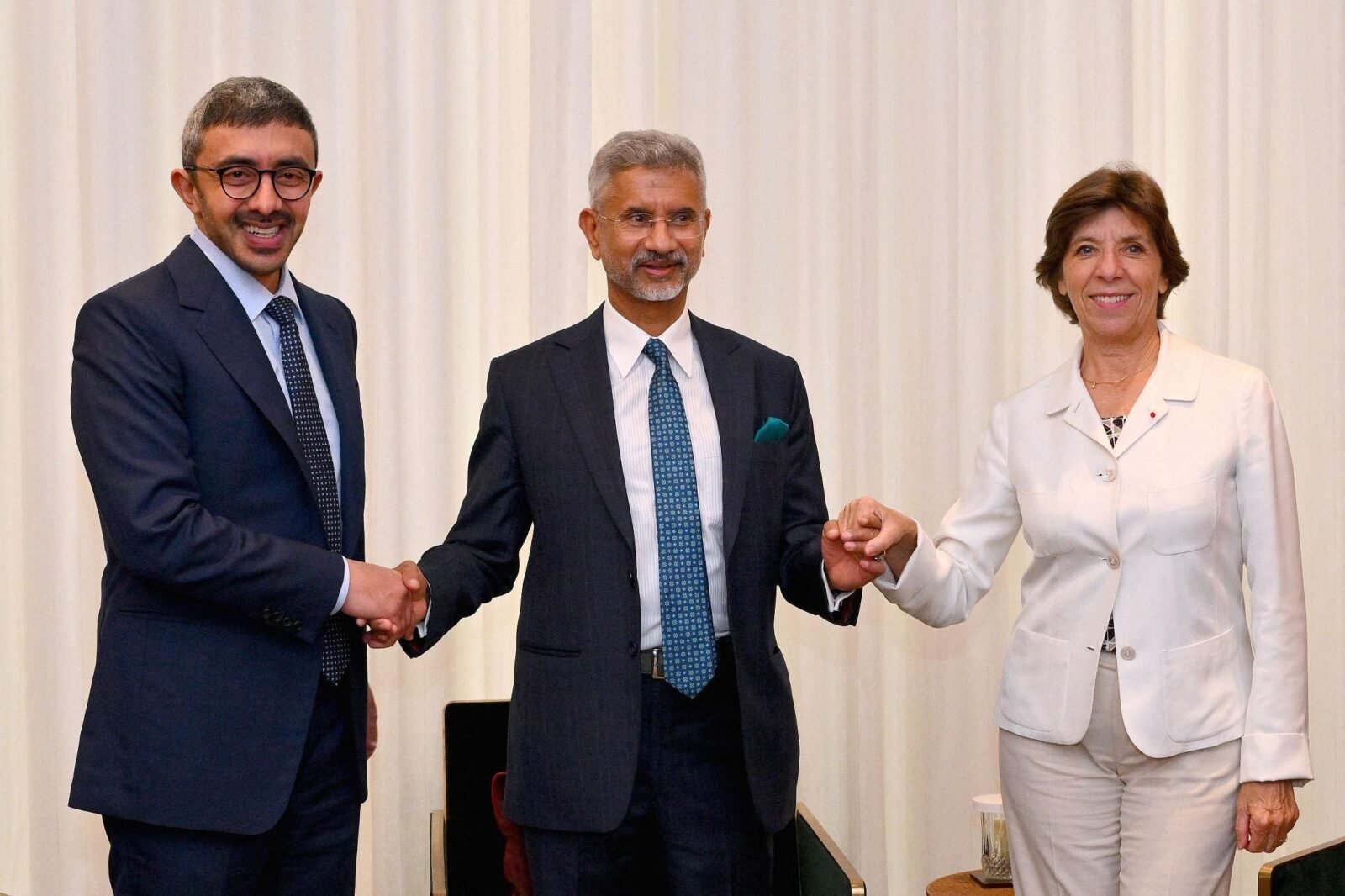

New York: India, France and the United Arab Emirates (UAE) have reviewed their trilateral cooperation in space, artificial intelligence, energy, health sciences, culture and heritage during a ministerial meeting in New York on the sidelines of the 81st session of the United Nations General Assembly (UNGA). The meeting brought together India’s External Affairs Minister S. Jaishankar, French Minister for Europe and Foreign Affairs Jean-Noël Barrot, and UAE Foreign Minister and Deputy Prime Minister Sheikh Abdullah bin Zayed Al Nahyan.
The discussions on September 22 came as the three countries looked at ways to expand their partnership through practical projects. The ministers also exchanged views on the rapidly changing situation in West Asia, including issues affecting regional stability and freedom of navigation.
Focus on Emerging Technologies
One of the central themes of the meeting was artificial intelligence.
India, France and the UAE are developing growing interests in AI, including research, digital infrastructure and emerging technologies. Jaishankar said the three countries discussed opportunities created by their shared interests and complementary capabilities and agreed to continue the dialogue.
The focus on AI comes at a time when governments worldwide are debating how to develop the technology while addressing issues such as safety, data governance and responsible use.
France has been active in discussions on international AI rules and governance, while India has positioned itself as a major participant in global technology discussions. The UAE, meanwhile, has invested heavily in artificial intelligence and digital infrastructure.
The trilateral format provides a platform for the three countries to explore areas where these capabilities can complement one another.
Space Cooperation Gains Attention
Space cooperation was another major area reviewed by the ministers.
India and France already have a long-standing space partnership through ISRO and France’s CNES, spanning more than five decades. Existing cooperation includes Earth observation, maritime domain awareness and the TRISHNA satellite programme.
India is also seeking to expand international partnerships as its space programme moves toward larger ambitions, including long-term human-spaceflight and exploration objectives. Prime Minister Narendra Modi recently invited France and other countries to become partners in India’s next phase of space development during a video address to the International Space Summit in Paris.
France hosted that summit in September, reflecting its interest in strengthening international cooperation in space and developing greater European technological capabilities.
The UAE also has an expanding space sector, creating opportunities for cooperation in satellite applications, Earth observation, research and commercial space activities.
Energy Is Another Key Pillar
Energy cooperation is also an important component of the partnership.
The three countries have previously identified energy and climate action as areas for trilateral cooperation. Their earlier roadmap included work involving clean energy, solar power, nuclear energy, climate change and biodiversity.
The energy discussion has become more significant because the current geopolitical situation has increased concerns about supply security, transport routes and energy prices.
India is a major energy consumer, France has substantial expertise in civil nuclear power, and the UAE is an important energy producer and investor. Their different strengths create potential areas for joint projects and investment, although the latest ministerial meeting did not announce a specific new energy project.
Health Sciences and Culture Included
The agenda extended beyond technology and energy.
Jaishankar said the ministers also discussed health sciences and culture, while the wider trilateral statement referred specifically to culture and heritage.
Health cooperation could include research, innovation and the exchange of expertise, while cultural collaboration offers opportunities for heritage preservation, exhibitions and people-to-people connections.
The inclusion of these areas shows that the trilateral partnership is not limited to strategic or commercial sectors.
West Asia Situation Discussed
Regional developments in West Asia also featured in the discussions.
France’s Foreign Ministry said the ministers reviewed the situation in the region, particularly developments around the Straits of Hormuz and Bab-el-Mandeb. They agreed on the importance of coordination and working together to restore freedom of navigation in the region.
These waterways are important for international trade and energy shipments, making their security a concern for countries well beyond the Middle East.
The discussion came as international attention remained focused on the wider West Asia crisis and its effects on shipping, energy markets and regional diplomacy.
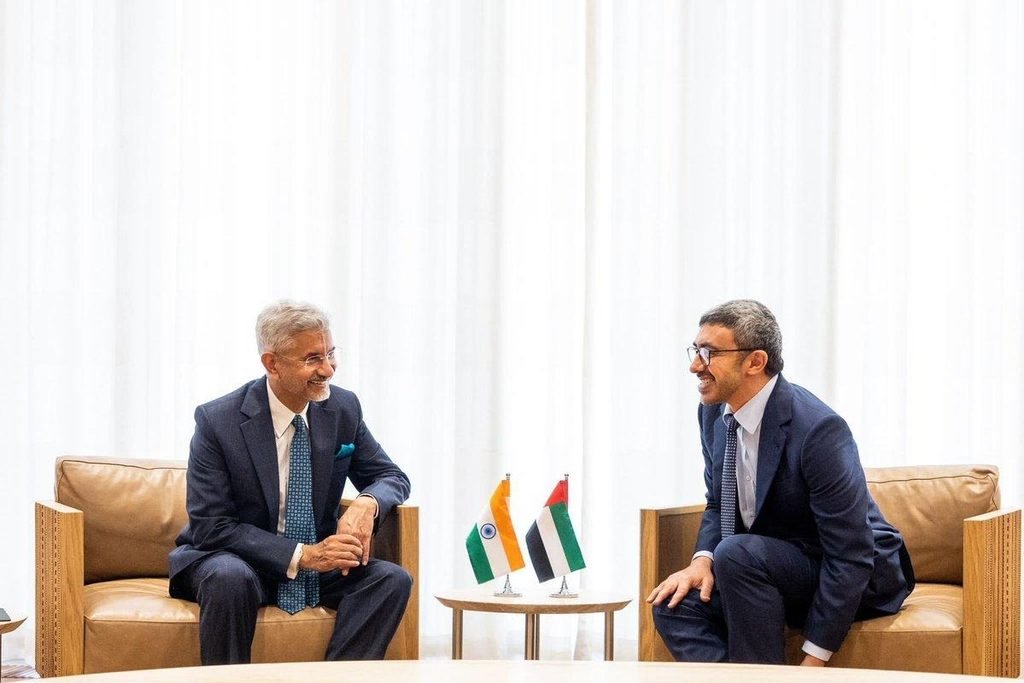
A Trilateral Partnership Dating Back to 2022
The India-France-UAE format is not new.
The foreign ministers of the three countries first met in a trilateral format on the sidelines of the UN General Assembly in September 2022. In February 2023, the three countries formally established a trilateral cooperation initiative and adopted a roadmap for its implementation.
The original framework identified several areas where the countries could work together, including energy, climate change, biodiversity and sustainable development.
France’s Foreign Ministry said the latest meeting represented a relaunch of the trilateral format, with the three countries seeking more concrete projects in priority areas including culture, environment, AI and space.
Complementary Strengths
The three countries bring different capabilities to the partnership.
India has a large technology sector, a growing space programme and extensive experience in digital public infrastructure. France has strengths in aerospace, nuclear energy, advanced manufacturing and research. The UAE has significant financial resources, infrastructure and a growing technology and innovation ecosystem.
These differences can create opportunities for joint ventures and investments.
Jaishankar said the countries’ shared interests and complementary capabilities offered substantial scope for cooperation. The ministers also agreed to meet again soon to take the discussions forward.
Regular Meetings Planned
One of the practical outcomes of the latest meeting was an agreement to maintain more regular engagement.
According to the Ministry of External Affairs-related reporting, India, France and the UAE agreed to meet at regular intervals to review progress across areas of cooperation.
Regular ministerial discussions could help move the partnership from broad areas of interest toward specific projects and partnerships.
However, no major new trilateral treaty or large-scale project was announced in the immediate statements following the September 22 meeting.
Why the Partnership Matters
The India France UAE trilateral cooperation is taking place during a period of major changes in technology, energy and international security.
AI is becoming increasingly important to national economies and security policies. Space is emerging as a major area of commercial and strategic competition. Energy security has become more complicated because of geopolitical tensions and disruptions to shipping routes.
For India, France and the UAE, cooperation across these areas can provide opportunities to share expertise, encourage investment and develop projects that connect South Asia, Europe and the Gulf.
The partnership also gives the three countries another channel for discussing regional issues alongside their individual bilateral relationships.
What Happens Next?
The next stage will be turning the areas discussed in New York into concrete initiatives.
Potential areas include space technology, AI research, digital innovation, energy, health sciences and cultural cooperation. The three governments are expected to continue working through existing diplomatic and technical channels before the next high-level meeting.
The meeting also showed that cooperation is expanding beyond traditional diplomatic subjects toward technology and innovation.
For now, the main outcome is a renewed commitment to the trilateral framework and more frequent consultations. As the partnership develops, the focus will be on whether the three countries can translate discussions on space, AI, energy and other emerging sectors into measurable projects and long-term cooperation.
Also Read | Banks to Remain Open on Sunday, September 27 Ahead of Three-Day Strike









Leave a comment