


Strong earthquake hits southern Peru
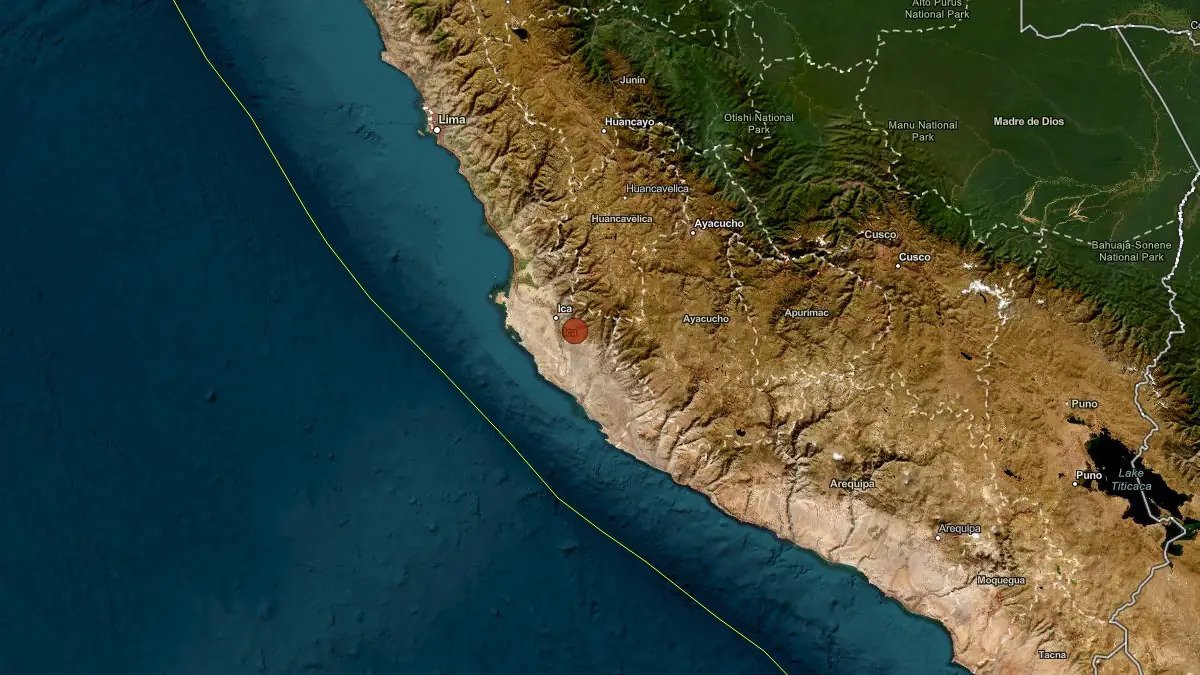
A 6.7-magnitude earthquake struck southern Peru on Thursday afternoon, shaking communities across the Andes and triggering alarm among residents. The earthquake was recorded at about 1 p.m. local time, or 18:00 UTC, according to the United States Geological Survey.
The epicentre was located about 38 to 40 kilometres northwest of Upahuacho in the Parinacochas province of the Ayacucho region. The earthquake occurred deep beneath the surface, with the USGS placing its depth at about 66.7 kilometres.
The tremor was felt across several parts of southern and central Peru. Residents in Ayacucho, Ica, Arequipa, Huancavelica, Apurimac and Cusco reported strong shaking.
People rushed out of homes and buildings as the ground moved. In some communities, residents gathered in open areas because of concerns about aftershocks and possible structural damage.
Damage reported in several areas
Initial assessments indicated that homes, schools and healthcare facilities had been affected. Reports said that 22 houses, six health centres and several schools suffered damage in districts across Ayacucho and Cusco.
The extent of the damage varied from one location to another. Cracks were reported in some buildings, while walls and other structures were damaged in areas close to the epicentre.
At least two or three people suffered minor injuries, according to preliminary reports. No widespread loss of life was reported in the first assessments. Authorities continued to inspect buildings and gather information from remote communities.
Power outages were also reported in parts of Nazca and Lucanas. More than 9,000 electricity customers were affected, according to local reports. Repair teams were expected to assess the network and restore supplies where necessary.
Peru’s emergency authorities were monitoring the situation and coordinating with local governments. Rescue and assessment teams were being sent to affected districts to check roads, public buildings and essential services.
Difference in magnitude estimates
The USGS recorded the earthquake at magnitude 6.7. Peru’s Geophysical Institute, however, initially measured the event at magnitude 7.2. Differences between early estimates are common because agencies use separate monitoring networks, instruments and calculation methods.
The depth of the earthquake was also reported differently. The USGS listed a depth of about 66.7 kilometres, while Peru’s national agency placed it at more than 100 kilometres.
A deeper earthquake can spread shaking over a wider region. However, its impact on buildings may differ from that of a shallow earthquake with the same magnitude.
Officials were expected to update the magnitude and damage figures as more data became available. Early earthquake readings can be adjusted after seismologists review additional information.
No major tsunami threat reported
The earthquake occurred inland in the Andes, far from Peru’s Pacific coastline. No major tsunami warning was issued in the initial reports.
A tsunami is usually linked to a large undersea earthquake that causes sudden movement of the ocean floor. Since this earthquake was centred inland, the immediate tsunami risk was considered low.
Authorities still urged residents to remain alert. Aftershocks can follow a major earthquake and may cause additional damage to buildings that have already been weakened.
Residents were advised to stay away from cracked walls, damaged structures and exposed electrical wires. Emergency officials also encouraged people to follow instructions issued by local authorities rather than rely on unverified messages on social media.
Emergency response begins
Peru’s disaster-management agencies began assessing the impact soon after the earthquake. Local officials were asked to report damage and identify communities that needed medical assistance or temporary shelter.
Schools and health facilities were inspected because damage to these buildings could disrupt essential services. In isolated Andean areas, difficult terrain and long distances can slow emergency operations.
Roads and communication networks were also being checked. Authorities needed to confirm whether landslides, falling rocks or damaged bridges had affected access to rural settlements.
The government’s early response focused on verifying casualties, restoring electricity and protecting residents from unsafe buildings. Additional support could be provided if further inspections reveal serious structural problems.
Earthquake preparedness remains important
Peru is located along the Pacific Ring of Fire, one of the world’s most active earthquake zones. Strong earthquakes occur regularly because of movements between tectonic plates beneath the region.
The latest earthquake has renewed attention on building safety and emergency preparedness in southern Peru. Older homes made from materials such as adobe can be especially vulnerable to strong shaking.
Experts recommend that residents prepare emergency kits containing drinking water, medicines, food, flashlights, batteries and important documents. Families should also identify safe open spaces and establish a communication plan.
People should follow the “drop, cover and hold on” procedure during an earthquake. After the shaking stops, they should leave damaged buildings carefully and avoid using lifts.
Situation remains under review
The 6.7-magnitude earthquake caused fear across southern Peru, but the initial damage appeared limited compared with the strength of the tremor. Authorities continued to verify reports of injuries, damaged buildings and power failures.
The final impact assessment may change as officials reach remote communities. Residents in affected regions are expected to remain cautious because aftershocks may occur.
For now, emergency agencies are concentrating on inspections, medical support and the restoration of basic services. Further updates are likely as Peru’s authorities and international seismological agencies review the earthquake data.
Read Also | HDFC Bank Raises $1.75 Billion in Biggest Overseas Fundraising Since 2008












Leave a comment