

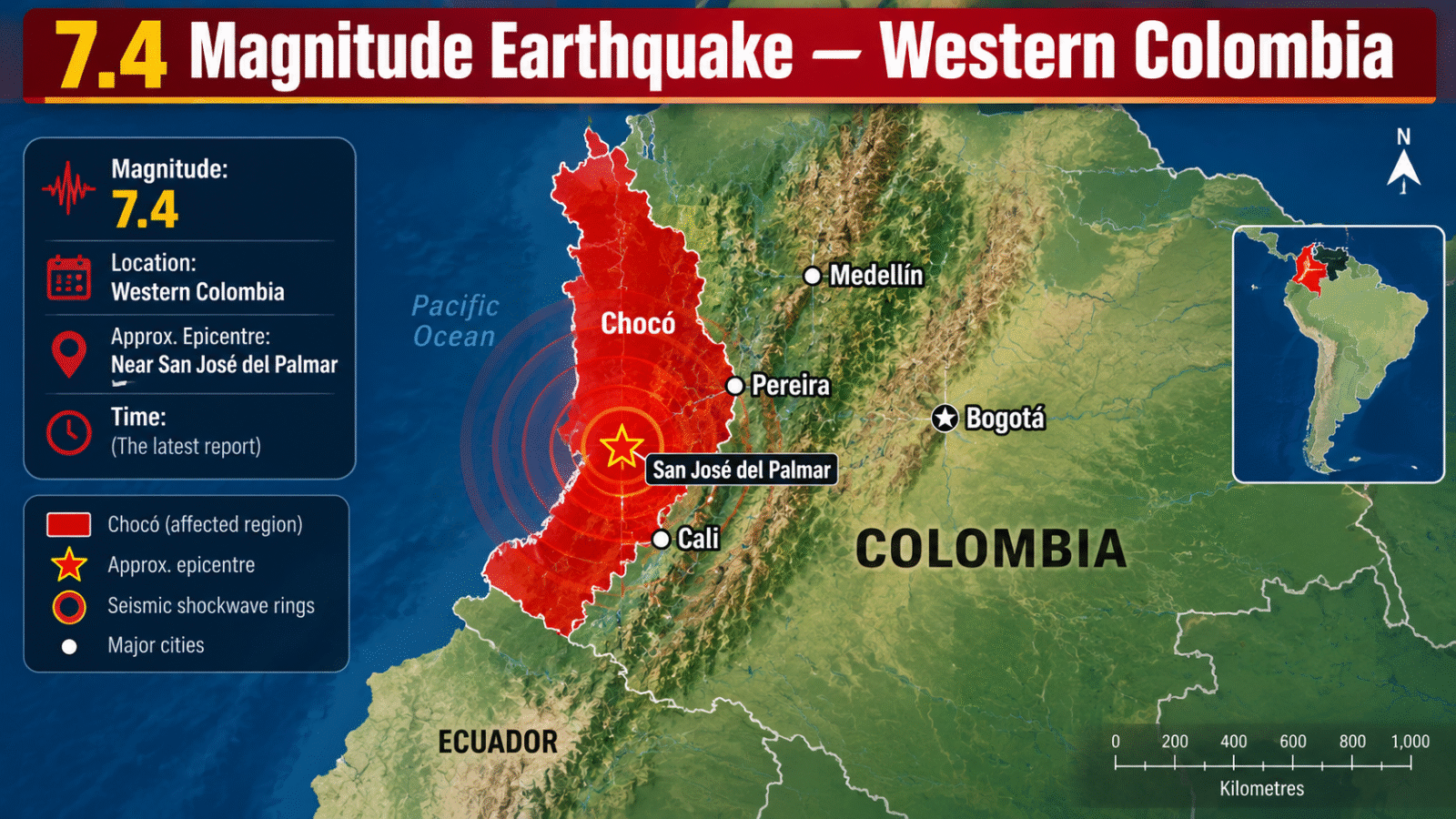

A 7.4 magnitude earthquake in western Colombia killed at least 111 people on Monday, August 10, 2026, according to early reports. The strong earthquake damaged hundreds of buildings, trapped residents under rubble and sent people running from homes, offices and public buildings. Rescue teams continued searching damaged areas as authorities assessed the scale of the disaster.
The United States Geological Survey recorded the earthquake near San José del Palmar in Colombia’s Chocó department. The earthquake struck at 12:34 UTC, or about 7:34 a.m. local time, at a depth of roughly 107 kilometres. Although the epicenter lay in a sparsely populated area, the powerful tremor reached several major cities across western Colombia.
The earthquake affected Chocó, Risaralda, Valle del Cauca, Caldas and Antioquia. Officials reported deaths and injuries in several departments, while emergency workers inspected collapsed buildings and damaged roads. Pereira, the capital of Risaralda, reported one of the highest numbers of fatalities. Cali, a major city in Valle del Cauca, also suffered structural damage.
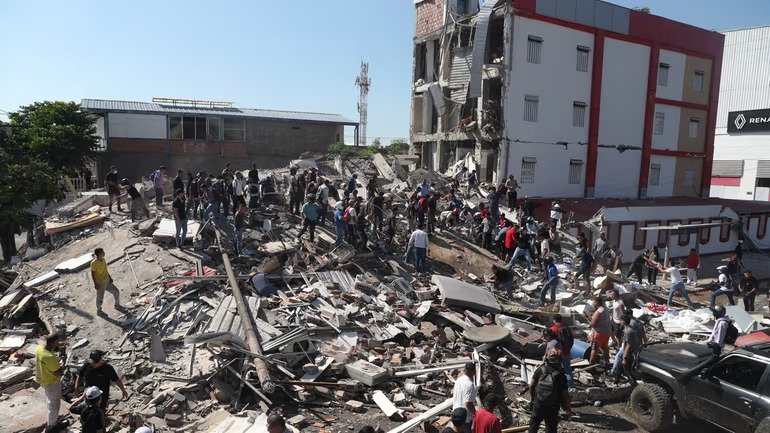
In Cali, several buildings collapsed, and rescuers searched for people who remained trapped inside. Authorities asked residents to stay away from damaged structures because weakened walls and ceilings could collapse without warning. Emergency crews also worked to clear roads and help residents reach hospitals and safer locations.
Quibdó, the capital of Chocó, reported injuries and serious damage to buildings. The region’s difficult terrain and transport challenges made rescue operations more complicated. Some communities faced delays as officials tried to assess damage, restore communications and deliver medical assistance.
The earthquake also shook other parts of Colombia, including Bogotá and Medellín. People in neighbouring Ecuador felt the tremor as well. The event caused widespread alarm because it struck early in the morning, when many people remained inside homes, schools and workplaces.
Rescue teams search the rubble
Colombian authorities launched rescue and recovery operations soon after the earthquake. Firefighters, police officers, medical teams and local volunteers searched damaged buildings for survivors. Residents also helped neighbours leave unsafe structures and provided emergency support before professional teams arrived.
Rescuers faced several challenges during the operation. Aftershocks could create additional risks, especially around buildings that had already suffered structural damage. Emergency workers needed to examine each site carefully before entering. Hospitals also prepared for a possible increase in patients with fractures, cuts, burns and other injuries.
Officials continued to update the casualty figures as teams reached more communities. Early reports often change after rescuers inspect remote areas and authorities compare information from hospitals, local governments and emergency agencies. For that reason, the death toll and number of injured people may rise as the assessment continues.
Earthquake felt beyond the epicentre
The earthquake’s depth helped distribute strong shaking across a wide area. People reported feeling the tremor in multiple Colombian departments and in parts of Ecuador. In several cities, residents evacuated buildings and gathered outdoors while officials checked for structural damage.
The earthquake reminded people across the region about Colombia’s exposure to seismic hazards. Colombia sits near tectonic zones that can produce strong earthquakes. Government agencies regularly advise residents to prepare emergency kits, identify safe areas and learn how to respond during an earthquake.
Experts generally advise people to follow the “drop, cover and hold on” procedure during strong shaking. Individuals should drop to the ground, take cover under a sturdy table or desk and hold on until the movement stops. People should avoid elevators and should not rush toward exits while buildings continue to shake.
Authorities assess the situation
Colombian officials continued to inspect buildings, roads, bridges, hospitals and public facilities after the earthquake. Authorities also worked to confirm reports from affected communities and coordinate assistance. Residents received warnings to avoid damaged buildings and to follow instructions from emergency services.
The government’s immediate priorities included locating survivors, treating the injured, providing shelter and restoring essential services. Officials also needed to determine whether schools, transport routes and public buildings could safely reopen.
The earthquake created a humanitarian emergency in several western regions. Families who lost homes or feared returning to damaged buildings needed temporary accommodation, food, drinking water and medical care. Local authorities and aid organisations were expected to focus on those needs as the rescue phase continued.
A continuing emergency
The 7.4 magnitude earthquake in western Colombia caused serious destruction across a wide area and left communities facing a difficult recovery. At least 111 people had died in the initial reports, while hundreds of buildings suffered damage and rescue teams continued searching for survivors.
Authorities urged the public to remain calm, avoid unsafe structures and rely on verified information. The final impact will become clearer after emergency teams complete inspections and reach isolated communities. For now, Colombia remains focused on rescue operations, medical care and support for families affected by one of the region’s strongest recent earthquakes.
Read Also | Typhoon Dolphin Triggers Severe Flooding in Shanghai: Latest Updates










Leave a comment