

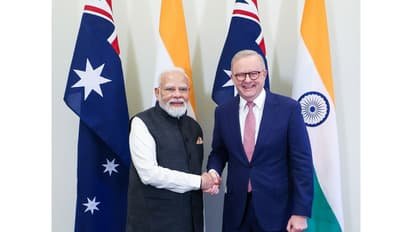

New Delhi: Prime Minister Narendra Modi is set to strengthen India’s growing partnership with Australia through a high-level visit aimed at expanding trade, attracting fresh investment, and enhancing cooperation across critical sectors. The visit is expected to mark another significant milestone in the Comprehensive Strategic Partnership between the two countries, with leaders focusing on economic growth, technology, clean energy, education, defence, and regional security.
As India continues to emerge as one of the world’s fastest-growing major economies, Australia has become an increasingly important partner in the Indo-Pacific region. The visit is expected to create new opportunities for businesses, investors, and industries while reinforcing the shared vision of a free, open, and prosperous Indo-Pacific.
Trade and Investment High on the Agenda
One of the primary objectives of Prime Minister Modi’s visit is to expand bilateral trade and encourage greater investment between India and Australia.
Officials from both countries are expected to discuss measures that simplify business regulations, improve market access, and strengthen supply chains. Business leaders accompanying the visit are also expected to participate in investment forums aimed at identifying opportunities in manufacturing, infrastructure, renewable energy, mining, agriculture, and digital technology.
India and Australia have witnessed significant growth in bilateral trade over the past few years, supported by the Economic Cooperation and Trade Agreement (ECTA). Both governments are now working toward expanding economic cooperation further through a broader Comprehensive Economic Cooperation Agreement (CECA), which could unlock new opportunities for exporters and investors.
Focus on Critical Minerals and Clean Energy
Critical minerals are expected to feature prominently during the discussions.
Australia possesses some of the world’s largest reserves of lithium, cobalt, nickel, and rare earth minerals, all of which are essential for electric vehicles, battery manufacturing, renewable energy technologies, and advanced electronics.
India aims to secure reliable supplies of these minerals as it accelerates its clean energy transition and expands domestic manufacturing under initiatives such as “Make in India.”
Renewable energy collaboration, including green hydrogen, solar power, and sustainable infrastructure, is also likely to receive significant attention during the visit.
Technology and Innovation Drive Future Growth
Technology cooperation has become another pillar of the India-Australia relationship.
The two countries are expected to deepen collaboration in:
- Artificial Intelligence (AI)
- Cybersecurity
- Semiconductor manufacturing
- Quantum computing
- Digital public infrastructure
- Space technology
- FinTech innovation
Joint research initiatives and startup partnerships are expected to help both countries strengthen technological capabilities while creating employment opportunities and encouraging innovation.
Defence and Indo-Pacific Security
Apart from economic cooperation, defence and regional security remain central to India-Australia relations.
Both nations are key members of the Quad grouping alongside the United States and Japan. During the visit, discussions are expected to focus on maritime security, defence technology cooperation, joint military exercises, and maintaining stability in the Indo-Pacific region.
Officials believe stronger defence cooperation will contribute to regional peace while ensuring secure sea lanes for global trade.
Education and Skills Partnership
Education continues to be one of the strongest pillars of India-Australia cooperation.
Thousands of Indian students pursue higher education in Australian universities every year, making India one of Australia’s largest international student communities.
The visit is expected to promote greater collaboration in higher education, vocational training, research partnerships, student mobility, and skill development. Universities from both countries may announce new academic partnerships aimed at preparing students for future industries.
Expanding Business Opportunities
Business leaders from India and Australia are expected to explore fresh opportunities in sectors including:
- Renewable energy
- Mining and minerals
- Information technology
- Healthcare
- Agriculture
- Food processing
- Infrastructure
- Logistics
- Defence manufacturing
- Tourism
Industry experts believe increased investment flows could generate employment, improve industrial cooperation, and strengthen economic resilience in both countries.
Strengthening People-to-People Ties
Beyond economics and diplomacy, the visit also highlights the strong cultural and community links between India and Australia.
The Indian diaspora in Australia continues to play a vital role in strengthening bilateral relations through business, education, healthcare, and innovation.
Both governments are expected to announce initiatives that encourage tourism, cultural exchanges, youth engagement, and cooperation between educational institutions.
Global and Regional Cooperation
Prime Minister Modi and Australian leaders are also expected to discuss several global issues, including climate change, resilient supply chains, economic security, regional stability, maritime cooperation, and reforms in international institutions.
As trusted democratic partners, India and Australia continue to work together on addressing common global challenges while supporting sustainable economic development.
Looking Ahead
Analysts believe Prime Minister Modi’s Australia visit could significantly enhance bilateral economic cooperation while opening new opportunities for businesses and investors.
Expected outcomes include new investment commitments, expanded technology partnerships, stronger cooperation in clean energy, and greater collaboration in defence and education.
The visit also reflects the growing importance of India-Australia relations in shaping the future of the Indo-Pacific and strengthening economic resilience amid changing global dynamics.
With trade volumes increasing and strategic cooperation expanding across multiple sectors, both countries appear well-positioned to build a stronger and more comprehensive partnership in the years ahead.
Conclusion
Prime Minister Narendra Modi’s Australia visit represents more than a diplomatic engagement it is a strategic effort to deepen economic ties, attract investment, and promote long-term collaboration in emerging sectors. As India and Australia continue to strengthen their partnership, the outcomes of this visit could benefit businesses, investors, students, and industries while contributing to regional stability and sustainable growth.












Leave a comment