

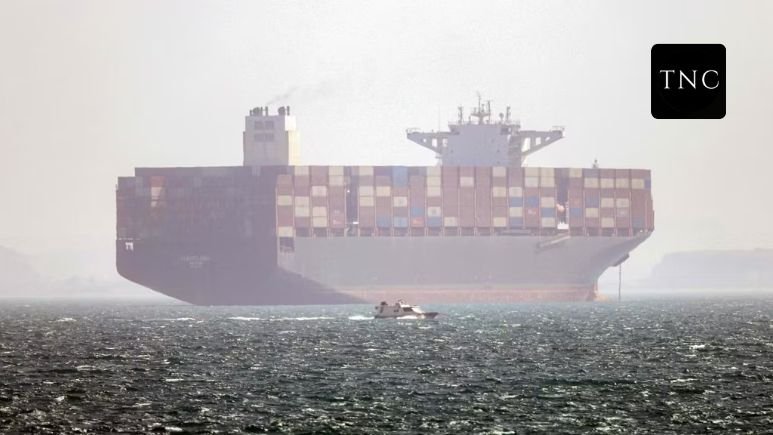

Washington: President Donald Trump announced on Tuesday that the United States has suspended “Project Freedom,” its military operation to escort commercial vessels safely through the Strait of Hormuz, just two days after launching it, citing a request from Pakistan and what he described as significant diplomatic progress toward a permanent deal with Iran. The naval blockade of Iranian ports, however, remains fully in force.
Trump made the announcement on his Truth Social platform, writing: “Based on the request of Pakistan and other Countries and, additionally, the fact that Great Progress has been made toward a Complete and Final Agreement with Representatives of Iran, we have mutually agreed that, while the Blockade will remain in full force and effect, Project Freedom the Movement of Ships through the Strait of Hormuz will be paused for a short period of time to see whether or not the Agreement can be finalized and signed.”
What Is Project Freedom And Why Was It Launched?
The maritime chokepoint, through which roughly one-fifth of the world’s energy supplies normally pass, has been effectively sealed by Iran since the United States and Israel launched their war on the country on February 28. Following a ceasefire in April, the US imposed its own blockade on Iranian ports in a bid to compel Tehran to agree to Washington’s terms in peace talks, including reopening the key waterway and halting all nuclear enrichment. The closure of the strait has disrupted global trade, causing oil and fertilizer prices to soar and prompting fears of a global recession and a food emergency.
Project Freedom was enforced by several US Navy destroyers, air and landbased military assets, and approximately 15,000 sailors in the US Central Command region. Two US commercial ships, along with American destroyers, successfully traversed the strait during the brief operation before the pause was announced.
Fire Exchanged Iran Attacks Shipping, US Retaliates:
As the US launched Project Freedom, Iran launched multiple attacks on shipping in and around the Strait of Hormuz. A tanker owned by a company affiliated to ADNOC was hit by drones in the strait on May 3. A bulker was attacked by Iranian fast craft heading towards the strait, also on May 3. The cargo ship HMM Namu suffered an explosion while at anchor off the UAE on May 4. The UKMTO reported that a cargo ship was struck by an unknown projectile in the Strait of Hormuz at 18:30 UTC on May 5. A CBS News report quoting US officials said the Maltese flagged CMA CGM San Antonio was hit by missiles in the Gulf region, injuring several Filipino crew members.
The launch of Project Freedom led to an exchange of fire between the US and Iran, and to Iranian missile attacks on the United Arab Emirates for the first time since the ceasefire was announced a month ago.
US Secretary of Defense Pete Hegseth said the renewed violence in the Strait of Hormuz did not constitute a breach of the four-week-old ceasefire. “American forces won’t need to enter Iranian waters. It’s not necessary. We’re not looking for a fight. But Iran cannot be allowed to block innocent countries and their goods from international waterways,” he said at the Pentagon.
Secretary of State Marco Rubio described Project Freedom as “a defensive, not an offensive operation,” stating: “There’s no shooting unless we’re shot at first.” Rubio also said the broader combat campaign against Iran Operation Epic Fury had ended, fuelling hopes of further deescalation. He separately warned Iranian leadership not to test Trump, characterising the country’s decisionmaking as “insane in the brain.”
Blockade Turns Away 51 Vessels:
US Central Command stated that as of May 5, the naval blockade of Iranian ports had turned around 51 vessels since it started operation on April 13. While Project Freedom is paused, the blockade remains fully enforced.
Hegseth noted that two US commercial ships and American destroyers led the initial transit of the strait. “We know the Iranians are embarrassed by this fact,” he said. “They said they control the strait but they do not. So, American ships led the way, commercial and military, shouldering the initial risk from the front, as Americans always do.” He added that CENTCOM had established an enhanced security area on the southern side of the strait, protected by US land, naval and air assets, to defeat further Iranian aggression against commercial shipping.
Pakistan’s Mediation Islamabad:
Trump cited Pakistan’s formal request as a key factor in the decision to pause Project Freedom. Pakistan’s prime minister, foreign minister and army chief have been actively pushing negotiations between Washington and Tehran, encouraging both sides to move toward direct dialogue. Pakistan has hosted previous rounds of negotiations between the two countries and has served as the primary communication channel throughout the current phase of talks.
The pause of Project Freedom fuelled optimism that Pakistan’s diplomatic effort to end the conflict remains alive. When exchanges of fire between US and Iranian forces in the strait on Monday did not reignite the war, it signalled to analysts that neither side wanted fullscale fighting to resume. Secretary of State Rubio’s statement that Operation Epic Fury had ended added further weight to expectations of a deescalation path.
Iran’s FM in Beijing China’s Role Grows:
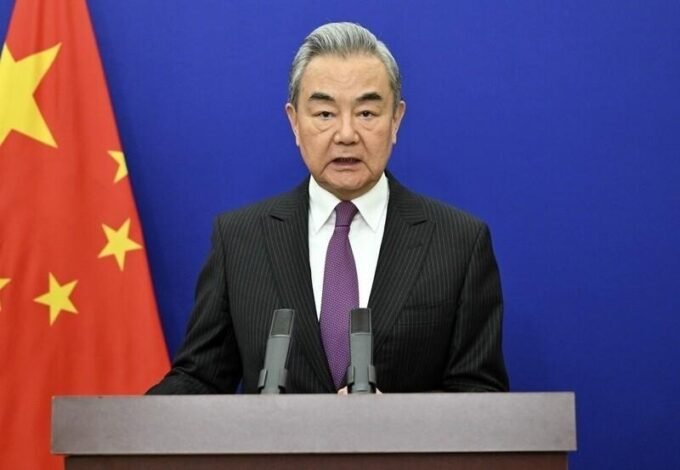
Iranian Foreign Minister Abbas Araghchi travelled to Beijing on Tuesday for talks “on regional and international developments” with his Chinese counterpart the first facetoface meeting between the foreign ministers of the two allied nations since the war began. Iran has called for China and Russia to play enforcement roles in any final peace agreement, a demand the US has not accepted. Trump is also due to travel to China next week in what is expected to be the most consequential foreign trip of his second term.
Shipping Industry Scepticism Global Economic Impact:
Project Freedom was met with skepticism by the global shipping industry, with maritime organisations questioning the level of safety it would realistically provide to commercial ships transiting one of the world’s most contested waterways. Iranian media, for their part, dismissed the suspension as Trump attempting to cover up the failure of his plan.
Demand for oil is falling at the fastest rate seen outside the Covid pandemic, as businesses and consumers cut consumption in response to the global economic disruption caused by the Hormuz closure. Oil and fertilizer prices have surged since February 28, and fears of a global food emergency have grown as the strait has remained blocked.
Diplomatic Outlook:
Trump has made numerous claims about the Iran war’s imminent end throughout the conflict, many of which have not materialised on the stated timelines. The pause of Project Freedom, however, and Rubio’s declaration that Operation Epic Fury has concluded, represent the most significant shift in US operational posture since the ceasefire came into effect in April. Whether a final agreement is achieved within the 30day window Iran has proposed or on any other timeline remains highly uncertain given the deep gaps between the two sides’ publicly stated positions.
The US has insisted that Iran cannot be allowed to charge a toll for passage through the Strait of Hormuz or create a precedent that could be replicated at other strategic maritime chokepoints around the world. Iran has not committed to minesweeping the strait as part of any agreement and has insisted that its right to uranium enrichment be guaranteed before a final deal is signed.
Also Read / Somali Pirates Seize Cargo Ship with Two Indians Among Crew as Hormuz Crisis Fuels Resurgence at Sea.








Leave a comment