

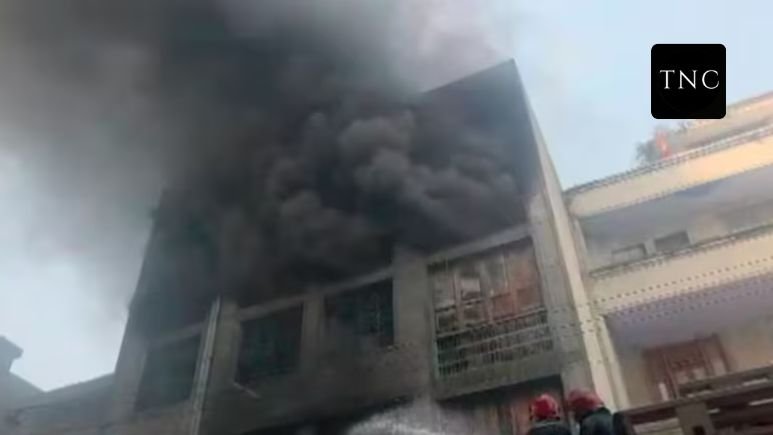

By the time the first siren cut through the morning air, Ramesh had already run back inside once.
The factory floor in Narela Industrial Area was thick with the smell of melted plastic and burning rubber. Boxes of slippers stacked to the ceiling just an hour earlier were now feeding the flames. Workers shouted names over the crackle of fire. Someone dragged a co-worker toward the exit. Others hesitated, glancing back at machines, at inventory, at months of wages tied up in what was now turning to ash.
Outside, a line of fire engines stretched along the road. Inside, the heat rose faster than decisions could be made.
Everyone made it out.
That, officials would later confirm, was the only clear victory of the day.
A fire broke out at a manufacturing unit in Delhi’s Narela industrial belt early in the morning, prompting a rapid emergency response and evacuation of workers. No casualties were reported, though the blaze fueled by flammable materials like plastic and footwear stock spread quickly and required multiple fire tenders to contain.
The incident matters not because it was deadly but because it wasn’t. In a landscape where factory fires in India often end in fatalities, this near-miss exposes a deeper, recurring question: Are industrial zones becoming safer, or are workers simply getting luckier?
The timeline tells its own story. The call came in around 8 a.m. Firefighters responded quickly. Workers were evacuated. No one died.
But beneath that efficiency lies a familiar pattern.
Factories in clusters like Narela often store highly combustible materials, plastics, adhesives, synthetic fabrics without proportionate safety upgrades. When a fire starts, it doesn’t creep. It explodes. In this case, officials classified the blaze as severe, with flames spreading rapidly due to the inventory inside.
This isn’t an isolated event. Just days earlier, another fire in the same region required dozens of firefighters to contain, again raising concerns about industrial safety compliance.
What changed this time was not the system but the sequence.
The fire broke out during working hours, when exits were accessible and workers were alert. Emergency services arrived before structural collapse. The difference between survival and tragedy often comes down to minutes, not policy.
Officials have yet to determine the cause. That uncertainty is part of the problem. Investigations tend to focus on ignition faulty wiring, overheating machinery but less on prevention: overcrowded storage, blocked exits, or lack of fire drills.
In many industrial pockets across India, compliance exists on paper. Reality operates on compromise.
No lives were lost in Narela but that doesn’t make it a success story. It makes it a warning that, for once, ended before the worst could happen.
Also Read / At least 25 dead as massive fire engulfs popular Goa nightclub.














Leave a comment