

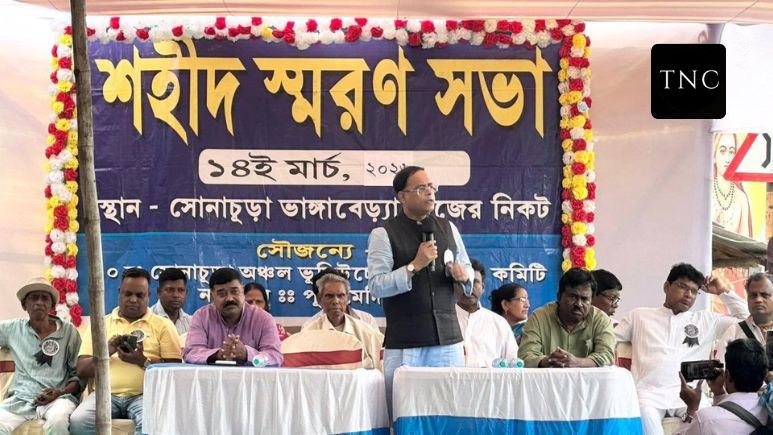

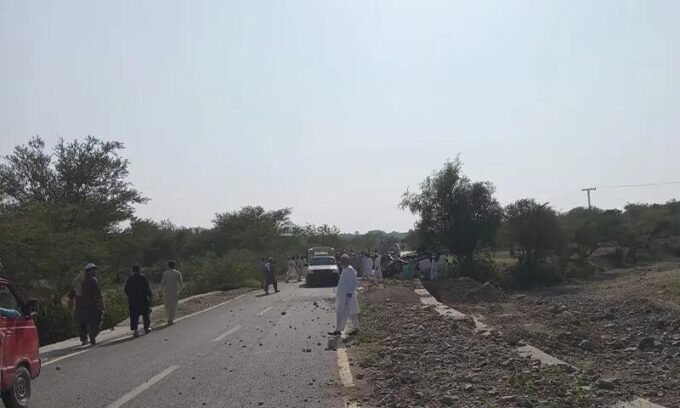
The road into Nandigram narrows without warning. A fisherman named Haripada Das still points to a patch of broken earth near Tekhali Bridge, where the soil looks darker than the rest. “We dug trenches here,” he says, recalling the months when villagers cut off roads, braced for police, and waited for something worse. The air that morning in March 2007 smelled of smoke and wet paddy. Then came the gunfire. By the time it stopped, bodies lay scattered across fields that once fed entire families.
Haripada doesn’t talk about politics. Not directly. But when election season returns, he watches the convoys roll in flags, slogans, loudspeakers and mutters: “They all come back to this place.”
Nandigram is not just another constituency in West Bengal. It is a political fault line where land, violence, and power collided and reshaped the state’s future. The 2007 uprising against land acquisition for a proposed chemical hub triggered police firing that killed at least 14 villagers and ignited a wider revolt against the ruling Left Front government .
What followed wasn’t just unrest, it was a political realignment. The protests became the foundation of All India Trinamool Congress’s rise and the eventual سقوط of three decades of Left rule in 2011. Nearly two decades later, Nandigram remains a symbolic battleground because it compresses Bengal’s political history into one geography: grievance, resistance, and relentless electoral combat.
Nandigram endures because it represents a rare convergence of policy failure, public anger, and political opportunity.
First, the trigger: land. The state’s plan to acquire thousands of acres for a Special Economic Zone exposed a deep fault in India’s development model growth imposed from above, often at the cost of rural livelihoods. Farmers feared displacement, not progress. That fear turned into organized resistance, led by local committees and backed by opposition parties.
Then came the rupture. When police attempted to re-enter the area in March 2007, violence escalated. The firing that left villagers dead became a defining image of state excess. It wasn’t just about casualties it was about legitimacy. Governments can survive protests; they struggle to survive moral collapse.
But Nandigram’s story doesn’t end in tragedy. It pivots into strategy.
Leaders like Mamata Banerjee transformed the outrage into a political narrative: Ma, Mati, Manush (Mother, Land, People). The slogan reframed a local conflict into a statewide movement. By 2011, it dismantled the long-standing Left Front regime, proving that agrarian dissent could redraw electoral maps.
Today, the constituency remains volatile not because of what is happening but because of what it represents. Elections here are rarely routine. They are referendums on memory.
Recent contests like the high-stakes battles involving Suvendu Adhikari show how Nandigram continues to attract heavyweight political figures and fierce competition . Parties deploy not just campaigns but narratives: development vs. displacement, identity vs. governance, loyalty vs. betrayal.
And beneath it all lies a more uncomfortable truth: the normalization of political violence. From trench warfare in 2007 to clashes during elections, Nandigram reflects a broader pattern in Bengal politics where control of territory often precedes control of votes.
Nandigram is not stuck in the past, it is powered by it. Every election there reopens an old wound, and every political speech tries to claim ownership of that memory.
The lesson is stark: when land, identity, and power collide, a single village can reshape an entire state’s politics and keep doing so, long after the smoke clears.
Also Read / A Diplomatic Reset in Dhaka: Can India and Bangladesh Rebuild Trust After Turbulence?









Leave a comment