

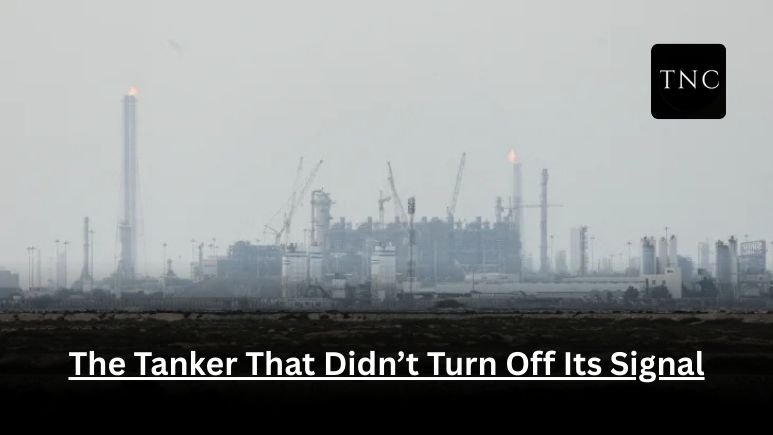

At 2:17 a.m., somewhere in the Arabian Sea, the crew of a rusting oil tanker watched their radar flicker back to life. For hours, they had sailed “dark” with no transponder, no digital footprint, just another ghost ship in a growing fleet that exists in the shadows of global trade.
The cargo below deck: Iranian crude. The destination: likely China. The paperwork: deliberately vague.
Above them, satellites tracked everything. And yet, nothing stopped them.
Even as war engulfs Iran and the United States publicly tightens sanctions, Tehran’s oil revenues have not collapsed; they’ve adapted. The paradox sits at the heart of today’s geopolitical economy: Iran is earning billions from oil exports during active conflict, while Washington appears to tolerate the flow to avoid a far bigger crisis of global energy shock.
This isn’t a loophole. It’s a calculated compromise. And it reveals how, in a world dependent on النفط (oil), enforcement often bends to economic reality.
Start with the numbers. Iran is exporting roughly 1.5 million barrels of oil per day, much of it routed through informal networks and sold primarily to China, its largest buyer.
That flow continues despite sanctions designed to choke it off. Why? Because enforcing those sanctions too strictly could send oil prices into the stratosphere.
The war has already pushed global markets to the edge. The Strait of Hormuz through which roughly 20% of the world’s oil moves has been partially shut or disrupted, choking supply lines and sending prices soaring past $100 per barrel, with some benchmarks spiking far higher.
Cut Iran’s oil on top of that, and the result isn’t strategic victory, it’s economic shock. Governments know it. Markets would feel it within days.
So Washington walks a tightrope.
On one hand, it conducts airstrikes on Iranian military infrastructure, including key locations like Kharg Island responsible for the majority of Iran’s oil exports. But notably, those strikes have avoided crippling the oil facilities themselves.
On the other hand, enforcement of oil sanctions has softened in practice. Analysts point to a quiet shift: maintaining global supply now outweighs strictly blocking Iranian exports.
Meanwhile, Iran has mastered evasion. Its so-called “shadow fleet” tankers that change names, flags, and tracking signals move crude across oceans with minimal traceability.
And buyers are willing. China alone accounts for the overwhelming majority of Iran’s oil exports, providing Tehran with a steady stream of revenue even under pressure.
The result is a strange equilibrium:
- War continues
- Sanctions exist
- Oil still flows
And the global economy, for now, keeps breathing.
The story isn’t that sanctions have failed. It’s that they’ve been recalibrated.
In a world where energy drives everything from inflation to elections no country can afford to fully shut off a major oil producer, even an adversary.
So the tankers keep moving. Quietly. Illegally. Indispensably.
Also Read / Oil Shock, Strategic Windfall: Why the Iran War Could Quietly Strengthen Russia.









Leave a comment