

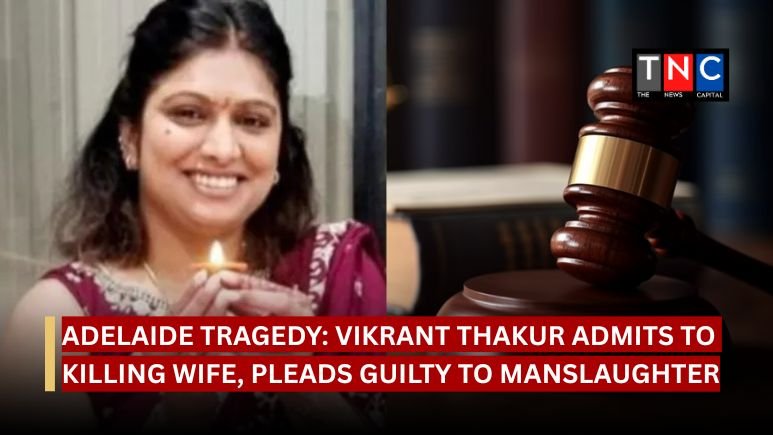

In a courtroom development that has sent ripples through the South Indian diaspora in Australia, 42-year-old Vikrant Thakur has admitted to causing the death of his wife, Supriya Thakur, while formally denying the more severe charge of murder. The partial confession during a virtual court appearance on Tuesday, January 20, 2026, has sparked a complex legal battle over “intent” in the Adelaide Magistrate Court, as prosecutors await crucial forensic evidence to determine whether to pursue the murder charge against the man who killed his 36-year-old wife just days before Christmas 2025.
Vikrant Thakur appeared before the Adelaide Magistrate Court on Tuesday, where he entered a strategic plea that acknowledges his role in his wife’s death while attempting to avoid the mandatory life sentence associated with a murder conviction.
- The Dual Plea: Following the advice of his lawyer, James Marcus, Thakur told the court, “I plead for manslaughter, but not guilty for murder.” This strategic plea acknowledges causing Supriya’s death but denies the specific intent to kill that distinguishes murder from manslaughter.
- Prosecution’s Delay: Prosecutors have requested a 16-week adjournment to finalize the brief of evidence. Crucial elements, including the final post-mortem report and DNA results, are still pending and will likely play a decisive role in determining if the Crown continues to pursue the murder charge.
- Custody Status: Thakur did not apply for bail and was remanded in custody. He is expected to remain behind bars until at least April 2026, when he will next appear in court for further proceedings.
- Strategic Calculation: The manslaughter plea represents an attempt to frame Supriya’s death as a tragic outcome of circumstances rather than a premeditated or intentionally murderous act, potentially reducing the severity of sentencing if accepted.
The Legal Distinction: What’s at Stake
| Feature | Murder Charge | Manslaughter Plea |
| Plea Entered | Not Guilty | Guilty |
| Definition | Intentional or reckless killing | Killing without specific intent to kill |
| Maximum Penalty | Life Imprisonment (Mandatory) | Discretionary (Up to Life) |
| Key Difference | Requires proof of intent or recklessness | Unlawful killing without malice aforethought |
| Next Court Date | April 2026 | April 2026 |
| Evidence Needed | Intent, premeditation | Causation, circumstances |
Supriya Thakur’s death has highlighted the immense sacrifices made by many Indian migrants in Australia, particularly women supporting families while pursuing professional dreams in a new country.
- The Aspiring Nurse: Supriya had migrated from India eight years ago. To support her teenage son and fund her dream of becoming a registered nurse, she reportedly worked up to 80 hours a week across multiple jobs.
- Community Tribute: Friends described her as a “selfless mother” who was dedicated to creating a better future for her child, sacrificing her own well-being to provide educational and economic opportunities.
- The Fatal Night: Emergency services were called to the couple’s home in Northfield, a northern Adelaide suburb, on the night of December 21, 2025, following reports of a domestic assault. Despite frantic attempts by paramedics to perform CPR, Supriya could not be revived.
- Teenage Witness: Her teenage son was reportedly home at the time of the incident, adding another layer of trauma to the tragedy as the child witnessed the loss of his devoted mother.
The tragedy has galvanized the Indian diaspora community in Adelaide and beyond, with immediate practical support for Supriya’s orphaned son and broader conversations about domestic violence.
- GoFundMe Campaign: A crowdfunding page established by friends has raised over $11,641 to support her teenage son, who now faces life without his mother and with his father facing potential life imprisonment.
- Christmas Eve Vigil: Supriya was one of several women honored at a Christmas Eve vigil in Melbourne, marking a somber end to 2025 for advocates of women’s safety in Australia.
- Diaspora Mourning: The tragedy has sent ripples through the South Indian diaspora in Australia, with community members expressing shock and grief over the loss of a woman many saw as embodying the migrant success story.
- Support Networks: Local Indian community organizations are providing counseling and practical assistance to Supriya’s son as he navigates the dual trauma of losing his mother and seeing his father charged with her death.
The tragedy has reignited conversations within the Indian diaspora regarding domestic violence and the unique pressures of migrant life that can create or exacerbate abusive situations.
- Migration Stresses: The pressures of adapting to a new country, economic challenges, social isolation, and cultural dislocation can intensify existing relationship tensions and create new sources of conflict.
- Silent Suffering: Many migrant women face additional barriers to seeking help for domestic violence, including language difficulties, unfamiliarity with Australian legal systems, fear of deportation, and concerns about community stigma.
- Economic Dependency: Supriya’s situation working 80-hour weeks to support her family and pursue nursing qualifications illustrates how economic pressures can create power imbalances and trap women in dangerous situations.
- Community Denial: Cultural factors sometimes lead to underreporting of domestic violence within diaspora communities, where family honor concerns and community pressure to maintain appearances can silence victims.
The prosecution’s 16-week adjournment request indicates that crucial forensic evidence is still being processed, which will determine the trajectory of the case.
- Post-Mortem Results: The final autopsy report will detail the exact cause and manner of death, potentially revealing whether injuries are consistent with intentional murder or a confrontation that escalated to manslaughter.
- DNA Analysis: DNA results may clarify the sequence of events, physical contact patterns, and other forensic details that help establish intent and premeditation.
- Scene Reconstruction: Forensic analysis of the Northfield home may provide additional evidence about the nature of the assault and whether it supports murder or manslaughter charges.
- Witness Statements: The teenage son’s account, along with any neighbor testimony about what they heard, will be critical in reconstructing events of December 21.
Prosecutors now face a strategic decision about whether to accept the manslaughter plea or continue pursuing the murder charge based on forthcoming forensic evidence.
- Evidentiary Threshold: The Crown must assess whether forensic results and witness testimony can prove beyond reasonable doubt that Vikrant acted with murderous intent rather than in a situation that escalated beyond his control.
- Plea Bargain Considerations: Accepting the manslaughter plea would guarantee a conviction and significant prison sentence while avoiding the risk of losing a murder trial if evidence of intent proves insufficient.
- Victim Impact: Prosecutors will also consider what outcome best serves justice for Supriya and her family, weighing the certainty of conviction against the severity of charges.
- April Deadline: The next court appearance in April 2026 will likely reveal whether the Crown proceeds with murder charges or accepts the manslaughter plea.
Supriya’s death occurred during a particularly deadly period for domestic violence in Australia, with her case becoming part of broader national conversations about women’s safety.
- 2025 Statistics: Supriya was one of dozens of women killed in domestic violence incidents in Australia in 2025, contributing to ongoing national debates about prevention and intervention.
- Migrant Vulnerability: Research consistently shows migrant women face elevated domestic violence risks due to social isolation, economic dependency, and barriers to accessing support services.
- Legal Protections: Australian states have strengthened domestic violence laws and support systems in recent years, but gaps remain in reaching isolated communities and vulnerable populations.
- Prevention Challenges: Supriya’s case, where death occurred despite her working extraordinary hours to support her family, illustrates how economic stress and migration pressures can create or intensify abusive dynamics.
As Vikrant Thakur remains in custody awaiting the April 2026 court date, multiple processes unfold simultaneously forensic analysis, legal strategy, and community healing.
- Forensic Timeline: The 16-week adjournment gives prosecutors time to receive and analyze post-mortem and DNA results that will shape their charging decision.
- Son’s Future: Supriya’s teenage son faces an uncertain future, potentially orphaned if his father receives a long prison sentence, requiring ongoing community support and intervention.
- Legal Precedent: The case may set important precedents about how Australian courts handle domestic homicides involving migrant families and the application of manslaughter versus murder standards.
- Community Reflection: The Indian diaspora in Australia continues processing this tragedy, with discussions about how to better support vulnerable women and prevent future domestic violence deaths.
Vikrant Thakur’s admission that he caused his wife’s death while denying murderous intent sets up a legal battle over what happened in that Northfield home on December 21, 2025 whether it was a premeditated murder or a confrontation that escalated to unintended killing. For Supriya’s teenage son, the legal distinction may matter less than the brutal reality that his mother, who worked 80-hour weeks to give him a better life, is gone, and his father sits in custody charged with ending it. The Go Fund Me campaign raising money for his future is a tangible expression of community support, but no amount can replace the mother who sacrificed everything for his success. As prosecutors await forensic evidence to decide whether to pursue murder charges or accept the manslaughter plea, the Adelaide Magistrate Court will ultimately determine whether Vikrant Thakur faces mandatory life imprisonment for murder or a discretionary sentence for manslaughter but either way, a family has been destroyed, a promising life has been cut short, and the Indian diaspora community confronts another painful reminder of how domestic violence shatters lives regardless of immigration status, economic ambition, or cultural background.
Also Read / Blood on the Coast: Russian National Arrested for ‘Chilling’ Double Murder in North Goa.













Leave a comment