

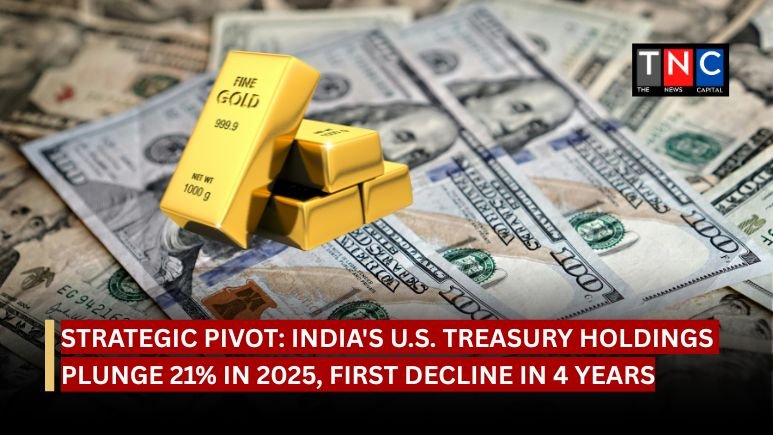

The order came through the Reserve Bank of India’s trading desk on a Tuesday morning in March. Sell $4.2 billion in U.S. Treasuries. No fanfare. No press release. Just a routine transaction in the global bond market that barely moved prices. But the sell order wasn’t routine. It was part of a quiet, methodical unwinding that would see India dump over $50 billion in American government debt by October, the largest drawdown in four years. While Wall Street analysts debated Federal Reserve policy and inflation prints, RBI Governor Shaktikanta Das was executing a different calculation entirely. He was betting that in a world where superpowers freeze each other’s assets and tariffs arrive by presidential tweet, gold matters more than yield.
India slashed its U.S. Treasury holdings by 21% in 2025, ditching over $50 billion in American debt even as yields climbed to their most attractive levels in years. The RBI chose strategic resilience over returns, pouring money into gold instead while navigating the fallout from Trump’s 50% tariffs and the chilling precedent of frozen Russian reserves. The pivot reveals how emerging economies are quietly redesigning their financial defenses, treating diversification not as portfolio theory but as geopolitical insurance against a world where your reserves can become leverage in someone else’s fight.
U.S. Treasury data shows India’s holdings fell from roughly $241 billion in October 2024 to $190.7 billion by October 2025, a $50.7 billion decline that marks the first annual drop since 2021. The timing is striking. During 2025, the benchmark 10-year Treasury yielded between 4.0% and 4.8%. Under normal conditions, those returns attract central banks like gravity. The RBI ignored them.
Economists point to strategic reallocation. By trimming dollar-denominated assets, the central bank reduces concentration risk and shields reserves from dollar-specific volatility. The move breaks a four-year trend of stable or rising holdings, aligning India with other BRICS nations seeking alternatives to Western financial dominance.
The money went to gold. RBI bullion reserves climbed to 880.18 metric tonnes by October 2025, up from 866.8 tonnes a year earlier. Gold now represents roughly 13.6% of India’s $686 billion forex basket, compared to just 9.3% in 2024. “India’s lower holdings of U.S. Treasuries reflect a push to buy more gold as a strategic hedge against geopolitical risks and potential financial sanctions,” said Gaura Sengupta, chief economist at IDFC First Bank.
The sell-off coincides with the worst year in India-U.S. trade relations in decades. In August 2025, the Trump administration slapped 50% tariffs on Indian exports as punishment for New Delhi’s continued purchases of Russian oil. The economic friction accelerated India’s desire to reduce financial dependence on Washington. But tariffs only explain the urgency. The deeper fear traces to February 2022, when the U.S. and European allies froze Russia’s foreign reserves. That move sent shockwaves through every central bank holding dollars in American custody. The RBI viewed the reduction as pre-emptive de-risking against future secondary sanctions or asset freezes.
India remains among the top 20 global holders of U.S. debt, but analysts expect the controlled exit to continue through 2026. The Federal Reserve is expected to cut rates in early 2026, potentially weakening the dollar and making non-dollar assets and gold even more attractive for reserve managers. The RBI may also deploy liquid dollar holdings to defend the rupee, which faces pressure from a widening trade deficit and regional instability.
India looked at 4.8% yields on U.S. Treasuries and decided gold bars locked in a Mumbai vault mattered more, because yield only matters if you’re confident the government paying it won’t freeze your account when geopolitics shift. The $50 billion drawdown isn’t a market call. It’s a vote of no confidence in a financial system where reserve currency status comes with the fine print that your assets belong to you only as long as Washington says they do. The RBI is betting that in 2026 and beyond, neutrality beats returns, and the only safe haven is the one no superpower controls.
Also Read / RBI slashes repo rate to 5.25% as inflation hits record low.












Leave a comment