

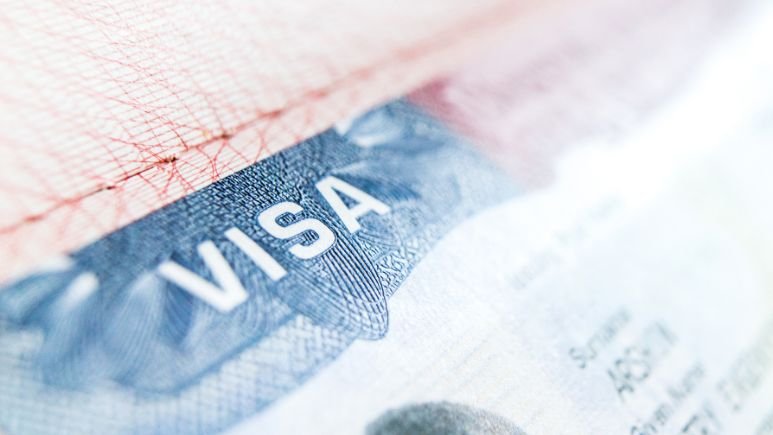

The United States halted visa issuance for all Afghan passport holders Friday and suspended asylum decisions indefinitely following a shooting that killed a National Guard member near the White House.
The sweeping freeze affects tens of thousands of pending immigration cases and threatens to strand Afghan allies who worked with American forces during the 20-year war.
Secretary of State Marco Rubio announced the visa ban hours after US Citizenship and Immigration Services Director Joseph Edlow ordered a complete halt to asylum decisions across all nationalities.
“President Trump’s State Department has paused visa issuance for ALL individuals traveling on Afghan passports,” Rubio posted on X. “The United States has no higher priority than protecting our nation and our people.”
The measures came three days after Rahmanullah Lakanwal, a 29-year-old Afghan national, allegedly shot two West Virginia National Guard members in downtown Washington. Army Specialist Sarah Beckstrom, 20, died Thursday from her injuries. Air Force Staff Sergeant Andrew Wolfe, 24, remains in critical condition.
Suspect was CIA-vetted
Lakanwal arrived in the United States in September 2021 through Operation Allies Welcome, the Biden administration program that evacuated tens of thousands of Afghans following the US withdrawal.
In Afghanistan, he worked with the Zero Unit, a CIA-backed elite force that targeted terrorism suspects. The unit operated closely with the CIA and Joint Special Operations Command.
“He was a trusted member of that team,” one source familiar with the investigation told ABC News.
Despite this background, Lakanwal was granted asylum in April 2025 under the Trump administration, according to multiple law enforcement sources.
The National Counterterrorism Center’s director Joe Kent said Friday that Lakanwal “was only vetted to serve as a soldier to fight against the Taliban, AQA, & ISIS in Afghanistan, he was NOT vetted for his suitability to come to America and live among us.”
Kent blamed the Biden administration for “negligently” using combat vetting standards as qualifications for US resettlement, “foregoing previous vetting standards applied to Special Immigrant Visas.”
Trump vows ‘permanent pause’
President Donald Trump escalated his response Thursday night, declaring he would “permanently pause migration from all Third World Countries.”
In a lengthy Thanksgiving Day post on Truth Social, Trump attacked immigration policies and promised what he called “reverse migration” to remove anyone “non-compatible with Western Civilization.”
“We must now re-examine every single alien who has entered our country from Afghanistan under Biden,” Trump said in an earlier video message, “and we must take all necessary measures to ensure the removal of any alien from any country who does not belong here.”
Asked Friday whether he planned to deport Lakanwal’s wife and five children, Trump said: “Well we’re looking at that right now. We’re looking at the whole situation with family.”
The Department of Homeland Security announced it would review green card holders from 19 “countries of concern,” including Afghanistan.
More than 2.2 million immigrants are awaiting asylum decisions or hearings as of August 2025, according to Syracuse University data.
Afghan allies devastated
For Afghans who risked their lives working with US forces, the blanket ban represents a devastating betrayal.
“They’ve closed our last path to safety,” one Afghan interpreter waiting in Islamabad told Reuters. Many former US partners remain in hiding from Taliban reprisals because of their wartime service.
AfghanEvac, a nonprofit helping former interpreters and military allies, condemned Friday’s announcement as “a violation of federal law.”
The organization accused the administration of using “a single violent individual as cover for a policy they have long planned,” arguing that “intelligence and vetting failures by US agencies are being turned into a rationale to penalize an entire community.”
Veterans’ groups echoed the criticism. Many pointed out that Congress specifically mandated Special Immigrant Visa pathways for Afghan allies, suggesting the freeze could breach statutory obligations.
“This sends a chilling message to future local allies in other conflict zones,” one analyst said, “who may conclude that US protection can disappear overnight when domestic politics shift.”
The numbers affected
Approximately 195,000 Afghan immigrants live in the United States as of 2022, with major concentrations in Washington DC and Sacramento, according to the Migration Policy Institute.
More than 100,000 immigration and resettlement cases from the 2021 evacuation remain under review, with no clear timeline for when processing might resume.
The State Department said it’s taking “all necessary steps to protect U.S. national security and public safety” but provided no details on what security protocols require revision.
Before the shooting, the Trump administration had already ordered USCIS to “re-interview” some 200,000 refugees who entered the country, according to a memo obtained by The Hill.
The chaotic 2021 evacuation
The Biden administration’s Operation Allies Welcome emerged from the chaotic US withdrawal from Afghanistan in August 2021.
As the Taliban swept into Kabul, thousands of Afghans who had worked with American forces rushed to the airport seeking evacuation. The resettlement process happened under immense time pressure.
A New York Times investigation found that the evacuation “spurred a humanitarian crisis in Doha as refugees packed into airport hangars and tents at a military base there.”
Flight manifests were at times incomplete or missing. Visa or citizenship status was unknown for many evacuees. Demographic data was lacking.
The rushed conditions created gaps that critics now cite as security failures. However, advocates note that these Afghans faced imminent danger from the Taliban precisely because of their US affiliations.
The investigation continues
Authorities have interviewed Lakanwal’s wife, each of his five children, and others around him, according to law enforcement officials.
Family members told investigators Lakanwal suffered from post-traumatic stress disorder, sources said.
The Taliban’s ambassador to Qatar called Friday for a “vast investigation” into the suspect.
“According to reports, this person was part of the security forces, then operating under CIA,” Suhail Shaheen said in a statement to CNN. “Such people were not faithful to their country (Afghanistan).”
Trump described the attack as a “terrorist attack” and blamed Biden-era immigration policies.
“I mean, he went nuts, and that happens. It happens too often with these people,” Trump told reporters at Mar-a-Lago. “There was no vetting or anything.”
However, records show Lakanwal underwent multiple vetting processes both before arriving in 2021 and when granted asylum in April 2025 under Trump’s administration.
International reaction
Two UN agencies criticized Trump’s rhetoric Friday, urging the United States to maintain its commitments to refugees.
The International Organization for Migration and UN refugee agency said blanket bans based on nationality undermine international protection systems.
“These measures risk stigmatizing entire populations and abandoning those most in need of protection,” a joint statement said.
European allies privately expressed concern that the US is walking away from commitments to Afghan partners, potentially complicating their own resettlement efforts.
Legal and practical questions
Legal experts say the visa freeze raises multiple questions.
The State Department has broad authority over visa issuance, but Congress created specific statutory pathways for Afghan allies. Whether the executive branch can indefinitely suspend those programs remains unclear.
“This could trigger court challenges arguing the administration is violating congressional mandates,” one immigration attorney said.
Practically, the freeze affects multiple categories: Special Immigrant Visas for interpreters and other allies, family reunification cases, student visas, and other legal pathways.
Some Afghans with approved cases ready for final processing now find themselves in limbo. Medical examinations and security clearances expire if not acted upon, requiring applicants to restart lengthy processes.
Political calculations
Trump’s escalating rhetoric appears aimed at his political base rather than practical security improvements.
His Thanksgiving post attacked Minnesota’s Somali community and Governor Tim Walz, using offensive language and making unsubstantiated claims about migration numbers.
“Hundreds of thousands” of Somali migrants are “completely taking over the once great state of Minnesota,” Trump claimed, without evidence.
He threatened to end Temporary Protected Status for Somalis, a program preventing deportations to countries experiencing conflict. A congressional report put the number of Somalis covered nationally at 705, far below Trump’s claims.
The president also disparaged Representative Ilhan Omar, a Somali-American congresswoman, making baseless suggestions about her immigration status despite her being a naturalized US citizen.
What happens next
The State Department provided no timeline for when visa processing might resume or what specific security gaps require addressing.
Edlow said asylum decisions are halted “until we can ensure that every alien is vetted and screened to the maximum degree possible.”
Afghan families with pending cases face agonizing uncertainty. Many have sold property, quit jobs, and made irreversible decisions based on expected US resettlement.
Those in third countries like Pakistan or Qatar face particular risk. Their temporary protection often depends on pending US cases. If those cases stall indefinitely, host countries may revoke permission to stay.
For advocates, the crisis represents a moral failure.
“These are the people who stood beside us for 20 years,” one veterans’ advocate said. “Now when they need us most, we’re slamming the door.”
The administration frames its actions as necessary security measures. Critics call them collective punishment that abandons allies and undermines future American credibility.
As the investigation into the DC shooting continues, tens of thousands of Afghans remain frozen in bureaucratic limbo, their futures hostage to political calculations thousands of miles away.
The freeze on Afghan visas and asylum decisions marks one of the Trump administration’s most sweeping immigration actions, affecting tens of thousands while sending shockwaves through Afghan communities worldwide who believed American promises of protection.
Also Read / Trump Orders Green Card Review for 19 High-Risk Countries After DC Guard Shooting







Leave a comment