

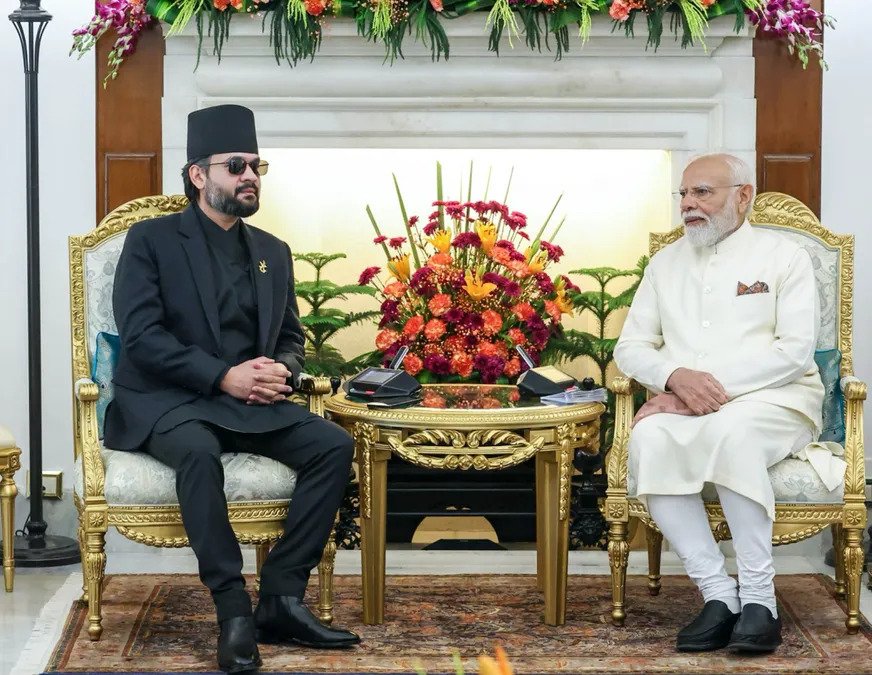

India’s ₹15,000 crore Nepal package aims to support reconstruction, infrastructure and energy development in its Himalayan neighbour. Prime Minister Narendra Modi announced the assistance on November 23, 2026, following talks with Nepal’s Prime Minister Balendra Shah in New Delhi.
The announcement came during Shah’s state visit to India from November 22 to 23. Official documents put the package’s value at ₹15,000 crore in Indian currency, equivalent to NPR 24,000 crore in Nepali currency.
The package combines grant assistance with a credit facility, making its funding structure important to understand.
How Is the Package Divided?
The official joint statement sets out two components:
| Component | Amount in Indian rupees | Purpose |
| Grant assistance | ₹3,500 crore | Post-disaster reconstruction and new infrastructure |
| Rupee-denominated credit line | ₹11,500 crore | Energy-sector projects |
| Total package | ₹15,000 crore | Development cooperation |
Grant assistance and a line of credit serve different purposes. The credit component provides loan financing, while the grant component supports reconstruction and infrastructure without being classified as a loan.
Specific projects and the arrangements for providing assistance will be finalised through consultations between the two countries.
That means the announcement is a funding commitment. Its practical delivery will depend on the projects selected, their preparation and the agreed implementation arrangements.
Why Nepal’s Reconstruction Is a Priority
The assistance follows the severe floods that struck Nepal in August 2026. During the visit, Nepal acknowledged India’s humanitarian and technical support after the Rasuwa-Bhotekoshi floods.
Modi said the package would support affected families, create opportunities and strengthen Nepal’s ability to deal with future disasters.
Reconstruction involves more than replacing damaged structures. Restoring reliable access, essential services and economic activity can help communities resume daily life.
The grant component gives this recovery effort a defined place within the wider development partnership. Project selection will be important in determining which communities and services receive support.
Energy Projects Receive the Largest Share
The ₹11,500 crore credit line is intended for energy-sector projects. It represents the larger share of the announced package.
The countries’ joint vision also supports stronger cooperation in hydropower, transmission infrastructure and electricity trade. Both sides agreed to encourage investment and explore opportunities based on mutual benefit and market demand.
Reliable power infrastructure could support businesses and create opportunities for energy trade. However, benefits will depend on project design, financing terms, construction progress and the ability to deliver electricity where it is needed.
The relevant agreements and project announcements will provide a clearer picture of how the credit facility is used.
Connectivity Announcements Accompanied the Package
The leaders announced several transport and infrastructure developments during the same visit.
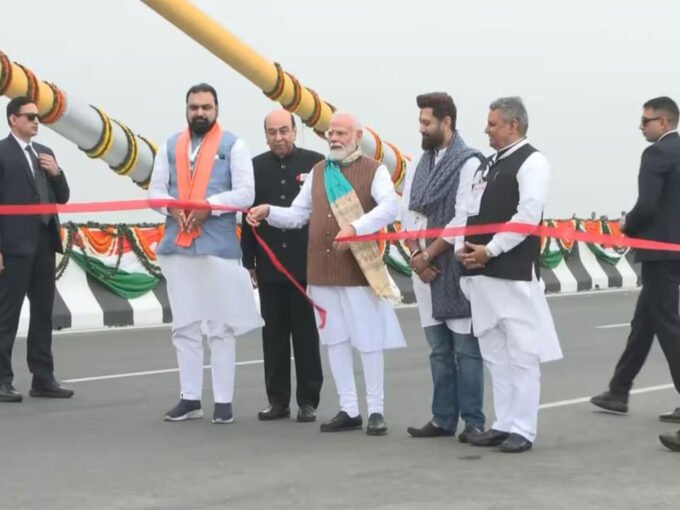
These included launching the Sarayu-Kamala Express between Ayodhya and Janakpur, inaugurating a road bridge between Dharchula in India and Darchula in Nepal, and laying the foundation stone for an integrated check post at Banbasa.
The official outcomes also listed the foundation stone for the Lower Arun Hydroelectric Project and the dedication of Phase II of the Motihari-Amlekhgunj oil pipeline.
These initiatives show the wider scope of the visit. Each project’s status and financing should be understood through its own official details, alongside the development assistance announcement.
Education, Innovation and Cooperation
The visit also produced announcements aimed at younger people and new businesses.
Modi outlined plans for a startup incubator, an innovation hub and an offshore Indian Institute of Technology campus in Nepal. He also announced expanded scholarship opportunities for Nepali students in law and technology.
The joint vision describes further cooperation in training, research and digital services. These areas could help connect infrastructure development with the skills needed to use and maintain modern systems.-
For students and entrepreneurs, the practical opportunities will become clearer when institutions publish programme details, admission requirements and implementation schedules.
Why the Announcement Matters for Both Countries
The package forms part of a broader vision for India-Nepal cooperation covering development, connectivity, energy and people-to-people links.
For Nepal, the immediate focus includes recovery and stronger infrastructure. For India, cooperation with a close neighbour can support regional connectivity and shared economic activity.
The potential benefits are connected: better infrastructure can improve access to markets, while dependable energy and transport can support productive businesses.
Achieving those outcomes will require coordination between governments, implementing agencies and the communities affected by individual projects.
What Happens Next?
The next stage is to identify projects, settle financing arrangements and establish delivery plans.
Public updates on approvals, expenditure and construction milestones will help show how the commitment is progressing. Clear information about grant-funded projects and credit-financed projects will also make the package easier to assess.
Regular reporting would help citizens understand which commitments have moved into approved projects and which remain under discussion.
The ₹15,000 crore Nepal package is a significant development commitment. Its lasting value will be measured through completed infrastructure, stronger services and practical improvements in people’s lives.
Also Read | Cairo Ring Road Tanker Fire: Death Toll Rises to 31 in Giza












Leave a comment