

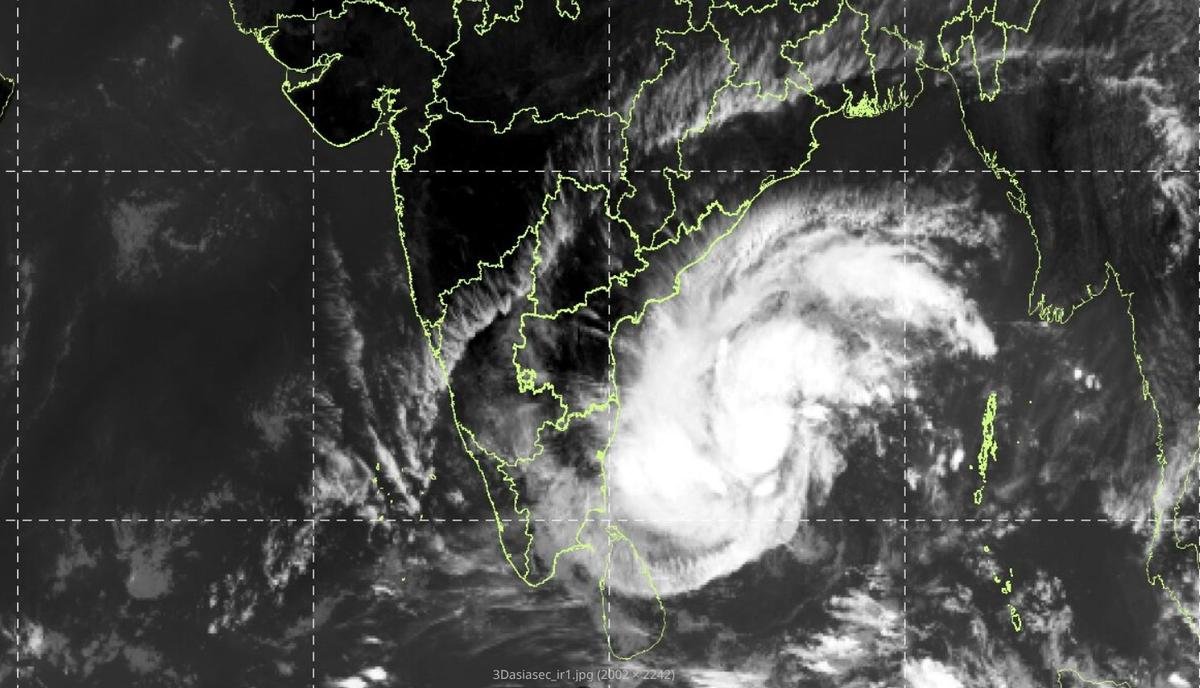

Cyclone Akvan Andhra Pradesh Update: The India Meteorological Department (IMD) has issued a cyclone alert for coastal Andhra Pradesh and nearby regions as Cyclone Akvan strengthens over the Bay of Bengal.
According to the IMD’s November 17 advisory, the storm is expected to intensify into a very severe cyclonic storm before approaching the Andhra Pradesh coast on November 20, 2026.
The weather department has forecast powerful winds, heavy rainfall, and dangerous sea conditions.
Coastal communities, fishermen, and travellers are advised to monitor official weather updates and follow instructions issued by local authorities.
Cyclone Akvan Latest Update: Where Is the Storm Now?
According to the IMD, Cyclone Akvan was located over the central parts of the southern and adjoining west-central Bay of Bengal on November 17.
At 8:30 AM IST, the storm was positioned approximately:
- 610 km east of Chennai, Tamil Nadu.
- 660 km southeast of Machilipatnam, Andhra Pradesh.
- 670 km south-southeast of Visakhapatnam, Andhra Pradesh.
- 790 km south of Gopalpur, Odisha.
The cyclone was moving slowly towards the north-northwest.
Meteorologists expect the storm to gain strength as it moves across the Bay of Bengal.
The IMD has issued an orange cyclone alert for Andhra Pradesh and the adjoining southern Odisha coast.
Residents are encouraged to follow official bulletins as the storm’s movement and intensity may change.
When Will Cyclone Akvan Make Landfall in Andhra Pradesh?
The IMD has forecast that Cyclone Akvan could cross the Andhra Pradesh and Yanam coasts between Nellore and Tuni around noon on November 20, 2026.
The storm is expected to intensify into a severe cyclonic storm on November 17 and a very severe cyclonic storm by the morning of November 19.
At landfall, the weather department forecasts maximum sustained wind speeds of approximately 120–130 km/h, with gusts reaching 145 km/h.
However, these figures remain forecasts rather than confirmed landfall conditions.
The cyclone’s actual path, timing, and intensity may change as new weather observations become available.
Heavy Rainfall Warning for Andhra Pradesh and Nearby Areas
Cyclone Akvan is expected to bring significant rainfall to parts of India’s eastern coastline.
Heavy rain may increase the risk of waterlogging, local flooding, and transport disruptions in affected areas.
Low-lying neighbourhoods and places with poor drainage may face additional challenges during periods of intense rainfall.
Strong winds could also damage weak structures, temporary shelters, trees, and unsecured outdoor objects.
Residents should avoid unnecessary travel during severe weather conditions.
People living near rivers, coastal areas, and flood-prone locations should remain particularly alert.
Official district-level rainfall warnings should be checked regularly because the expected impact can differ from one location to another.
Which Areas Could Be Affected by Cyclone Akvan?
The cyclone is expected to have its greatest impact near the projected landfall zone along coastal Andhra Pradesh.
Areas requiring close monitoring include:
- Nellore and surrounding coastal regions.
- Coastal areas around Machilipatnam.
- Kakinada and nearby communities.
- Tuni and adjoining coastal locations.
- Yanam and surrounding areas.
Other locations may experience rainfall, strong winds, or rough sea conditions depending on the cyclone’s final movement.
The IMD has also issued weather advisories for parts of Tamil Nadu, Puducherry, and Karaikal.
Residents should not assume that every listed location will experience the same conditions.
The exact impact will depend on the storm’s track, intensity, and distance from each area.
Fishermen Warned About Dangerous Sea Conditions
One of the major concerns surrounding Cyclone Akvan is the expected deterioration of sea conditions.
Strong winds and high waves can make fishing and marine travel extremely dangerous.
Fishermen should follow the IMD’s latest sea-area warnings and instructions from local coastal authorities.
Fishing boats already operating at sea should remain in contact with the relevant authorities and follow official return-to-port guidance.
People are also advised to avoid beaches, exposed coastlines, and unnecessary sea travel during cyclone warnings.
Even when rainfall appears limited on land, offshore conditions may remain dangerous.
How Can Residents Prepare for Cyclone Akvan?
With the cyclone approaching, early preparation can reduce risks.
Residents in vulnerable areas should take the following precautions:
1. Monitor official weather alerts
Follow IMD updates and local government announcements for accurate information.
2. Prepare essential supplies
Keep drinking water, food, medicines, torches, and important documents ready.
3. Charge electronic devices
Ensure mobile phones and power banks are fully charged before severe weather arrives.
4. Secure outdoor objects
Move loose furniture, flowerpots, and other items that strong winds could carry away.
5. Avoid flooded roads
Never attempt to walk or drive through fast-moving floodwater.
6. Follow evacuation instructions
If local authorities announce evacuation measures, move to designated safe locations promptly.
Why Is Cyclone Akvan a Serious Weather Threat?
Cyclones can bring several hazards at the same time.
Heavy rainfall may cause flooding, while powerful winds can damage buildings and electricity infrastructure.
Storm surges and dangerous waves may also affect coastal communities.
The combined impact can interrupt transportation, communication, and essential services.
However, the level of damage cannot be determined before the cyclone reaches the affected region.
Accurate forecasts, early warnings, and timely safety measures are important for reducing potential losses.
Final Update: What Happens Next?
Cyclone Akvan remains a developing weather situation as of November 17, 2026.
The IMD forecasts further intensification before the storm approaches the Andhra Pradesh and Yanam coasts around November 20.
Residents should remain alert, avoid spreading unverified information, and regularly check official weather bulletins.
The most important message is to prepare early, follow government instructions, and prioritize personal safety.
For official updates, visit the India Meteorological Department website at https://mausam.imd.gov.in/.
Stay connected with The News Capital for further updates on Cyclone Akvan, Andhra Pradesh weather warnings, and important developments across India.
Also Read | Kulgam Encounter: Lashkar Operative Linked to CRPF Attack Killed













Leave a comment