

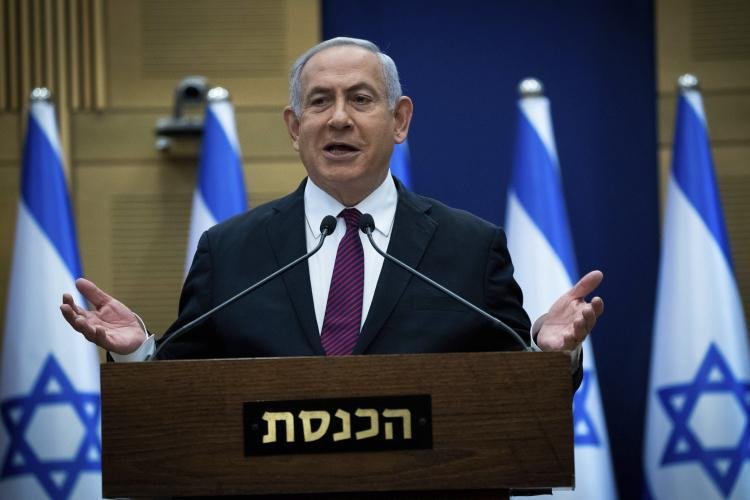

Israel is facing political uncertainty after its October 27 parliamentary election failed to produce a clear winner.
Prime Minister Benjamin Netanyahu’s political alliance emerged as the largest bloc, but it has not secured enough seats to form a majority government.
The election has raised fresh questions about the Netanyahu coalition’s future, with rival parties preparing for difficult negotiations.
Opposition leader Gadi Eisenkot is also exploring possible alliances, while Arab-led political parties could play an important role in deciding Israel’s next government.
With votes still being counted, the country may face weeks of political negotiations.
What Happened in the Israel Election 2026?
Israel held its parliamentary election on October 27, 2026, to elect members of the Knesset.
The Knesset has 120 seats, meaning a political alliance generally needs at least 61 seats to secure a majority.
Early results showed Netanyahu’s right-wing and religious alliance leading the race.
However, neither Netanyahu nor Eisenkot secured a clear majority.
By October 29, preliminary figures indicated that Netanyahu’s bloc could receive approximately 53 to 54 seats.
Eisenkot’s opposition grouping was projected to win around 48 seats.
Arab-led parties were expected to secure approximately 18 to 19 seats.
These numbers may change slightly as the remaining votes are counted.
Why Is Netanyahu’s Coalition Future Uncertain?
Although Netanyahu’s alliance has more seats than its main rival, it remains short of the majority required to govern.
This creates a major challenge.
Netanyahu must convince additional lawmakers or political parties to support his leadership.
His traditional allies include right-wing, far-right and ultra-Orthodox religious parties.
However, their combined strength is currently insufficient to guarantee another term in office.
Any new coalition could require compromises over government policies, ministerial positions and political priorities.
Some potential partners may also demand changes to the existing government’s composition.
Until an agreement is reached, Netanyahu’s political future remains uncertain.
Who Is Gadi Eisenkot, Netanyahu’s Main Rival?
Gadi Eisenkot is a former chief of staff of the Israel Defense Forces and the leader of the Yashar party.
He emerged as Netanyahu’s main challenger during the election.
Eisenkot’s political campaign focused on leadership, national security and changing Israel’s political direction.
However, his opposition grouping also lacks enough seats to form a majority independently.
To become prime minister, Eisenkot would need support from additional parties.
One possible route involves cooperation with Arab-led political groups.
Such an arrangement could face resistance from some parties within the opposition alliance.
This makes his path to power complicated.
Why Are Arab-Led Parties Important?
One of the election’s most significant developments has been the strong performance of Arab-led parties.
Their combined representation could reach approximately 18 to 19 seats.
These parties represent different political positions and communities, including many Palestinian citizens of Israel.
Their parliamentary strength could become important during coalition negotiations.
If Eisenkot hopes to form a government, support from these parties may be necessary.
However, several opposition figures have previously opposed governing with Arab-led parties.
The election has therefore created an important political question: Can rival parties overcome their differences to form a government?
What Happens Next in Israel?
Israel’s president, Isaac Herzog, will play an important constitutional role after the official results are finalised.
The president consults parliamentary parties before selecting a lawmaker to attempt to form a government.
The chosen candidate is generally given 28 days to negotiate a coalition.
A 14-day extension may be granted.
If negotiations fail, another candidate may receive an opportunity.
Further unsuccessful attempts could eventually lead to another election.
For now, Netanyahu remains caretaker prime minister while the political process continues.
Could Netanyahu Form a Unity Government?
One possibility is a broader coalition involving parties that previously competed against one another.
A unity government could bring together Netanyahu’s Likud party and select opposition groups.
Supporters of this approach argue that cooperation could provide greater political stability.
However, such an agreement would require significant compromises.
Disagreements over security policy, religious exemptions from military service and the role of controversial political figures could complicate negotiations.
Eisenkot and other opposition leaders would also need to consider whether joining Netanyahu would contradict their election promises.
No final unity agreement has been announced.
What Issues Influenced the Election?
The election took place during a period of major political and security challenges.
National security remained an important concern following the October 7, 2023, Hamas-led attacks and the subsequent war in Gaza.
The government’s handling of those events became a central political issue.
Other debates included military service exemptions for ultra-Orthodox Jewish men, the economy and the future of Israel’s democratic institutions.
Netanyahu’s ongoing corruption trial also remained part of the political debate. He denies wrongdoing.
These issues contributed to divisions among voters and political parties.
How Could the Election Affect the Middle East?
Israel’s next government will influence important regional decisions.
These include security policy, relations with neighbouring countries, the situation in Gaza and diplomatic relations with international partners.
A government led by Netanyahu may continue several existing policy priorities.
An alternative coalition could seek changes in some areas.
However, future decisions will depend on the parties involved and the agreements they reach.
It is too early to predict the direction of Israel’s next government.
Conclusion
The Netanyahu coalition’s future remains uncertain following Israel’s closely watched 2026 parliamentary election.
Although Netanyahu’s alliance leads the vote count, it has not secured the majority needed to govern alone.
Gadi Eisenkot also faces challenges in building a coalition, while Arab-led parties could influence the outcome.
The coming days will be important as final results emerge and negotiations begin.
Whether Israel forms a new coalition, establishes a unity government or eventually returns to the polls remains unclear.
Also Read | Spain High-Speed Train Collision: At Least 68 Dead, Dozens Injured in Tragic Railway Disaster







Leave a comment