

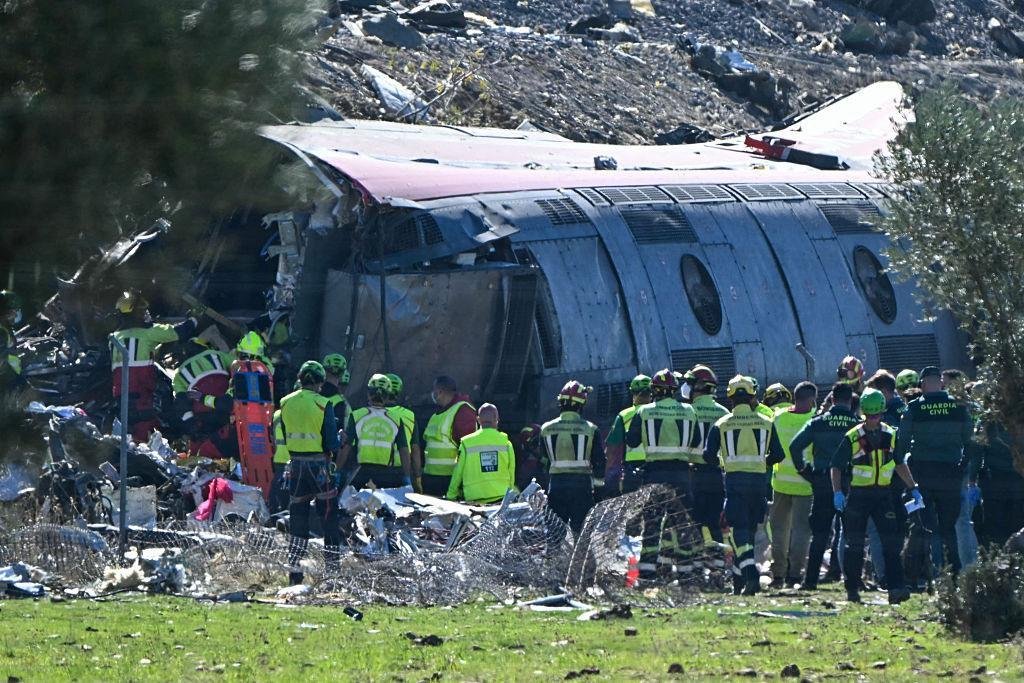

A devastating Spain high-speed train collision has killed at least 68 people and injured dozens more, leaving the country in shock.
The accident occurred on Wednesday, October 28, near Urda in Toledo province, approximately 130 kilometres south of Madrid.
Two passenger trains travelling in the same direction collided after one train reportedly stopped on the tracks.
The crash caused severe damage to several carriages and triggered a major emergency response.
Spanish authorities have launched an investigation into the circumstances surrounding the disaster, with early findings pointing towards a signalling failure and a possible mistake in railway traffic control.
What Happened in the Spain High-Speed Train Collision?
The accident occurred at approximately 8:53 a.m. local time on the Madrid–Seville high-speed railway line.
According to officials, a high-speed train operated by Spain’s state-owned railway company Renfe struck the rear of a stationary train operated by private company Iryo.
The impact caused carriages to derail, leaving passengers trapped inside damaged compartments.
Emergency responders rushed to the location as images of overturned train carriages and damaged railway infrastructure emerged.
The collision happened on a straight section of railway track, raising serious questions about how two trains could collide on a modern high-speed network.
How Many People Were Killed and Injured?
Initial reports confirmed at least 68 fatalities following the collision.
By October 29, some reports indicated that the death toll had increased to at least 69.
Around 80 people were reported injured, with approximately 50 suffering serious injuries and 15 described as critically injured in earlier official updates.
More than 50 injured passengers required hospital treatment.
Authorities warned that the casualty figures could change as rescue teams continued searching the wreckage.
The disaster has become one of Spain’s deadliest railway accidents in recent history.
What Caused the Train Collision?
Investigators are examining a failure in the railway signalling and communication system.
According to Spanish Transport Minister Óscar Puente, a computer malfunction caused trains on a section of the route to stop.
Railway traffic controllers subsequently authorised a Renfe train to resume its journey.
However, the Iryo train remained stationary on the same track.
The moving train then collided with the stopped service.
Officials have questioned why the Renfe train was allowed to proceed despite an active stop signal.
Although preliminary findings suggest an error in traffic management, investigators have not yet completed their examination of the accident.
Authorities are expected to review communication records, signalling equipment and railway operating procedures.
Rescue Teams Launch Emergency Operations
Emergency workers arrived quickly after the collision.
Firefighters, medical teams, police officers and specialist rescue personnel worked to reach passengers trapped inside damaged carriages.
Several carriages were severely crushed, making rescue operations difficult.
Heavy equipment was brought to the scene to assist with removing wreckage.
Injured passengers were transported to nearby hospitals, while emergency teams established temporary medical assistance areas.
Local residents also helped survivors during the immediate aftermath.
Authorities continued searching the damaged trains to ensure that no passengers remained unaccounted for.
Spanish Prime Minister Announces National Mourning
Spanish Prime Minister Pedro Sánchez expressed condolences to the victims and their families.
He announced three days of official mourning, from October 29 to October 31.
The government promised a thorough investigation into the collision.
Officials also pledged to identify any technical, operational or human failures that may have contributed to the disaster.
The tragedy has prompted widespread expressions of sympathy across Spain.
Political leaders suspended several public activities as the country mourned the victims.
Train Services Suspended After Deadly Crash
The collision caused major disruption to railway services connecting Madrid with southern Spain.
Spain’s railway infrastructure operator, Adif, suspended high-speed services between Madrid, Ciudad Real and Andalusia.
Passengers travelling along the affected route faced cancellations and delays.
Railway authorities began assessing the damaged infrastructure and preparing recovery operations.
Services will depend on the completion of safety inspections and restoration work.
Passengers have been advised to check official railway announcements before making travel arrangements.
Spain Faces Renewed Questions About Railway Safety
The latest accident has intensified concerns about railway safety in Spain.
Earlier this year, another serious train collision near Adamuz, Córdoba, killed 46 people.
The October disaster is Spain’s second major fatal high-speed rail accident of 2026.
Spain operates one of Europe’s largest high-speed railway networks, connecting major cities through modern rail infrastructure.
However, the two disasters have raised questions about maintenance, signalling systems and emergency procedures.
Officials have said the causes of the January and October accidents appear to be unrelated.
Investigators must now determine whether additional safety measures are required.
Why Is This Railway Disaster Significant?
High-speed rail systems are designed with advanced signalling and traffic management technology to reduce collision risks.
When these systems experience technical problems, established safety procedures become especially important.
The Urda collision highlights the potentially devastating consequences of failures in communication or operational decision-making.
The investigation could influence future railway safety policies in Spain and other countries operating high-speed networks.
For passengers, the tragedy has also raised concerns about the reliability of railway safety systems.
Conclusion
The Spain high-speed train collision near Urda has claimed at least 68 lives, injured dozens and left families across the country grieving.
As emergency operations continue, investigators are working to understand how a stationary train and a moving high-speed service ended up on the same track.
The findings will be important for establishing accountability and preventing similar accidents.
For now, Spain remains focused on supporting survivors, assisting grieving families and restoring confidence in its railway network.
Also Read | Two Indian-Origin Men Jailed for 28 Years After High-Speed Race Kills Mother and Daughter in UK









Leave a comment