

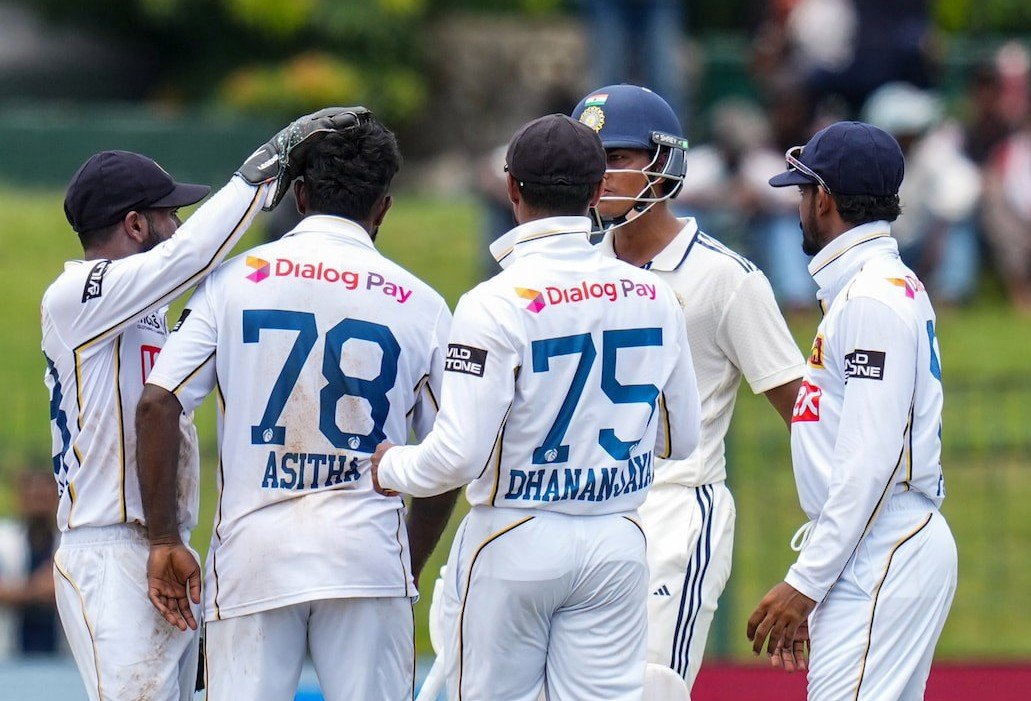

Indian opener Yashasvi Jaiswal has been punished by the International Cricket Council (ICC) following a heated confrontation with Sri Lankan fast bowler Asitha Fernando during the second Test in Colombo.
Both players were fined 25% of their match fees and given one demerit point each after breaching the ICC Code of Conduct. The incident occurred on the opening day of the Test at the Sinhalese Sports Club Ground.
The disciplinary action was announced by the ICC on August 24, 2026. Both Jaiswal and Fernando admitted the offence and accepted the proposed sanctions, meaning a formal hearing was not required.
What Happened Between Jaiswal and Fernando?
The incident took place during the 17th over of India’s first innings.
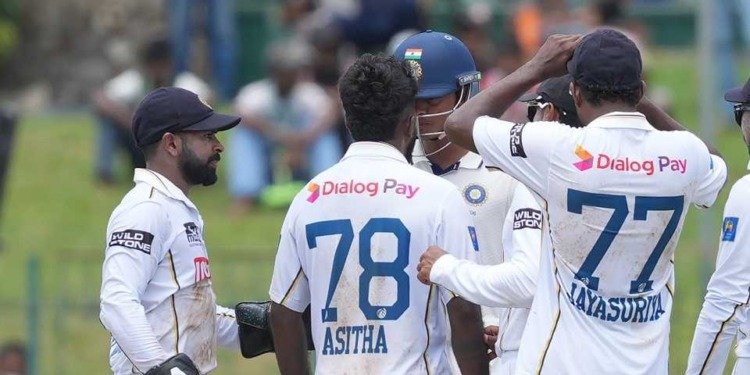
Fernando dismissed Jaiswal for 45 after the Indian batter had struck the Sri Lankan pacer for three consecutive boundaries. Fernando then gave Jaiswal an animated send-off.
Jaiswal turned back and approached Fernando, and the two players exchanged words. The confrontation became more intense when they moved close to each other and their heads made contact. Teammates intervened before the situation could escalate further.
The incident quickly became one of the main talking points from the opening day of the Colombo Test.
ICC Takes Disciplinary Action
The ICC found both players guilty of breaching Article 2.12 of its Code of Conduct.
The provision relates to inappropriate physical contact involving a player, support staff member, umpire, match referee or another person during an international match.
As a result, Jaiswal and Fernando were each handed a 25% match-fee fine and one demerit point.
The punishment was classified as a Level 1 offence. Neither player received a match suspension.
Jaiswal Avoids a Match Suspension
The decision means Jaiswal will not miss the ongoing Test because of the disciplinary incident.
That is significant for India, as the young opener remains an important part of the team’s Test batting lineup.
A heavier punishment could have affected India’s options during the Colombo match. Instead, the matter has been resolved with a financial penalty and a demerit point.
The same punishment was given to Fernando, making the disciplinary decision applicable to both players.
Jaiswal Responds to the Controversy
The incident generated considerable discussion among cricket fans and commentators.
Jaiswal later addressed criticism surrounding the confrontation on social media. He argued that people should not judge the incident without knowing what had been said during the exchange.
His comments suggested that the verbal exchange played an important role in the confrontation.
However, the ICC’s decision focused on the physical contact rather than attempting to publicly determine every detail of the conversation.
Why the ICC Code Matters
The ICC Code of Conduct is designed to maintain discipline and sportsmanship in international cricket.
Competitive cricket can produce emotional moments, especially during Test matches where players spend long periods under pressure.
However, physical confrontations are treated seriously because they can quickly affect the atmosphere of a match.
The ICC’s action sends a clear message that players are expected to control their behaviour even during heated exchanges.
No Previous Offences Helped
One factor mentioned by the ICC was the disciplinary record of both players.
Neither Jaiswal nor Fernando had committed an offence during the previous 24 months.
That clean record is important because repeated breaches can lead to accumulating demerit points and potentially more serious consequences.
For Jaiswal, the one demerit point now sits on his disciplinary record.
The young batter will therefore need to avoid similar incidents in future international matches.
India and Sri Lanka Test Series
The altercation took place during the second Test of India’s series against Sri Lanka.
India won the first Test in Galle by 165 runs, according to the ICC’s series information. The second Test began in Colombo on August 23 and is part of the 2025–27 ICC World Test Championship cycle.
The series has therefore carried importance beyond the individual matches.
Both teams have been competing for valuable Test Championship points, making discipline and player availability especially important.
Jaiswal’s Role in India’s Test Team
Jaiswal has established himself as one of India’s leading young Test batters.
His aggressive approach at the top of the order has made him an important player for India’s long-term Test plans.
His ability to score quickly can put pressure on opposing bowlers, but his aggressive style can also create intense on-field moments.
The Colombo incident showed how quickly emotions can rise between batters and bowlers.
For Jaiswal, the challenge now will be to maintain his competitive approach while ensuring that future confrontations remain within the rules.
What Is a Demerit Point?
A demerit point is added to a player’s disciplinary record when the ICC determines that a breach of its Code of Conduct has occurred.
Players can accumulate demerit points through repeated offences.
If a player reaches the relevant threshold within the specified period, demerit points can be converted into suspension points, potentially leading to missed matches.
Jaiswal has received one point from the Colombo incident, but he has not been suspended.
Message to International Cricketers
The punishment also reinforces the ICC’s approach to player behaviour.
Players are allowed to compete intensely and celebrate wickets, but physical contact that crosses the line can result in disciplinary action.
The decision involving Jaiswal and Fernando demonstrates that the rules apply to both sides.
The ICC did not punish only one player. Instead, both players were sanctioned for their roles in the confrontation.
What Happens Next for Jaiswal?
Jaiswal can continue playing for India unless another disciplinary matter occurs that triggers additional consequences.
His immediate focus will be on cricket and helping India in the ongoing Test series.
The fine will have a financial impact, while the demerit point will remain on his disciplinary record.
For one of India’s emerging batting stars, the incident serves as a reminder that performances on the field can quickly be overshadowed when emotions get out of control.
Conclusion
The Yashasvi Jaiswal ICC punishment has brought an end to the disciplinary controversy surrounding his confrontation with Asitha Fernando during the Colombo Test.
Both players were fined 25% of their match fees and handed one demerit point after the ICC found them guilty of breaching Article 2.12 of its Code of Conduct.
Jaiswal will not face a match suspension for the incident, allowing him to continue representing India in the Test series.
The incident highlights the importance of discipline in international cricket. While passion and aggression are part of the sport, players are expected to maintain control when tensions rise.
Also Read | How Jos Buttler Rewrote the T20 Record Books













Leave a comment