

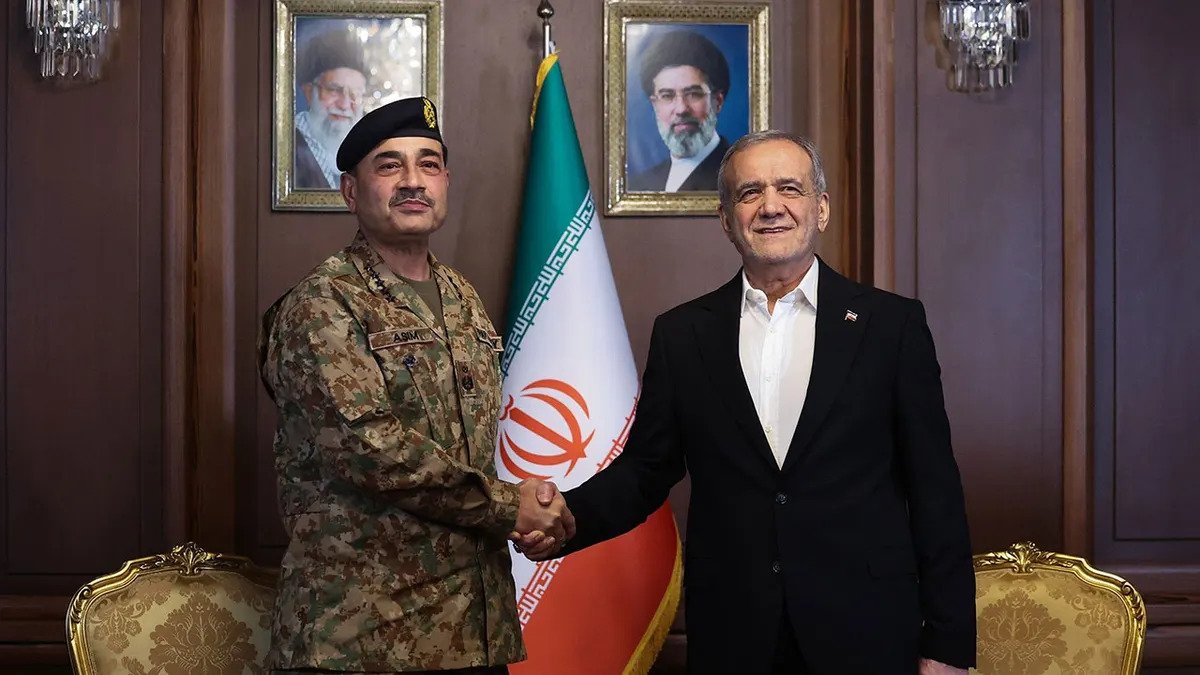

Munir returns to Tehran
Pakistan’s Army Chief, Field Marshal Asim Munir, has returned to Iran as Islamabad intensifies efforts to revive stalled peace talks between Tehran and Washington.
Munir is visiting Tehran on Monday, August 24, for meetings with senior Iranian officials. Iran’s Foreign Ministry said the visit would focus on bilateral cooperation, regional security and Pakistan’s efforts to support peace in West Asia.
The visit comes at a critical moment for the United States-Iran conflict. Diplomatic efforts have slowed, while Washington has threatened stronger economic pressure against Tehran.
Pakistan believes it can provide a channel of communication between Iran and the United States. However, it remains unclear whether Munir can overcome the major differences that have blocked negotiations.
This is reportedly Munir’s third visit to Iran this year. His repeated involvement shows the importance Islamabad places on mediation, especially because Pakistan shares a long border with Iran and could face serious security and economic consequences from a prolonged conflict.[
Peace process reaches deadlock
Pakistan helped broker a memorandum of understanding between Iran, the United States and Islamabad on June 17. The agreement created a 60-day framework for diplomatic engagement.
That deadline expired in mid-August without the parties agreeing to extend the arrangement. Talks were then stalled over several major issues, including sanctions, frozen Iranian assets and the status of the Strait of Hormuz.
The Strait of Hormuz is one of the world’s most important energy routes. A large share of global oil and gas shipments passes through the waterway.
Washington continues to enforce a naval blockade, according to reports. Tehran, meanwhile, insists that movement through the strategic passage will remain restricted until the United States lifts oil sanctions and unfreezes Iranian assets
The dispute has made a diplomatic breakthrough difficult. Iran wants sanctions relief and security guarantees, while the United States is demanding changes to Tehran’s regional and military policies.
What Munir may discuss
During his meetings in Tehran, Munir is expected to discuss ways to reduce tensions and restart direct negotiations. Regional security, the Strait of Hormuz and the humanitarian effects of the conflict are likely to be important topics.
He may also hold talks with Iranian Foreign Minister Abbas Araghchi and other senior security officials. Munir and Araghchi recently discussed regional developments and possible diplomatic solutions during a phone conversation.
Pakistan could propose a step-by-step plan. Such a plan might include a temporary ceasefire, limited sanctions relief, the release of frozen funds and the resumption of direct talks.
The first objective may be to prevent further escalation. Islamabad may seek commitments from both sides to avoid attacks on critical infrastructure, commercial shipping and civilian areas.
A temporary arrangement could create space for longer negotiations. However, neither Washington nor Tehran has indicated that it is ready to abandon its central demands.
Pakistan’s diplomatic role
Pakistan has traditionally maintained close relations with Iran while also preserving important ties with the United States. This position gives Islamabad some access to both sides.
Pakistan’s government says that it wants to support regional peace and security. The country also has practical reasons to pursue diplomacy.
An extended conflict could affect Pakistan through rising oil prices, trade disruptions and pressure along its western border. It could also increase the risk of militant activity and refugee flows.
Pakistan has previously offered to mediate between rival countries. Its officials have described the current effort as an attempt to prevent a wider regional war.
Munir’s role is significant because Pakistan’s military has considerable influence over the country’s foreign and security policy. His participation may allow Islamabad to present proposals that combine diplomatic, military and regional security concerns.
At the same time, the involvement of a military chief could raise questions about the nature of Pakistan’s mediation. Iran and the United States may prefer diplomatic channels led by civilian officials, although security issues may require direct military communication.
Can Munir break the impasse?
Munir may be able to help restart communication, but ending the conflict will be much more difficult. The central disputes involve issues that go beyond personal diplomacy.
Iran wants the removal of sanctions and an end to the naval blockade. Washington wants guarantees on Iran’s military activities and regional influence.
The two sides also disagree over the future of the Strait of Hormuz. Any arrangement that affects the waterway will require detailed monitoring and enforcement mechanisms.
Trust remains another major problem. Previous understandings have failed to produce a lasting settlement, and both sides may fear that concessions could be used against them later.
Munir could help establish a limited confidence-building agreement. However, a final peace deal would probably require direct negotiations involving senior US and Iranian representatives.
Regional risks remain high
The conflict has already affected energy markets, shipping and regional security. A further escalation could increase pressure on neighbouring countries and raise global fuel prices.
Gulf states are closely watching developments around the Strait of Hormuz. India, China, Japan and European countries also have major economic interests in the waterway.
Pakistan’s mediation effort may therefore receive international attention. If Munir succeeds in creating even a temporary diplomatic opening, Islamabad could strengthen its position as a regional intermediary.
If the visit fails, however, the conflict could enter a more dangerous phase. Washington may impose additional sanctions, while Tehran could maintain restrictions on shipping and reject further talks.
Difficult road ahead
Asim Munir’s return to Iran represents Pakistan’s most visible attempt yet to revive the stalled US-Iran peace process. His meetings may help reduce tensions and reopen a communication channel.
But no immediate breakthrough has been announced. The expired June agreement, the dispute over the Strait of Hormuz and the continuing sanctions campaign remain serious obstacles.
For now, Pakistan is trying to create the conditions for dialogue. Whether Munir can end the impasse will depend on the willingness of Washington and Tehran to accept limited compromises and return to direct negotiations.
Read Also | China Successfully Recovers Reusable Rocket Booster in Major Space Milestone












Leave a comment