

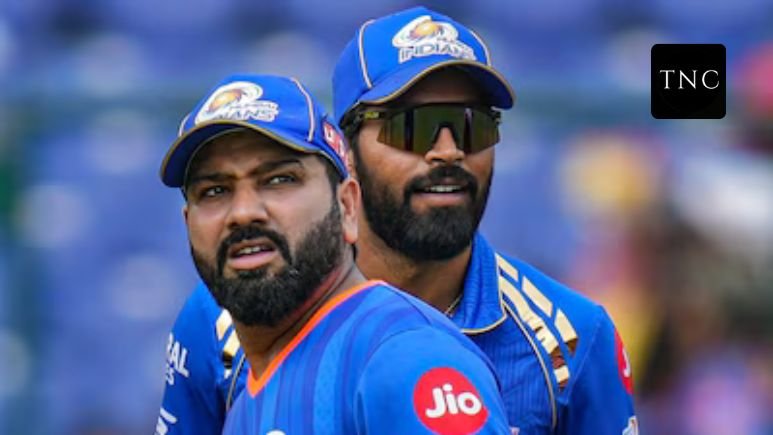

The floodlights at Wankhede cast long shadows as Hardik Pandya stood near the boundary rope, arms folded, eyes fixed somewhere beyond the field. A game had just slipped away again. In the dugout, a familiar figure, Rohit Sharma, leaned forward, quietly studying the chaos. No gestures, no speeches. Just presence. Around them, the Mumbai Indians looked like a team searching for direction, not just runs.
The debate now consuming Indian cricket isn’t just about tactics or team selection it’s about leadership. As Mumbai Indians stumble through a poor start to IPL 2026, former players and analysts are openly questioning whether Pandya should step aside and allow Rohit Sharma to reclaim control. The suggestion reflects a deeper tension: when does a franchise prioritize legacy and stability over transition and long-term planning?
The numbers are brutal. Mumbai Indians have lost multiple early matches this season, slipping down the table despite a squad stacked with international stars. The criticism has been equally sharp. Former cricketers have pointed directly at Pandya’s decision-making field placements, bowling changes, and match awareness as key factors behind the slide.
Some of the criticism borders on harsh. One former India opener labeled his captaincy “mediocre,” pointing to mismanagement of key bowlers in crucial phases. Others have hinted at on-field disconnects between Pandya and senior players, including Rohit Sharma, a suggestion that carries weight in a dressing room built on hierarchy and trust.
But the push to reinstall Rohit isn’t just nostalgia. It’s rooted in results. Under Sharma, Mumbai Indians became a dynasty with five IPL titles, a culture of calm leadership, and a reputation for peaking when it mattered most. His leadership style measured, understated, instinctive contrasts sharply with Pandya’s more aggressive, expressive approach.
Yet, the argument isn’t one-sided. Pandya wasn’t handed the captaincy by accident. He led Gujarat Titans to an IPL title in their debut season and proved he could command a team under pressure. The Mumbai move was meant to signal a generational shift in franchise planning for the future, not clinging to the past.
That’s what makes this moment complicated. If Mumbai reverses course now, it risks undermining its own long-term vision. But if it doesn’t, the season could spiral beyond repair. Even voices within the cricket ecosystem are split, some urging immediate change, others warning against instability and knee-jerk decisions.
This isn’t just about one captain. It’s about how modern teams balance legacy with evolution and how quickly patience runs out in a results-driven league like the IPL.
Mumbai Indians are caught between two timelines: the proven past of Rohit Sharma and the uncertain future of Hardik Pandya. The real question isn’t who should lead today, but how much losing a team is willing to tolerate for the promise of tomorrow.










Leave a comment