

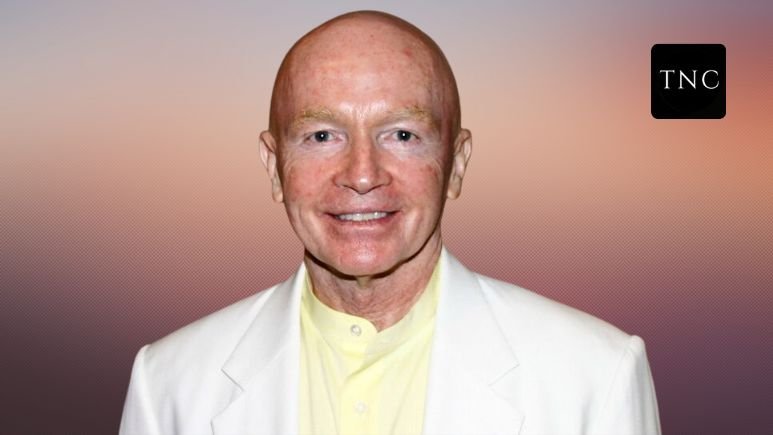

At 9:17 a.m., the trading floor screens flicker from green to red. A mid-level fund manager in Mumbai leans back in his chair, watching the BSE Sensex swing wildly. Just hours earlier, global cues had suggested a rally. Now, profit booking is erasing gains. He doesn’t panic. Instead, he scrolls through a note he saved months ago, a quote from Mark Mobius predicting a decades-long rise for India.
“Volatility is noise,” he mutters, almost rehearsed. “The story is bigger.”
That “story” is what Mobius spent decades arguing: India is not just another emerging market it is a long-duration growth engine. His calls ranging from a 50-year structural rally to the possibility of the Sensex touching 1 lakh are not predictions in isolation. They are a framework for understanding how India is repositioning itself in the global economic order.
At a time when global capital is shifting away from China and searching for stability, India has emerged as a prime candidate. Mobius’ thesis matters because it forces investors to ask a harder question: Are short-term market swings distracting from a generational opportunity?
Mobius’ bullish stance on India rests on three pillars each grounded in structural change, not market hype.
1. Demographics as destiny
India’s young, English-speaking workforce is not just large, it is adaptable. Mobius repeatedly highlighted the country’s ability to absorb global technology and scale it quickly.
This is not theoretical. From IT services to digital payments, India has leapfrogged traditional growth cycles.
2. The China+1 shift
Global supply chains are being rewritten. Companies are diversifying manufacturing bases, and India is a major beneficiary. Mobius saw this early, positioning India as a long-term alternative to China.
This shift is not just about factories it is about capital flows, policy alignment, and geopolitical trust.
3. Sectoral momentum
Mobius pointed toward technology, retail, and manufacturing as key growth drivers, expecting markets to deliver double-digit returns.
These sectors reflect a broader transition from a consumption-led economy to a hybrid model combining consumption, exports, and innovation.
But his optimism was not blind.
Mobius warned about bureaucratic hurdles, regulatory friction, and policy inconsistency risks that could slow the pace of growth.
Even today’s market behavior, sharp intraday corrections, valuation concerns, and global uncertainty reinforces that India’s rise will not be linear.
Meanwhile, other institutions echo parts of his vision. Some forecasts suggest the Sensex could approach or even cross the 1 lakh mark under favorable conditions, though with significant downside scenarios.
This tension between long-term conviction and short-term volatility is the defining feature of India’s market story.
Mobius wasn’t predicting a straight line to wealth. He was pointing to something harder to see in daily market noise: India’s rise is structural, not cyclical.The real test for investors isn’t whether the Sensex hits 1 lakh next year.
It’s whether they can stay invested long enough to see why it might.













Leave a comment