

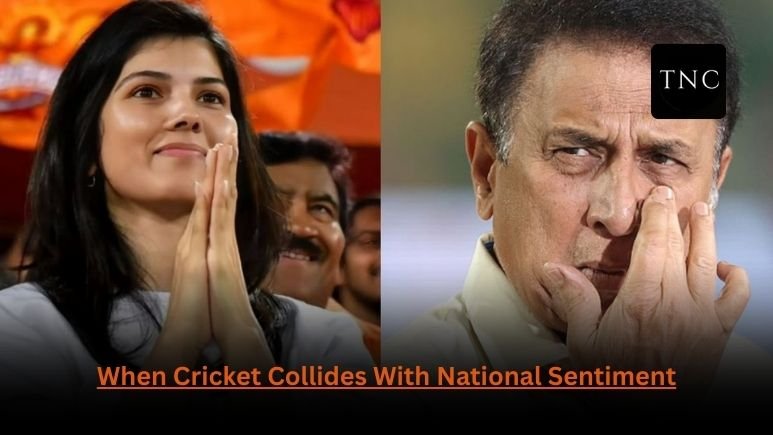

The auction room was quiet for a moment, the kind of silence that falls when a paddle goes up and a decision becomes final. On the screen flashed the name of a Pakistani spinner Abrar Ahmed. The winning bid belonged to an Indian-owned franchise tied to Kavya Maran.
Within minutes, the reaction spilled out of the auction hall and onto millions of phone screens. Social media timelines filled with anger, nationalism, and disbelief.
Hours later, the voice that cut through the noise belonged to a man whose words still carry weight in Indian cricket: Sunil Gavaskar.
“Is winning more important than Indian lives?” he asked, igniting a debate far bigger than a player contract.
The controversy began when the franchise linked to the Sunrisers brand bought Abrar Ahmed during the 2026 Hundred auction, triggering a fierce reaction among Indian fans and commentators. Gavaskar criticized the decision, arguing that paying Pakistani players could indirectly benefit systems hostile to India, a comment that stirred intense debate across the cricket world.
The uproar highlights a complicated question: Where does sport end and geopolitics begin? In an era where cricket leagues span continents and owners operate across borders, the lines between business, patriotism, and sport are becoming increasingly blurred.
Cricket has always been more than a game in South Asia. It is a theater for national pride, political tension, and public emotion.
For decades, cricketing relations between India and Pakistan have mirrored the relationship between the two nations themselves periods of cooperation punctuated by long stretches of distrust. Bilateral cricket between the countries has virtually disappeared, replaced by occasional clashes in global tournaments.
Franchise leagues changed that equation.
Competitions like The Hundred, the IPL, and other global leagues run on a different logic. They are businesses first. Owners chase talent, television ratings, and trophies. National borders matter less in the spreadsheet of a franchise owner than they do in the heart of a fan.
That is where the tension begins.
To Gavaskar and many critics, the signing represents something symbolic. If an Indian-owned team hires a Pakistani player, the money ultimately flows into a system connected to a rival nation. His warning reflects a deeply emotional argument rooted in national security concerns.
But supporters of the decision see something else entirely: the global nature of modern cricket. They argue that leagues like The Hundred are international entertainment products, not political statements. The England and Wales Cricket Board has emphasized that player selection in the league is purely merit-based.
Even the BCCI has distanced itself from the controversy, pointing out that it has no authority over decisions made in foreign leagues.
In other words, the storm may not be about Abrar Ahmed at all. It is about the unresolved tension between cricket as commerce and cricket as national identity.
This episode reveals a hard truth about modern sport: globalization makes teams richer, leagues bigger, and talent more mobile but it also exposes the emotional fault lines that fans carry with them.
Cricket may aspire to be a borderless game.
But for millions watching, the flags still matter.
Also Read / Signing, Suspension, and a Storm Online: How Abrar Ahmed’s Hundred Deal Sparked a Cricket Controversy.











Leave a comment