


The Bangladesh garment wage increase has put workers’ pay and factory conditions back in the spotlight. On November 25, 2026, the country’s Minimum Wage Board announced an entry-level monthly wage of Tk 17,000, up from Tk 12,500.
That is an increase of Tk 4,500, or 36 per cent. The decision followed weeks of protests, factory disruption and negotiations between workers’ and employers’ representatives.
Although headlines often refer broadly to textile workers, this announcement concerns the ready-made garment sector. Its impact will depend on implementation, workers’ living costs and the industry’s response.
What Is the New Wage Structure?
The announced structure sets different monthly minimums for four worker grades:
| Worker grade | Monthly minimum |
| Grade 4 | Tk 17,000 |
| Grade 3 | Tk 19,200 |
| Grade 2 | Tk 20,000 |
| Grade 1 | Tk 21,500 |
These are the announced total monthly wage amounts. They should be distinguished from basic salary alone or a guaranteed take-home amount after individual adjustments.
The lowest grade receives the widely reported 36 per cent increase. Higher grades have different previous wage levels, so that percentage should not automatically be applied to every worker.
Clear communication about grades and pay components will be important when factories explain the revised structure to employees.
When Will Workers Receive Higher Pay?
The new structure is scheduled to apply from December 1, 2026. Workers are expected to receive their revised December salaries in January 2027.
There is also a formal notification process. Reporting on November 26 said the board was preparing a draft gazette containing its recommendations. The report described an opportunity for written objections before a final gazette.
The practical distinction is between an announced wage decision, its scheduled effective date and the completion of formal procedures. Employers and workers will need the final official details to understand precisely how the structure applies.
Why Was the Increase Announced?
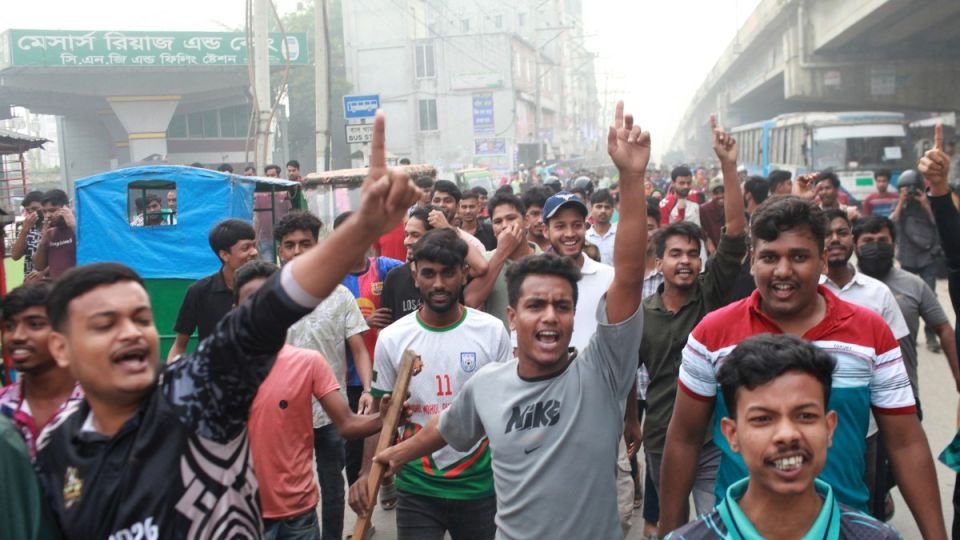
Workers have been demanding higher pay as living costs put pressure on household budgets. Protests affected major manufacturing areas, including Gazipur, Ashulia and Savar.
The wage board’s talks ended with a vote. Four of its six members supported Tk 17,000, while two backed the workers’ representatives’ revised proposal of Tk 18,000.
The result shows that a majority decision was reached, but agreement was not unanimous. It also helps explain why the announcement did not immediately settle the dispute.
Reuters reported fresh protests on November 26, with police using tear gas to disperse workers attempting to block a highway.
What Does It Mean for Workers?
For someone receiving the previous entry-level minimum, an additional Tk 4,500 could provide more room for food, rent, transport and other essential spending.
However, a higher wage figure does not automatically tell us whether a household can meet its needs. That depends on prices, family size, other earnings and the regularity of payment.
Worker representatives and labour advocates have argued that pay should better reflect living costs. Continued protests indicate that some workers remain dissatisfied with the announced amount.
The real measure of improvement will be whether workers receive the revised pay correctly and whether it strengthens their purchasing power over time.
Why the Garment Industry Matters
Bangladesh’s garment sector employs about four million people and accounts for roughly 80 per cent of the country’s exports, according to Associated Press reporting.
This makes the wage decision important beyond individual factories. The industry supports jobs, foreign currency earnings and business relationships with international retailers.
Manufacturers must now plan for higher wage bills while managing production and delivery commitments. Workers, meanwhile, need predictable earnings and a stable workplace.
Those needs are closely connected. A lasting settlement will require attention to both household welfare and the commercial conditions under which factories operate.
Could India and Other Suppliers Benefit?
Reuters reported on November 27 that factory owners said buyers had diverted about $254 million in orders from Bangladesh between November 1 and 18, with most moving to India.
The report linked those shifts to unrest and production disruption. They occurred before the November 25 wage announcement, so they should not be described as a direct result of the new pay rates.
For international buyers, delivery reliability matters alongside cost. Whether temporary diversions become lasting changes will depend on future sourcing decisions and Bangladesh’s ability to restore stable production.
What Happens Next?
The next steps include completing the wage notification process, explaining the structure clearly and preparing payroll systems for the scheduled change.
Accurate wage slips and accessible complaint channels would help employees identify errors and resolve questions about their grade or pay calculation.
The Bangladesh garment wage increase is a significant announcement, but its everyday value will become clearer through actual payments. The key questions are whether the revised wages are implemented properly, whether workers consider them adequate and whether factories can rebuild confidence through stable operations.
Also Read | Cairo Ring Road Tanker Fire: Death Toll Rises to 31 in Giza












Leave a comment