

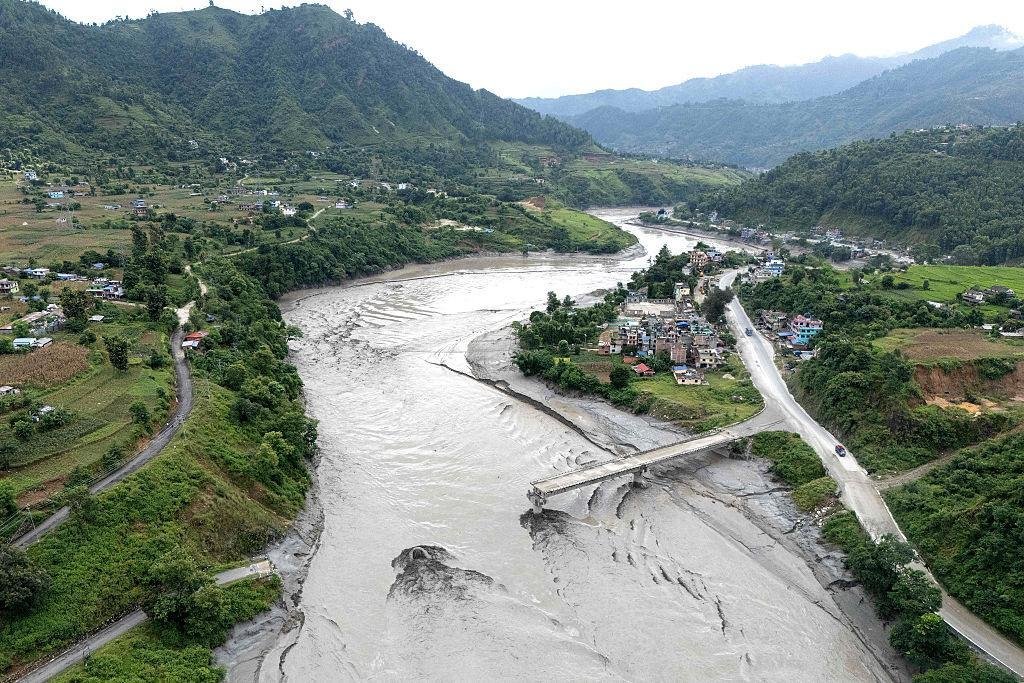

A massive landslide in Nepal has triggered dangerous flash flooding along the Budhi Gandaki River, damaging homes, bridges and hydropower infrastructure in the country’s Gorkha district.
The Nepal Budhi Gandaki flood began early on Sunday, October 11, 2026, after a landslide reportedly blocked the river’s flow and created a temporary natural dam.
According to preliminary investigations, the blockage may have collapsed, releasing a powerful surge of water, mud and debris into downstream communities.
As of October 12, five people remain missing, while rescue teams have evacuated dozens of residents and tourists.
Nepalese authorities have warned communities along connected river systems to remain alert as the risk of further flooding continues.
What Happened to the Budhi Gandaki River?
The incident occurred near Chumchet in Chumnubri Rural Municipality, located in Nepal’s mountainous Gorkha district.
According to the International Centre for Integrated Mountain Development (ICIMOD), a landslide may have blocked part of the river system, creating a temporary barrier.
Water accumulated behind the obstruction before a possible breach sent floodwaters rushing downstream.
The sudden surge carried rocks, mud and debris through settlements, damaging buildings and infrastructure.
The flooding reportedly began around 4 AM on October 11.
Authorities are still investigating the exact cause and sequence of events.
Five People Missing as Rescue Teams Continue Search
At least five villagers remain unaccounted for following the disaster.
According to Reuters, rescue teams had evacuated 96 people, including nine foreigners, by October 12.
Nepal’s army has deployed helicopters and ground personnel to reach isolated communities.
Rescue operations have been difficult because several roads, bridges and trekking routes have been damaged.
Emergency workers are delivering food, medicine, tents and other essential supplies to affected residents.
No deaths had been confirmed in the latest major international reports available on October 12.
However, authorities continue searching for the missing people and assessing damage in remote areas.
More Than 100 Foreign Trekkers Stranded
The flooding has also affected Nepal’s tourism industry.
More than 100 foreign trekkers have been stranded in the Manaslu region after floodwaters damaged walking trails and bridges.
The Manaslu trekking circuit is a popular destination for international visitors seeking Himalayan mountain experiences.
October is normally an important trekking month in Nepal because of relatively favourable weather conditions.
Officials say some stranded tourists are waiting for rescue, while others are staying in safe locations.
Local accommodation providers and rescue authorities are coordinating assistance.
Tourists have been advised to avoid damaged routes and follow official safety instructions.
Bridges, Homes and Hydropower Projects Damaged
The flash floods have caused extensive damage to infrastructure in Gorkha district.
According to Associated Press reporting, several bridges were damaged or destroyed, leaving villages disconnected from nearby settlements.
Homes, farmland, power facilities and communication infrastructure were also affected.
Three hydropower construction sites reportedly suffered damage.
The destruction of bridges has made it difficult to transport food, medical supplies and emergency equipment.
Hydropower facilities are especially vulnerable to sudden changes in river flow because they are often located close to major waterways.
Authorities are continuing damage assessments before determining the full cost of reconstruction.
Why Has Nepal Issued Flood Alerts?
Nepal’s disaster management authorities issued warnings because the Budhi Gandaki River connects with larger downstream river systems.
The river joins the Trishuli, which eventually forms part of the Narayani river system.
A sudden increase in water levels can therefore affect communities far from the original landslide.
Authorities have urged people living near vulnerable riverbanks to move to safer locations when instructed.
Warnings have covered areas in Gorkha, Dhading, Tanahun, Chitwan and Nawalparasi.
Residents have also been advised to avoid river crossings and unstable slopes.
What Causes Landslide-Dam Floods?
A landslide-dam flood occurs when falling rocks, soil or debris block a river.
The obstruction acts like a temporary dam, causing water to collect behind it.
Unlike engineered dams, these natural barriers may be unstable.
If the blockage breaks suddenly, large amounts of water can rush downstream with little warning.
Such floods can carry heavy sediment and rocks, making them particularly destructive.
Nepal’s steep mountain slopes and powerful river systems make certain regions vulnerable to these events.
Scientists are examining whether the Budhi Gandaki disaster resulted from this type of sudden dam failure.
Is Climate Change Increasing Nepal’s Flood Risks?
Climate change is an important concern for Himalayan communities.
Rising temperatures can affect glaciers, frozen ground and mountain slopes.
Changes in rainfall patterns may also increase the risk of landslides and flooding.
However, scientists have not established that climate change directly caused this particular disaster.
The Budhi Gandaki incident highlights the importance of monitoring unstable slopes, improving flood warnings and strengthening emergency preparedness.
What Happens Next?
Nepalese authorities are continuing search-and-rescue operations while assessing damage to roads, bridges and hydropower facilities.
Emergency teams are also working to restore access to isolated villages.
Scientists are examining satellite images and river conditions to better understand the cause of the flooding.
Officials have warned that additional water surges remain possible if unstable material continues to affect the river.
Conclusion
The Nepal Budhi Gandaki flood has left five people missing, stranded international trekkers and damaged essential infrastructure.
Although emergency warnings helped many residents escape, the disaster demonstrates how quickly natural river blockages can become dangerous.
As rescue operations continue, authorities are focusing on protecting vulnerable communities, restoring transport connections and preventing further loss of life.
Also Read | Riyadh Airport Attack: Indian National Killed, Death Toll Rises to 13









Leave a comment