

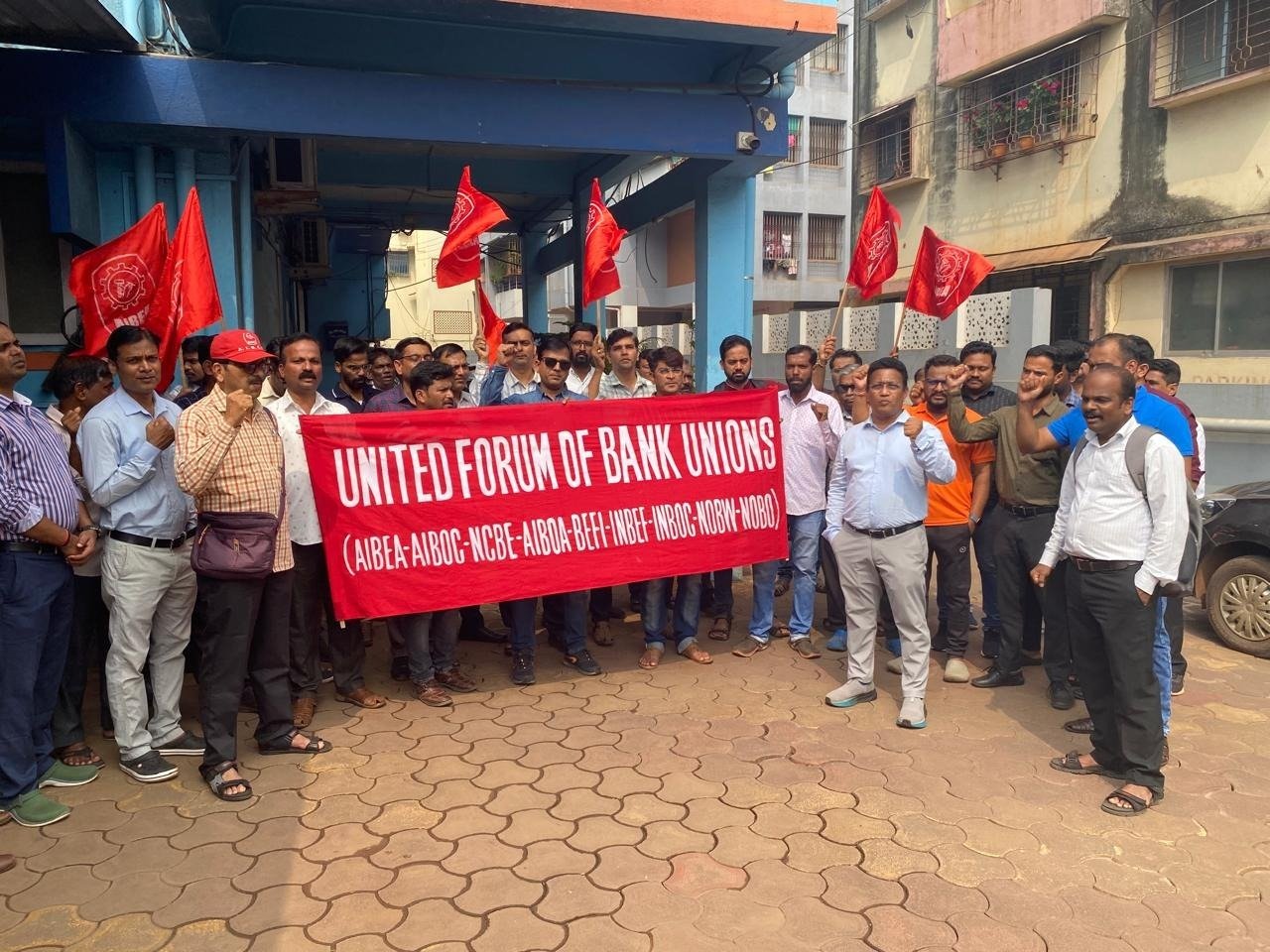

Bank Strike Deferred After Late-Night Talks
The proposed three-day nationwide bank strike from September 28 to September 30, 2026, has been deferred after the United Forum of Bank Unions (UFBU) and the Indian Banks’ Association (IBA) reached an understanding on key issues.
The development came after a late-night meeting between representatives of the two sides on September 27. The decision means the planned strike will not take place on the three dates originally announced. Bank branches are therefore expected to function normally, although customers should continue to check individual bank advisories for local updates.
However, the agreement does not mean that all demands of bank employees have been settled. Instead, the two sides have agreed to continue discussions, particularly on the long-pending demand for a five-day banking week.
Why Was the Bank Strike Planned?
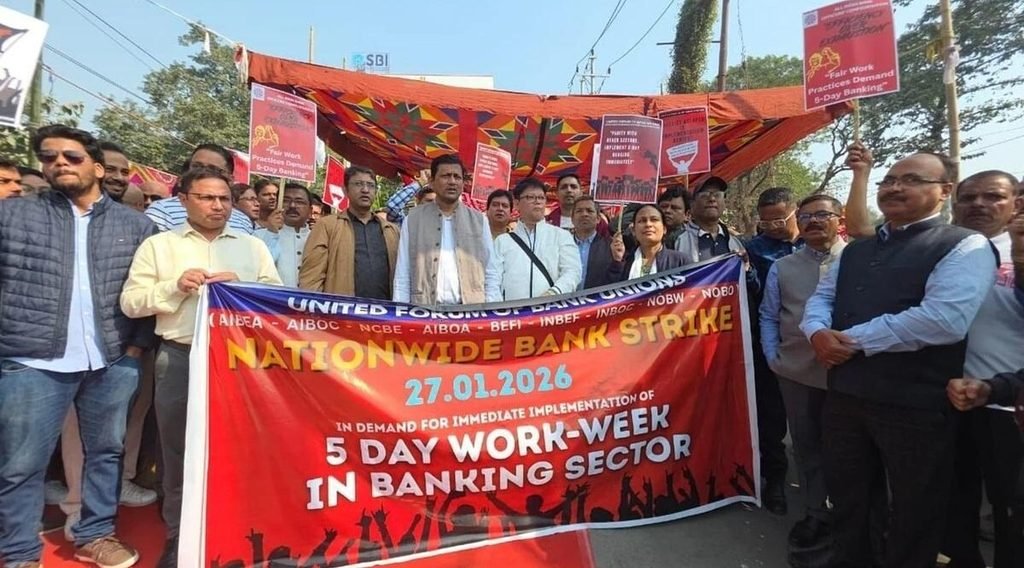
The main issue behind the latest round of industrial action was the demand for a five-day working week in the banking sector.
At present, bank branches generally remain closed on the second and fourth Saturdays of each month. Bank unions have been seeking holidays on all Saturdays, effectively creating a five-day working week from Monday to Friday.
The demand has been under discussion for several years. The unions have argued that changing the working pattern would bring banking employees in line with several other sectors that already operate on a five-day schedule.
The issue has led to repeated demonstrations and strikes during 2026. A one-day nationwide strike was also held on September 11 before the larger September 28-30 action was planned.
What Did the IBA and UFBU Agree On?
The most important part of the latest understanding is the creation of a high-level committee involving the IBA and UFBU.
The committee will examine the demand to declare the remaining Saturdays as holidays. It will consider different alternatives, consult relevant stakeholders and work towards a solution that takes into account the interests of banks and customers.
This is significant because it moves the immediate dispute back toward negotiations instead of another nationwide strike.
However, it is important to understand that the committee’s formation does not automatically introduce a five-day banking week. A final decision and the necessary implementation process are still pending.
What About the PLI Scheme?
The agreement also covers the Performance Linked Incentive, or PLI, scheme for senior bank officers.
The two sides agreed to begin discussions on possible modifications to the PLI scheme for officers in Scale IV and above. The discussions could lead to proposals being taken forward with the government.
Earlier in September, the government had announced that the PLI scheme would be kept in abeyance while it addressed concerns raised by bank unions. The government had described five-day banking and the PLI issue as major areas of dispute.
The latest understanding therefore keeps the PLI issue within the negotiation process rather than treating it as fully resolved.
What Does the Agreement Mean for Bank Customers?
For ordinary customers, the immediate impact is straightforward: the proposed September 28-30 strike has been deferred.
This means customers do not need to treat those three dates as nationwide bank strike days. Branch operations are expected to continue normally.
The development is particularly important because September 30 is the half-yearly closing date for banks. A three-day strike immediately before the closing date could have created additional pressure on branches, businesses and financial transactions. The government had earlier taken steps to keep public-sector and regional rural banks open on Sunday, September 27, because of the expected disruption.
Digital banking services such as internet banking, mobile banking, UPI and ATMs are also expected to continue according to normal arrangements, although individual services can vary between banks.
Does This Mean Five-Day Banking Is Confirmed?
No.
This is one of the most important points for customers and bank employees.
The agreement creates a mechanism for further discussion, but it does not itself introduce a Monday-to-Friday banking schedule. The high-level committee must examine the issue, consult stakeholders and work toward a solution.
The present arrangement of holidays on the second and fourth Saturdays therefore remains in place unless a separate decision changes it.
What Happens Next?
The next stage will be negotiations between the IBA and UFBU through the proposed committee.
The discussions are expected to focus on Saturday holidays, possible changes to the PLI scheme for senior officers and other pending issues from earlier negotiations.
The unions have therefore paused their planned strike action, but the broader issue has not disappeared. The outcome of the committee’s discussions will determine whether the long-standing demand for a five-day banking week moves closer to implementation.
For customers, the immediate uncertainty over the September 28-30 shutdown has been removed. For bank employees, however, the larger question of working days remains under discussion.
Conclusion
The September 2026 bank strike has been deferred following a late-night understanding between the IBA and UFBU. The most important development is the decision to establish a joint high-level committee to examine the demand for holidays on all Saturdays.
The agreement provides more time for negotiations and avoids an immediate disruption to banking services. But it should not be confused with a final approval of a five-day banking week.
For now, banks are expected to operate normally during the dates originally scheduled for the strike, while negotiations continue on working hours, Saturday holidays, the PLI scheme and other employee-related issues.
Also Read | LPU Protests Turn Violent: What Happened at Lovely Professional University?











Leave a comment