

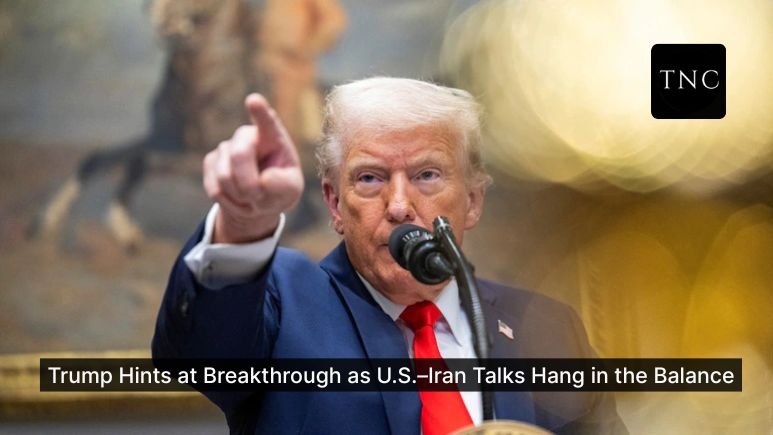

The oil trader in Singapore didn’t wait for confirmation. By the time the alert flashed “Trump: amazing two days ahead” prices had already twitched. He stared at the chart, a jagged line shaped by weeks of war, sanctions, and whispered diplomacy. Tankers had turned back in the Strait of Hormuz. Insurance premiums had surged overnight. Now, a single statement from Washington hinted at something else entirely: not escalation, but the possibility however fragile of an exit.
Markets moved first. Governments followed.
U.S. President Donald Trump’s suggestion that a “breakthrough” may be imminent ahead of a second round of talks with Iran is more than political theater; it is a pivot point in a conflict that has already shaken global energy markets, disrupted trade routes, and threatened a wider regional war.
After failed negotiations in Islamabad and a subsequent naval blockade, both nations now stand at a crossroads: double down on confrontation or step back toward diplomacy. The stakes extend far beyond Washington and Tehran. Oil flows, inflation, and geopolitical stability all hang in the balance.
The optimism coming from the White House is striking, especially given how negotiations collapsed just days earlier. The first round of talks broke down over a familiar fault line: Iran’s nuclear ambitions. The U.S. demanded long-term limits on uranium enrichment; Iran resisted, offering shorter timelines and fewer concessions.
What followed was escalation. Washington imposed a naval blockade targeting Iranian shipping routes, while Tehran tightened its grip on the Strait of Hormuz, a chokepoint through which a significant share of the world’s oil passes.
The consequences were immediate. Oil prices spiked, shipping routes were disrupted, and the global economy felt the tremor. The International Monetary Fund warned that the conflict has already slowed global growth and fueled inflation, cutting economic forecasts for 2026.
And yet, amid this escalation, diplomacy persists.
Trump’s remarks suggest a strategic calculation. By signaling confidence “very close to over,” “amazing two days ahead” he is shaping expectations before negotiations even begin. It’s a tactic often used in high-stakes diplomacy: create momentum, force the other side to respond, and frame any agreement as inevitable.
But beneath the rhetoric lies a harsher reality. The core disagreements remain unresolved. The U.S. wants deep, long-term restrictions on Iran’s nuclear program. Iran wants sanctions relief without surrendering its strategic leverage. Neither side has publicly shifted its position in a meaningful way.
At the same time, external pressures are mounting. Regional players from Pakistan to Saudi Arabia are pushing for de-escalation. Parallel diplomatic efforts, including rare talks between Israel and Lebanon, hint at a broader attempt to stabilize the region.
This is what makes the current moment so precarious. The situation contains both the ingredients of a breakthrough and the risk of collapse. A single misstep military or diplomatic could undo weeks of fragile progress.
The next round of the U.S.–Iran talks is not just another negotiation. It is a test of whether brinkmanship can give way to compromise before the economic, political, and human become irreversible.
Trump’s optimism may signal momentum. But until the core issues move, the “breakthrough” remains a promise, not a reality.
read also / Xi Jinping Warns Global Order Is Crumbling Amid Iran Conflict











Leave a comment