

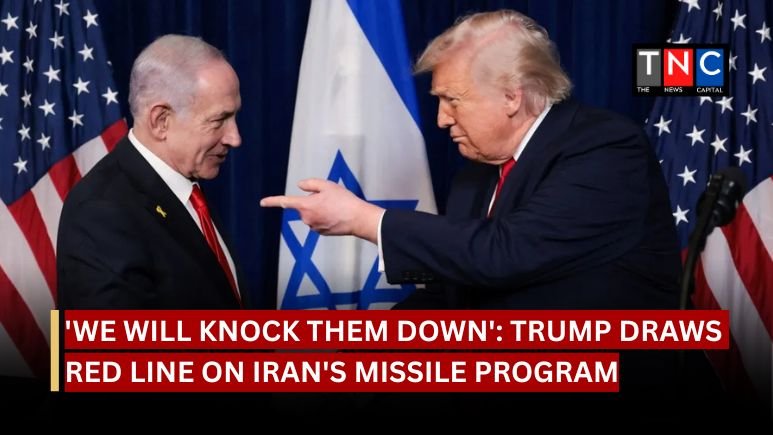

The warning was blunt, delivered with the casual confidence of a man who’s already ordered strikes once and seems perfectly comfortable doing it again. Standing beside Israel’s prime minister at his Florida resort, President Donald Trump made clear that if Iran is rebuilding what American bombs destroyed earlier this year, those facilities won’t be standing for long.
President Donald Trump issued a stark ultimatum to Iran on Monday (December 29, 2025), vowing to “knock down” any attempt by the Islamic Republic to reconstitute its weapons programs following the devastating “12-day war” that levelled key facilities back in June. Speaking at his Mar-a-Lago estate alongside Israeli Prime Minister Benjamin Netanyahu, Trump signalled that the United States is prepared to launch military strikes even more punishing than the previous campaign which already obliterated three major nuclear sites if intelligence confirms that Tehran is trying to rebuild in secret locations.
The high-stakes meeting in Florida wasn’t just diplomatic theatre. It comes amid troubling intelligence reports suggesting that Iran may be attempting to relocate its ballistic missile production to clandestine facilities, trying to avoid the fate of the infrastructure reduced to rubble by U.S. and Israeli forces just months ago.
Trump’s warning was unambiguous:
- The Threat: “Now I hear that Iran is trying to build up again,” Trump told the assembled reporters, his tone mixing frustration with determination. “And if they are, we’re going to have to knock them down. We’ll knock them down. We’ll knock the hell out of them.”
- Escalation Promise: Trump went further, suggesting that any future military action could exceed the June strikes in scope and intensity. “The consequences will be powerful, maybe more powerful than last time. Iran should have made a deal last time,” he added, implying that Tehran missed its window for a negotiated solution and now faces only force.
- Intelligence Uncertainty: While acknowledging that reports of rebuilding at “different sites” haven’t been fully confirmed, Trump made clear that the “red line” hasn’t moved any reconstitution of Iran’s nuclear or missile programs will trigger an immediate military response, verification be damned if the intelligence becomes solid enough.
Tehran’s response came swift and defiant, with top officials rejecting the U.S. threats as propaganda designed to intimidate rather than genuine warnings backed by capability.
Iran’s counter warning:
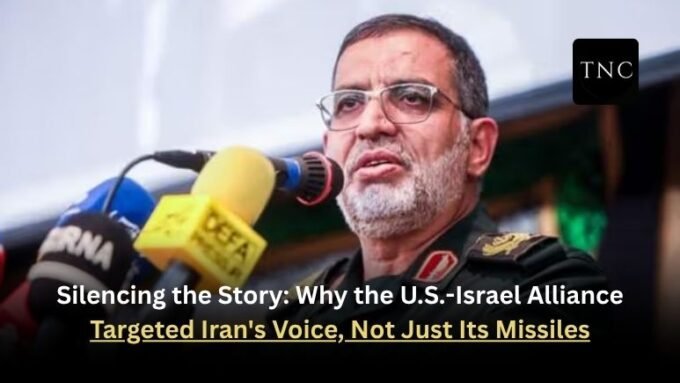
- Defiance: Ali Shamkhani, a senior political adviser to Iran’s Supreme Leader, took to social media to declare that Iran’s missile capabilities are “not containable or permission-based” a direct rebuke to the notion that Washington gets to dictate what weapons Tehran can possess.
- Threat of Retaliation: Shamkhani went further, warning that any act of aggression against Iran would face an “immediate harsh response beyond its planners’ imagination.” The language was deliberately apocalyptic, signaling that Tehran believes it can inflict costs severe enough to make the U.S. and Israel think twice, even if it ultimately loses such a confrontation.
“They can threaten all they want. We’ve survived sanctions, we’ve survived strikes, and we’ll survive whatever comes next. Our defense is not negotiable,” an Iranian Foreign Ministry spokesman said in a briefing, his words intended for domestic consumption as much as foreign audiences.
“The president is absolutely serious. If Iran rebuilds, we strike again. It’s that simple,” a senior U.S. administration official told reporters on background, confirming that military planning for such contingencies is already underway.
The Mar-a-Lago meeting also tackled the stalled ceasefire in Gaza, with Trump placing responsibility for the next phase squarely on Hamas. He warned the militant group it has a “very short period of time to disarm” as part of the fragile truce agreement brokered earlier this year.
“If they don’t disarm as they agreed to do… then there will be hell to pay for them,” Trump stated bluntly, while praising Israel for honoring its commitments “100 percent” a pointed contrast meant to isolate Hamas as the obstacle to lasting peace.
The renewed threats against Iran come at a moment when the regime is facing serious internal pressure. Trump noted that Iran is currently battling “tremendous inflation” and that “their economy is bust” accurate assessments given the rial’s recent collapse and protests that have erupted in Tehran and Hamadan over economic conditions that make daily life increasingly unbearable for ordinary Iranians.
The economic devastation creates a cruel paradox for Tehran’s leadership: they desperately need sanctions relief and economic revival, but pursuing nuclear and missile programs that might deter future attacks only guarantees continued isolation and potential military strikes that make everything worse.
With Netanyahu pushing for a “preemptive” military posture against Iran’s remaining missile arsenal and Trump signaling clear willingness to use overwhelming force, the Middle East remains balanced on a razor’s edge. Diplomatic channels appear dormant, if not completely severed. Instead, Washington and Jerusalem are openly coordinating on “options for potential future strikes,” treating another round of bombing not as a last resort but as an inevitable next step if Iran doesn’t comply.
The June “12-day war” saw sustained air campaigns that targeted Iran’s most critical nuclear infrastructure, weapons production facilities, and command centers. Hundreds died, including scientists and military personnel. The strikes were devastating, setting Iran’s nuclear program back years according to Western intelligence assessments. But they didn’t eliminate the knowledge, the desire, or the political imperative driving Tehran’s pursuit of deterrent capabilities.
Now the question isn’t whether Iran will try to rebuild most analysts assume they already are, or will soon but whether they can do it secretly enough and quickly enough to present the world with a fait accompli before the next round of bombs falls.
Trump’s message suggests the answer is no. The surveillance is constant, the intelligence sharing with Israel is seamless, and the political will to strike again exists. For Tehran, that means every tunnel dug, every centrifuge hidden, every scientist relocated to a secret facility is a gamble that they can finish before they’re discovered.
For the region, it means the cycle of strikes and rebuilding, threats and defiance, could become a permanent feature of the landscape a grinding war of attrition where Iran tries to achieve deterrence and the U.S. and Israel try to prevent it, with periodic explosions marking each side’s latest move.
The world watches nervously, hoping that somewhere between Mar-a-Lago’s luxury and Tehran’s defiance, someone finds an off-ramp before the next round of strikes makes the last one look restrained.
Also Read / US sanctions six more ships as Venezuela slams tanker seizure as ‘piracy’.












Leave a comment