

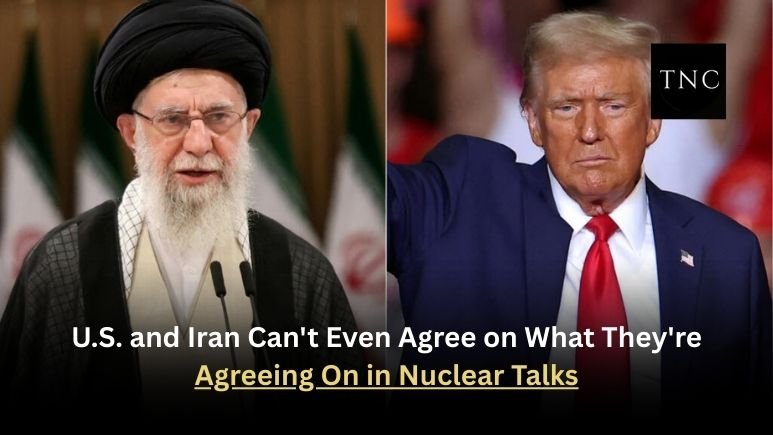

The diplomatic dance between the United States and Iran is getting messy again, with both sides claiming they’re making progress while simultaneously pointing fingers at each other over what’s actually been agreed to. It’s the kind of frustrating situation where you’re not sure if the glass is half full or half empty, and honestly, it might just be a different glass entirely depending on who you ask.
U.S. Vice President JD Vance threw some cold water on the optimistic spin, saying Iran still hasn’t formally recognized Washington’s “red lines” when it comes to their nuclear program and military activities across the region. That’s a pretty significant problem if you’re trying to negotiate a deal. Meanwhile, Iranian officials are saying they’ve already established broad principles for the talks and everything’s moving forward just fine within an agreed framework. So who’s right? Probably both, which is part of the problem.
The same old arguments, round infinity
Here’s where the two sides are stuck, and honestly, it’s the same place they’ve been stuck for years. Washington wants strict limits on how much uranium Iran can enrich, more inspections and monitoring, and restrictions on their ballistic missile program and support for proxy groups across the Middle East. That’s a lot to ask for, and Iran knows it.
Tehran’s response is basically: we have a right to peaceful nuclear development, we’re not going to stop that, and why are you trying to drag missiles and regional issues into this when we’re supposed to be talking about nuclear stuff? They want sanctions lifted and they want the world to recognize their nuclear rights. Those are fundamentally different goals from what Washington is pushing for.
Analysts who’ve been watching these negotiations play out over the past decade are pretty much shrugging at this point. These competing positions aren’t new. They’re structural problems baked into how each country views the situation, and that’s why every round of talks ends up hitting the same walls.
They’re still talking, which counts for something
Despite all the disagreements and the pessimistic undertones, both sides are saying they’ll keep talking in the coming weeks. Mediators are working overtime trying to bridge the gaps, and while progress is being described in very careful language as “incremental,” the fact that they’re maintaining communication channels is viewed as important by both governments. After all, the alternative to talking is usually something nobody wants.
These current diplomatic efforts are building on earlier rounds where they tried to establish a basic framework for how to even have these conversations. Previous talks focused on creating structure and identifying small confidence-building measures that both sides could live with. It’s slow, grinding work with no guarantees.
Why the world is watching nervously
International observers aren’t just casually keeping an eye on this. They’re watching closely because the stakes are enormous. How these talks go has implications for security across the entire Middle East, for global energy markets that depend on stability in the Persian Gulf, and for efforts to prevent nuclear weapons proliferation more broadly.
Experts keep warning that if these negotiations completely fall apart, geopolitical tensions are going to spike. But even small progress, even limited agreements, could help stabilize diplomatic relations and reduce the risk that this situation escalates into something much more dangerous.
The long road ahead
For now, both Washington and Tehran say they’re committed to continuing negotiations, though officials on both sides are being refreshingly honest about one thing: reaching a comprehensive agreement is going to require resolving major policy differences that are deeply entrenched and aren’t going away anytime soon.
It’s the kind of diplomatic challenge where success means finding a way for two countries that fundamentally don’t trust each other to agree on something that satisfies both their core interests. That’s incredibly difficult under the best circumstances, and these aren’t the best circumstances. But the alternative, walking away and letting tensions escalate unchecked, is worse.
So they keep talking, keep disagreeing about what they’re agreeing on, and keep hoping that somehow, eventually, they can thread the needle on a deal that’s eluded everyone for years. Whether that’s realistic optimism or wishful thinking is something we’ll only know once they either succeed or give up trying.
Also Read / U.S. and Iran Back at the Negotiating Table in Geneva, But It’s Complicated.









Leave a comment