

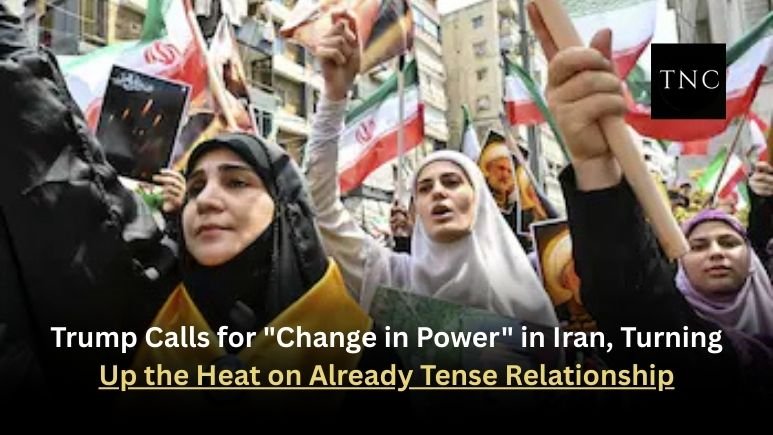

Donald Trump just threw gasoline on an already burning fire, saying that a “change in power” in Iran would be “the best thing that could happen.” It’s the kind of blunt talk that’s vintage Trump, but it comes at a really dicey moment when tensions between Washington and Tehran are already running high and nobody’s quite sure how to dial things back down.
Trump made these comments while talking about the broader Middle East crisis, and while he didn’t lay out some detailed policy proposal, just saying the quiet part out loud like that has gotten everyone’s attention. We’re talking about a region where military forces are already deployed in greater numbers, nuclear talks have completely stalled out, and Iran’s economy is getting squeezed harder and harder by sanctions.
Years of bad blood getting worse
The U.S. and Iran haven’t exactly been friends for a long time. The friction is over pretty much everything: Iran’s nuclear program, their missile development, and the way they support various groups around the Middle East that the U.S. isn’t thrilled about. But things have gotten especially dicey lately with military posturing in the Gulf and zero progress on the diplomatic front when it comes to lifting sanctions or putting limits on Iran’s nuclear activities.
When Trump says regime change would be the best outcome, he’s tapping into an old debate that splits American foreign policy types right down the middle. Some people genuinely believe that if Iran had a different government, the whole region would be more stable. Others think that trying to force leadership change from the outside is a recipe for disaster either triggering a wider war or creating chaos inside Iran that makes everything worse.
Iran’s not going to take this well
You can bet Iranian officials are going to hit back hard at comments like this. They’ve always rejected any hint of foreign powers meddling in their government, calling it a violation of their sovereignty. Based on past reactions, Tehran’s going to argue that their political system is their own business and that outside pressure just makes the hard-liners inside Iran stronger, not weaker.
People who watch Iran closely are warning that when you talk openly about regime change, you make it a lot harder to negotiate about anything else. If Iran thinks the U.S.’s real goal is to overthrow their government, why would they make deals about nuclear limits or anything else? Even informal comments like Trump’s can mess with the diplomatic dynamics, both inside Iran and across the region where countries are trying to figure out which side to align with.
The stakes are enormous
This isn’t just about two countries trading insults. The Persian Gulf is absolutely critical to global energy markets. If things spiral out of control and Iran gets involved in a serious conflict, you’re looking at potential disruptions to oil shipping routes that could send shock waves through the world economy. Countries in the region have been practically begging Washington and Tehran to keep talking to each other because they know that if dialogue breaks down completely, you could see retaliatory strikes, proxy wars flaring up, or Iran messing with maritime traffic through strategic choke points.
Where do we go from here?
The experts trying to game this out say everything depends on whether serious diplomatic engagement can get back on track or whether we’re just going to keep hearing tough talk from both sides. Right now, Trump’s statement is a reminder that U.S.-Iran relations are as volatile and unpredictable as they’ve ever been.
Nobody really knows if we’re heading toward some kind of negotiated solution that eases tensions or if we’re on a path toward something much more dangerous. What’s clear is that one of the world’s most sensitive geopolitical situations just got even more complicated, and everyone from oil traders to regional governments to ordinary people living in the area is watching nervously to see what happens next.
Also Read / Iran Digs In on Uranium Enrichment Despite Fresh Talks in Oman.







Leave a comment